







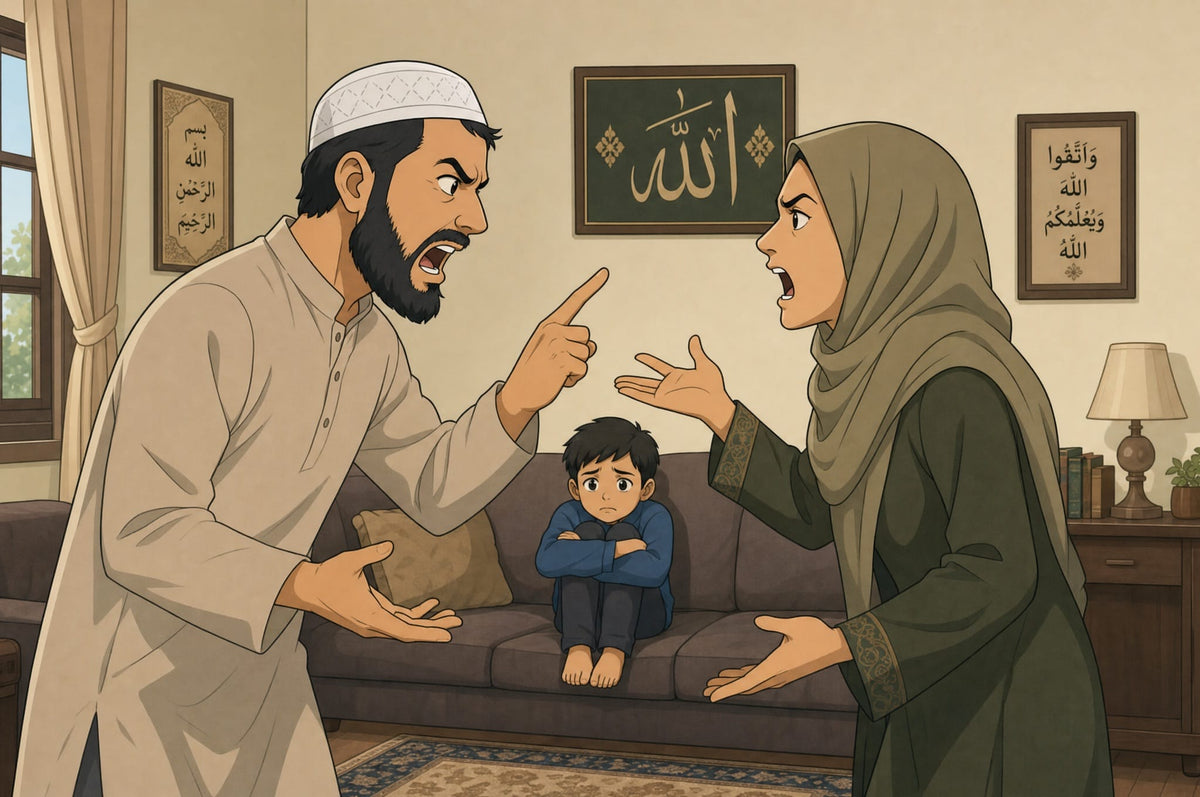
What do you do when your hardest test is not outside your home but inside it?
What do you do when the people who were supposed to protect you are the ones causing the most pain? When the home that should have been your safe place has instead been a source of confusion, shame, guilt and emotional exhaustion for as long as you can remember?
We want to talk about narcissistic parents today. Not to encourage disrespect. Not to give anyone permission to cut off their family. But because women in our community need awareness, they need to be intelligent and know what's actually happening in some of our households.
Unfortunately, many young girls and boys quietly suffer, who blame themselves for things that were never their fault, and who desperately need someone to acknowledge what they are going through.
Believe it or not but many children have narcissistic parents. Either the mother is a control freak or the father is a stubborn nightmare. These qualities sometimes become the framework of their children when they grow up.
Many of these parents quote the quran when it comes to cementing their authority (or dictatorship).
"And your Lord has decreed that you worship none but Him, and that you be kind to parents." — Surah Al-Isra 17:23
But forget that Islamic scholars across centuries have been clear that obedience to parents is not absolute. Imam Al-Nawawi and other classical scholars acknowledged that parental authority does not extend to matters that violate Islamic principles or cause genuine harm to a person's wellbeing.
The Prophet ﷺ said: "There is no obedience to creation if it involves disobedience to the Creator." — Sahih al-Bukhari 7257
So what does Islam say about them? Do we still need to listen to parents that are being unfair and don't know how to be emotionally mature parents?
Firstly, let's describe the narcissistic signs within a mother or father because awareness of their characteristic gives us clarity.
Signs of a narcissistic mother (according to psychologists and mental health experts):
- She makes everything about herself — your pain becomes her inconvenience, your achievement becomes her achievement
- She withholds love and affection as punishment and gives it as a reward for compliance
- She shares your private information or secrets with others to gain sympathy or attention
- She competes with you — over attention, suffering, who had it harder
- She plays the victim in every conflict, even the ones she caused
- She demands perfection from you while holding herself to no standard
- She dismisses your feelings and redirects every conversation back to herself
- She uses guilt consistently as a tool — "after everything I have done for you" is a weapon, not a statement
- She criticises your appearance, choices and personality — often disguised as concern
- She boasts about you to others but never truly listens to you in private
- She blames you for family conflict and positions herself as the peacemaker or the one who suffers most
- She uses tears and emotional displays to win arguments and avoid accountability
Signs of a narcissistic father (according to psychologists and mental health experts):
- He has an inflated sense of self-importance and always needs to be the most respected person in the room
- He takes credit for your successes and distances himself from your failures
- He reacts with anger, aggression or silence when he feels criticised or challenged — even mildly
- He behaves very differently in public versus at home — charming and respected outside, controlling or dismissive inside
- He feels threatened by your independence and becomes possessive or undermining when you grow beyond his influence
- He belittles your opinions, speaks over you and acts as though his view is always the only correct one
- He uses financial control or provision as leverage to maintain authority over your choices
- He lacks empathy for your emotional needs and struggles to understand or care about your inner life
- He expects you to be available to him on his terms — your needs, plans and boundaries are secondary to his
- He is envious of your achievements if they surpass his own and will minimise or redirect attention away from them
- He behaves as though rules do not apply to him and becomes furious when anyone does not accommodate his wishes
- He creates conflict between family members — your siblings, your mother — to keep control over the narrative
If you read that list and felt a heaviness in your chest, a recognition — please know that what you are feeling is valid. And please know that experiencing this does not mean you are a bad child or a bad Muslim. It means you grew up in a difficult environment that was not your fault.
Children of unjust or emotionally abusive parents often internalise blame, thinking "I must be the problem." If you grew up feeling unwanted, unheard or unloved, it is not a reflection of your worth.
"Always hate what is wrong, but do not hate the one who errs. Hate sin with all your heart, but forgive and have mercy on the sinner. Criticise speech, but respect the speaker. Our job is to wipe out the disease, not the patient." - Imam al-Shafi'i
Now comes the part that requires real wisdom. Because this is where it gets complicated and deeply personal.
We have parents who have caused real harm. And we also have a deen that calls us to honour them. So how do we protect ourselves without escalating things, without becoming bitter, and without disobeying Allah?
We try to set internal boundaries first.
You need to stop internalising what they say as truth about who you are. This is one of the most powerful things you can do and it does not require a confrontation.
We keep our interactions brief, calm and practical rather than emotional. We do not share our dreams, our struggles or our private thoughts with someone who has shown they will use that information against us. We give them nothing to work with. Not because we are being cold. Because we are being wise.
They have shown us time and time again they are not intelligent.
Don't try to argue or try to change them.
You cannot reason with someone who does not believe they are wrong. Attempting to do so almost always escalates the situation and leaves you more depleted. You will not win that argument. Let it go.
We try to make du'a for them.
Not because they deserve it in the way we understand deserving. But because du'a for someone who has hurt you is one of the most spiritually powerful things you can do. It moves something inside you. It loosens the grip of resentment. And it is seen by Allah.
We try to seek professional help.
This is not weakness. This is wisdom. A Muslim therapist or counsellor who understands both Islamic values and the psychological impact of narcissistic parenting can help you process what you have been through in a way that is safe, structured and deeply needed.
We try to remember what Ibrahim (AS) showed us.
He had a father who rejected him, threatened him and refused to hear him.
When his father became threatening Ibrahim (AS) did not retaliate. He distanced himself with dignity. He did not stop making du'a for his father. He did not stop being respectful. But he also did not stay in a place of ongoing harm.
That is the balance Islam calls us to. Not bitterness. Not anger. Not sadness. Not estranged without wisdom. Principled, patient, and protected.
Allah is Al-Adl. The Most Just. He sees every act of patience you have shown. Every moment you chose kindness when cruelty would have been easier. Every time you made du'a for someone who hurt you. Every tear you cried in private because you did not want to cause more conflict. He saw all of it. None of it was wasted.
The Prophet ﷺ said: "There are three whose supplication is not rejected: the fasting person when he breaks his fast, the just ruler, and the supplication of the oppressed." — Sunan al-Tirmidhi 3598
Your du'a reaches Allah. Even from inside a home that has not been what it should have been.
One of the greatest things you can do for yourself, for your future family and for the ummah is to break the cycle.
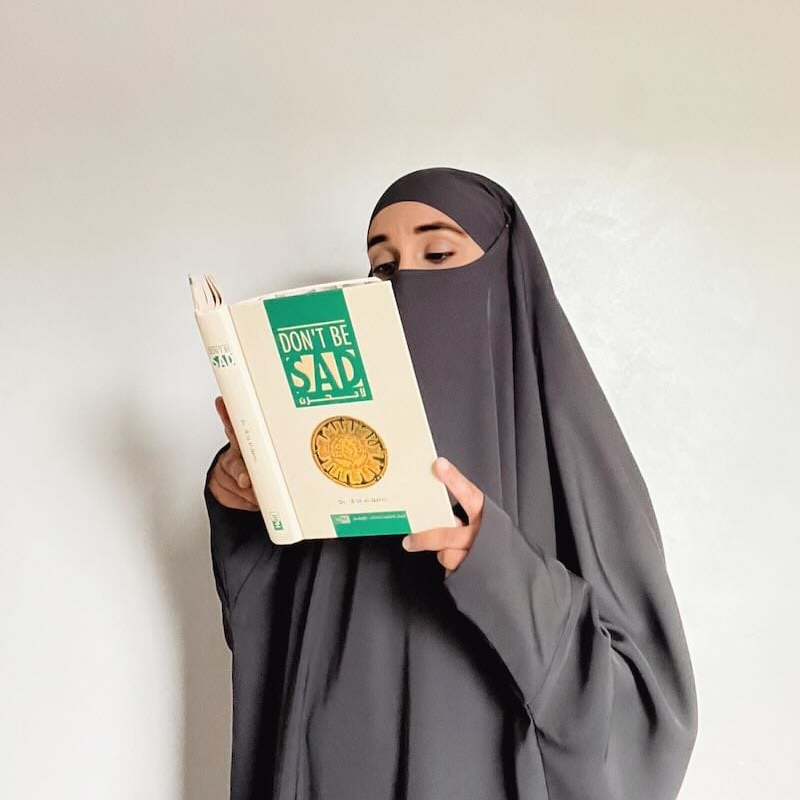
To study the way the Prophet ﷺ treated those around him, to read books like
- Simple Seerah of the Prophet
- Islam and the Problems of the Youth
- The Rights of the Husband and Wife
- Depression & Anxiety - The Causes & Treatment
and decide that what was done to you will not be passed on.
May Allah heal every heart that was wounded in a place it should have been safe. May He give us patience without bitterness, boundaries without cruelty, and the wisdom to know the difference between the two. May He break every cycle of harm in our families and replace it with mercy, honesty and love. Ameen.
P.S If you need someone to talk to, please do not suffer alone. Reach out to a Muslim counsellor, a trusted scholar, or a mental health professional who understands your situation. Getting help is not dishonouring your parents. It is honouring yourself. And Allah created you worthy of that.

Leave a comment
All comments are moderated before being published.
This site is protected by hCaptcha and the hCaptcha Privacy Policy and Terms of Service apply.