



Abaya Sizing Measures Something Different
The most common question we get is what size abaya to order, and the confusion is understandable. Our sizes run 52, 54, 56, 58 and 60, which look like dress sizes and are not.
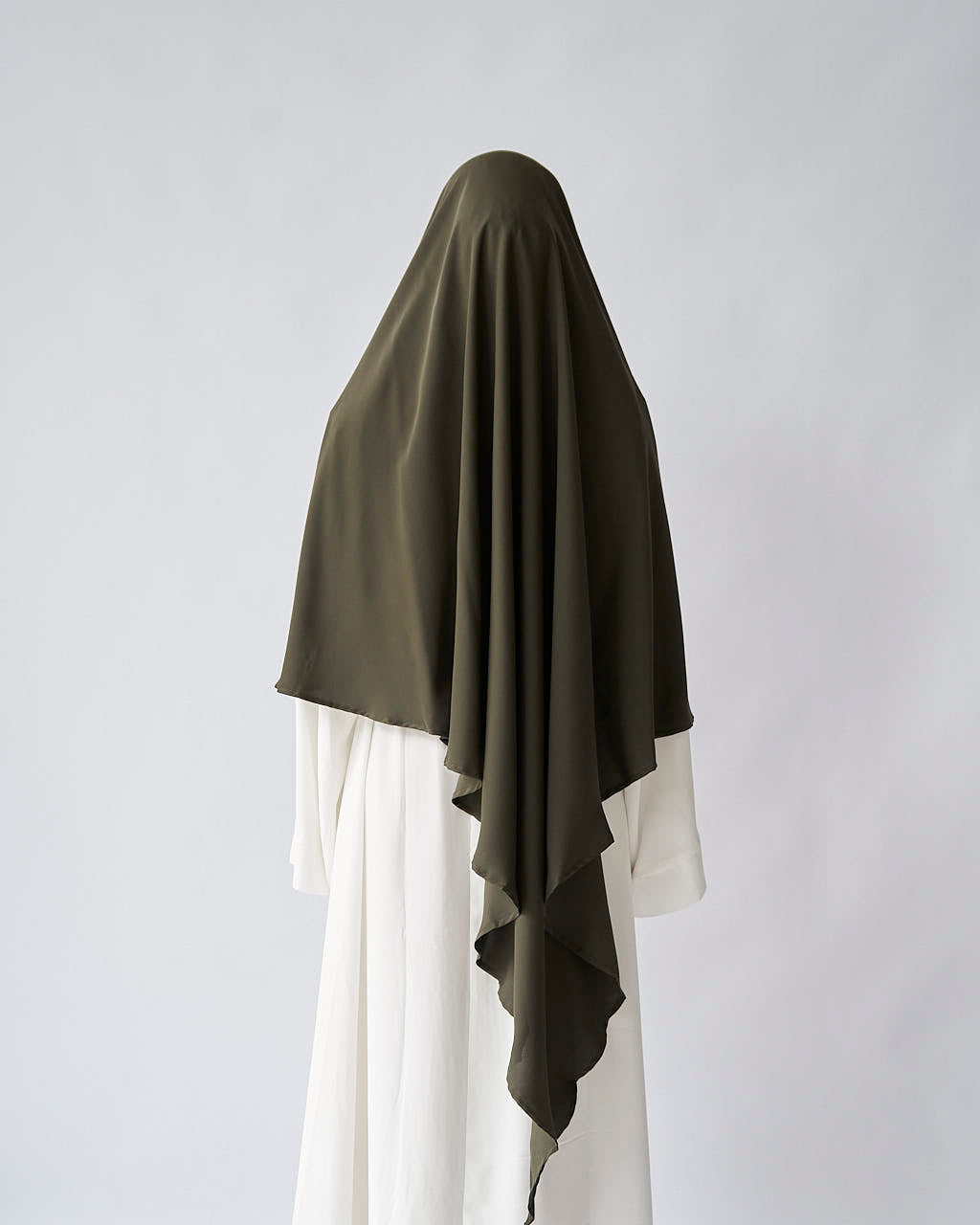
They are lengths. An abaya is cut loose through the body, so width is rarely the constraint. What actually decides whether a garment fits is how tall you are, because the hem needs to reach your ankle without pooling on the floor.
That makes our size data unusual. It is, in effect, a height distribution of several thousand customers.
What the Distribution Looks Like
Across 4,485 sized garment orders in the year to September 2026:
| Size | Equivalent | Orders | Share |
|---|---|---|---|
| 52 | S | 1,228 | 27.4% |
| 54 | M | 1,121 | 25.0% |
| 56 | L | 976 | 21.8% |
| 58 | XL | 675 | 15.1% |
| 60 | 2XL | 485 | 10.8% |
The two shortest lengths account for 52.4% of all sized orders. The two longest account for 25.9%, which is less than size 52 on its own.
Why the Curve Leans Short
Three things are happening at once, and separating them matters.
It is a length curve, not a body-size curve. This is the most important point and the one most often misread. A woman wearing size 52 is not necessarily smaller than a woman wearing 58. She is shorter. Because the cut is generous through the body, two women of very different builds and the same height will often order the same size.
Shoes change the answer. The length you need depends on what is on your feet. The same customer may sit between two sizes depending on whether she wears flats or any heel. Our guidance is to take the shorter length for flats and the longer for heels, which nudges the distribution toward the shorter end for a customer base that largely wears flats.
Short is safer than long. An abaya that is slightly short reads as intentional. One that is too long pools on the ground, wears out at the hem, and is a genuine trip hazard when rising from sujood. Customers who are unsure tend to size down, and that caution shows up in the curve.
The Practical Consequence for Ordering
Because length is the variable, a single measurement answers the question.
Measure from the top of your shoulder to the floor, wearing the shoes you expect to wear with the abaya. Choose the length that reaches your feet without pooling. That is the whole method, and it is more reliable than converting from a dress size you already know.
If you fall between two sizes:
- Wearing flats, take the shorter length.
- Wearing any heel, take the longer.
- Unsure, take the shorter. It is the more forgiving error.
What It Means for Ordering Around Eid
There is a stock consequence buried in this data that is worth knowing as a shopper.
Sizes at the ends of the range, 52 and 60, are ordered by fewer people, so fewer are produced. In a peak period they sell out first, and once they are gone they are gone for the season.
Our busiest month ran 5.5 times the volume of our quietest. That kind of surge tests depth at the edges of a size range harder than anywhere else. If you wear 52 or 60, ordering three to four weeks before Eid is not caution, it is the difference between getting the garment and not.
Why Retailers Should Publish This
Size distribution is treated as commercially sensitive, which is why almost nobody shares it. We think that is the wrong instinct for a category where the sizing system is genuinely unfamiliar.
A customer who understands that 52 means a length rather than a body size makes a better decision and returns the garment less often. Publishing the curve is a faster way to explain that than any size chart.
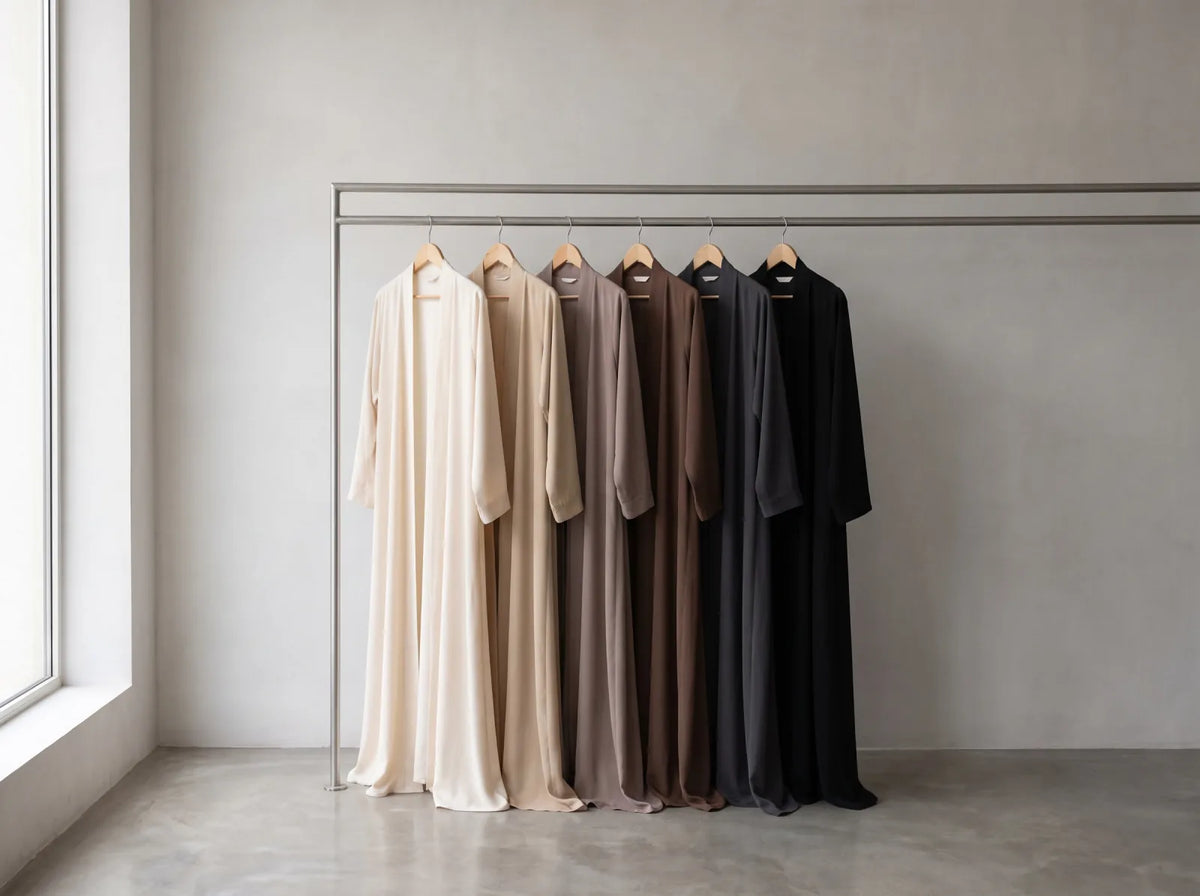
Our full range is in abayas, and the closed abayas are the easiest place to start if it is your first.
Methodology
Figures are from Shopify order data for fajrnoor.com covering 22 September 2025 to 21 September 2026, grouped by product variant title. The analysis covers 4,485 orders of sized garments across the five standard lengths. Orders without a size variant, such as jewellery, books and one-size accessories, are excluded.
Size availability affects these numbers. A size that sells out is a size that cannot be ordered, so the distribution reflects supply as well as demand, particularly in peak months. This is one Australian retailer's data and not a measure of the height distribution of Muslim women generally.
If you would like to cite these figures, please link back to this page.
Frequently Asked Questions
What is the most common abaya size?
Size 52, equivalent to S, at 27.4% of 4,485 sized orders. Size 54 follows at 25.0%. Together the two shortest lengths make up 52.4% of orders.
Does abaya size mean body size?
No. Abaya sizes are lengths. The cut is loose through the body, so what decides fit is your height rather than your build. Two women of different builds and the same height often order the same size.
How do I measure for an abaya?
Measure from the top of your shoulder to the floor while wearing the shoes you expect to wear with it. Choose the length that reaches your feet without pooling on the ground.
What if I am between two abaya sizes?
Take the shorter length if you wear flats and the longer if you wear any heel. If you are unsure, take the shorter, because slightly short looks intentional while too long is a trip hazard.
Which abaya sizes sell out first?
The ends of the range, 52 and 60, because fewer are produced. In peak periods around Eid they go first, so order three to four weeks ahead if you wear either.
Can I cite these figures?
Yes. Please attribute them to Fajr Noor and link to this page so readers can see the methodology.


Leave a comment
All comments are moderated before being published.
This site is protected by hCaptcha and the hCaptcha Privacy Policy and Terms of Service apply.