

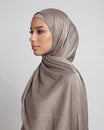
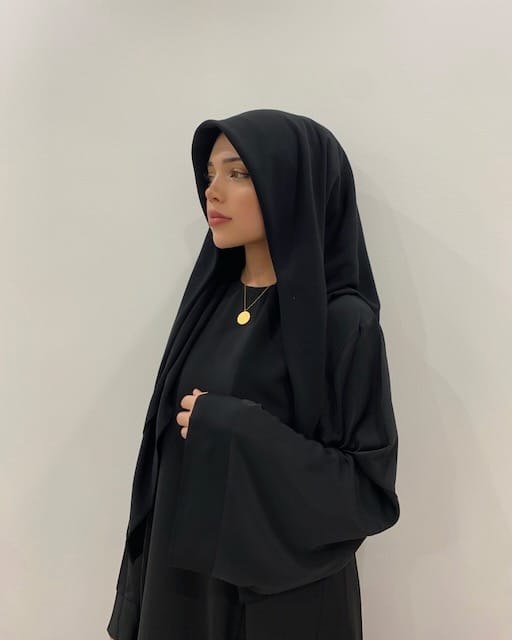
Black Is the Hardest Colour to Get Right
A black abaya sounds like the safe purchase. It is actually the least forgiving one, and this is why so many women own several and reach for only one.
Black hides detail. It flattens texture and conceals embroidery, so the things that make a garment interesting in other colours simply disappear. What is left is cut, drape and the quality of the black itself. There is nowhere for a poorly made garment to hide.
That is also why a good black abaya is the most useful thing in a modest wardrobe. When it is right, it works for everything.
Not All Blacks Are the Same Black
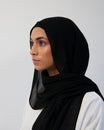
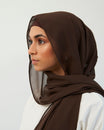
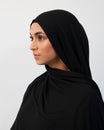
Hold two black garments together in daylight and you will see it immediately. One is a deep, even, slightly warm black. The other has a grey, blue or brown cast.
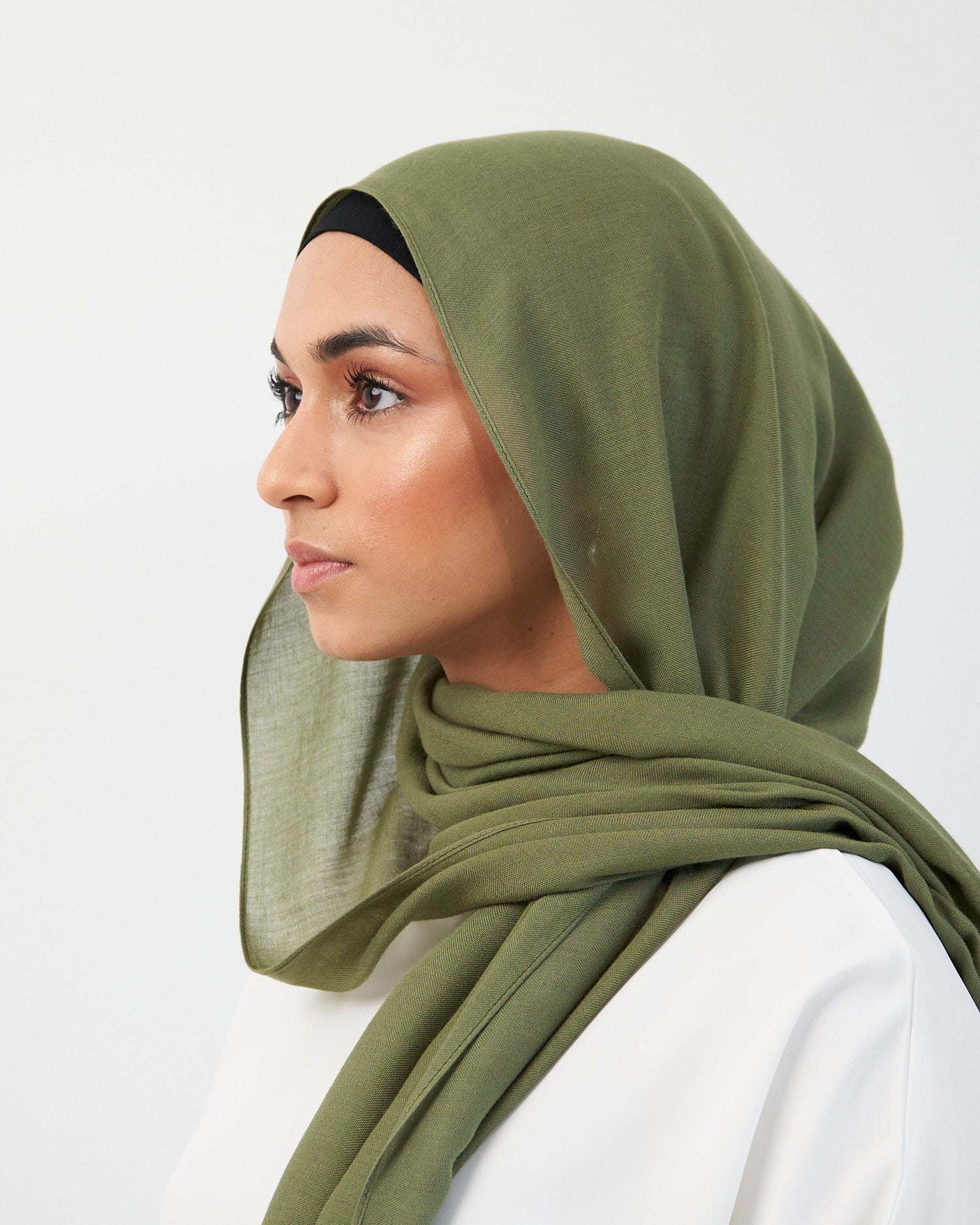
This matters for a practical reason. If your abaya and your hijab are different blacks, the mismatch is visible in every photograph and in every mirror, even when neither piece looks wrong alone.
Two things follow. Buy your black hijabs from the same place as your black abaya where you can. And check black garments in daylight rather than under indoor lighting, which disguises the cast almost completely.
Black also fades, faster than most colours and much faster in Australian sun. Dry in shade, always.
What Separates a Good Black Abaya From a Cheap One
Four things, in order of how much they matter.
Opacity. Thin black fabric goes translucent in direct sun in a way that is invisible indoors. This is the most common failure and the most uncomfortable to discover in public. A good abaya is opaque in full daylight without a slip underneath.
The drape. Good fabric falls in long vertical lines from the shoulder. Poor fabric either clings or stands away stiffly. Since black conceals everything else, drape is most of what you are seeing.
The shoulder seam. This is where cheap construction shows first. It should sit at your actual shoulder. Too wide and the whole garment hangs off you; too narrow and it pulls when you raise your arms.
Hem and sleeve finishing. Look at how the edges are done. A rolled or well-finished hem holds its shape for years. A raw or barely finished one twists after a few washes and cannot be corrected.
Choosing a Cut
A-line is fitted at the shoulder and widens gradually to the hem. It is the most universally flattering shape and the easiest to wear daily. If you are buying one black abaya, buy this.
Closed front gives full coverage with nothing to coordinate underneath. You put it on over whatever you are wearing and you are dressed. Our closed abayas are the most practical everyday option.
Open front is layered over an inner outfit. More versatile across seasons and more visually interesting, but it requires coordinating what goes underneath.
Wide or bell sleeves look elegant and are genuinely impractical for cooking, wudu and small children. Many women love them and manage. Know which you are before you buy.
The Details Worth Paying For
In black, the details you notice are the functional ones rather than the decorative ones.
- A belt, which lets you change the silhouette from loose to defined without a second garment.
- Cuffed sleeves, which stay where you put them rather than falling forward.
- Pockets, which not every abaya has. If you want them, check before ordering rather than assuming. Our Essential Abayas collection is the range with pockets.
- Tonal embroidery, black on black. It is the only kind of detail that reads on a black garment, and it shows as texture rather than pattern.
The Khatijah is our best-selling black abaya: closed front, A-line, wide bell sleeves with a deep folded cuff, and a self-fabric tie belt included. It is made in premium Nidha, and it has no pockets, which is worth knowing before you order.
Getting the Size Right
Abaya sizing is by length rather than by body measurement, which confuses people used to buying by dress size. Ours run 52 to 60, mapping to S through 2XL.
Measure from the top of your shoulder to the floor, wearing the shoes you expect to wear with it. Choose the length that reaches your ankle or just above the floor without pooling.
Because the cut is loose through the body, width is rarely the issue. Length is. Between sizes, take the shorter for flats and the longer if you wear any heel.
Making One Black Abaya Work for Everything
This is where black earns its reputation. One good garment covers the whole week if you vary what sits around it.
- Everyday: jersey hijab, trainers, no jewellery.
- Work: belt at the waist, modal hijab, flat pointed shoes, small earrings.
- Evening: satin hijab, one statement necklace, a heel.
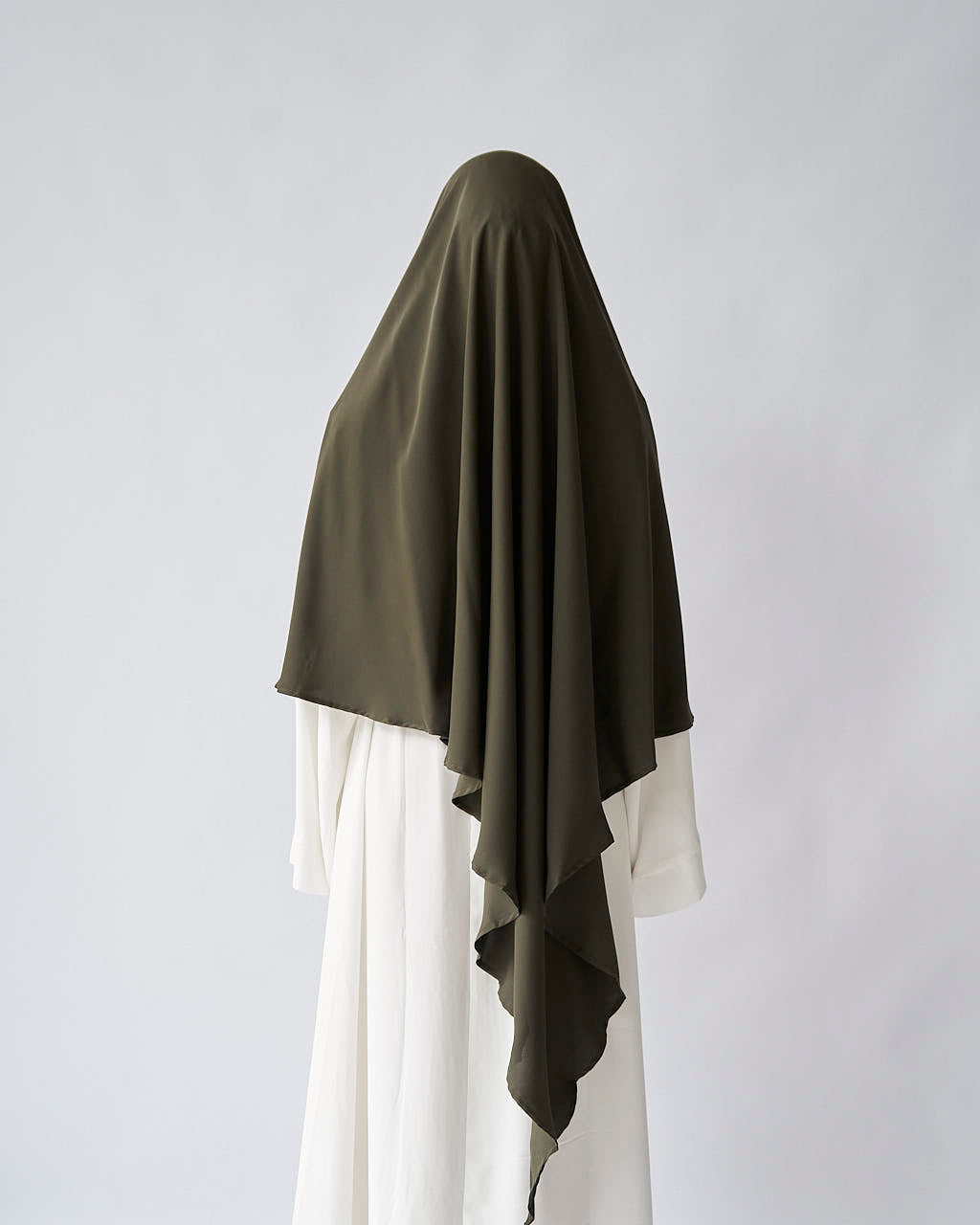
- Masjid: khimar over the top, flats you can slip off.
Four distinct outfits, one garment. That is the argument for spending more on a single black abaya than on three cheaper ones in different colours.
Browse the full range in abayas, or the Khatijah abayas if you want the bell-sleeve cut specifically.
Caring for It
Wash cold and inside out, which slows fading at the seams. Dry in shade, never in direct sun, because Australian light will take a deep black to a dusty charcoal within a season. Iron on low, inside out. Store hanging, with room either side so the shoulders keep their shape.
Frequently Asked Questions
How do I know if a black abaya is good quality?
Check opacity in daylight, how the fabric falls from the shoulder, whether the shoulder seam sits at your actual shoulder, and how the hem is finished. Black conceals decoration, so construction is most of what you are buying.
Why do my black abaya and black hijab look different?
Because blacks vary. Some are warm, some have a grey or blue cast, and the difference is invisible indoors but obvious in daylight. Buying both from the same source avoids it.
What size black abaya should I order?
Measure from the top of your shoulder to the floor in the shoes you will wear. Sizes run 52 to 60, which maps to S through 2XL. Between sizes, take the shorter for flats and the longer for heels.
Do black abayas have pockets?
Not all of them. Our Khatijah does not, while the Essential Abayas range does. It is worth checking the product description rather than assuming, since it is one of the most common surprises after ordering.
How do I stop my black abaya fading?
Wash cold and inside out, and dry in shade. Direct Australian sun will take a deep black to a dull charcoal within a season, and that change cannot be reversed.
Is a closed or open black abaya better?
Closed is more practical for everyday, because you put it on over anything and you are dressed. Open is more versatile across seasons and more visually interesting, but it needs a coordinated outfit underneath.

Leave a comment
All comments are moderated before being published.
This site is protected by hCaptcha and the hCaptcha Privacy Policy and Terms of Service apply.