
Judge a Fabric by What It Does
Fabric names tell you almost nothing useful. What you actually need to know about a hijab fabric is four things: does it grip or slip, is it warm or cool, is it sheer, and does it need a cap and pins.
Answer those and you can choose confidently without touching anything. This guide covers the six fabrics you will actually encounter, and it is honest about what each one costs you as well as what it gives.
Jersey
What it is. A knitted fabric rather than a woven one. That single difference explains everything else about it.
What it does. Stretches, grips, and stays exactly where you put it. No pins required. It is the most secure hijab fabric there is, which is why it is almost always the right recommendation for someone new to hijab.
What it costs you. Warmth and formality. Jersey has more body than a woven scarf, so it holds heat. It also drapes in soft rounded folds rather than crisp lines, which reads casual. It is not the fabric for a wedding.
Wear it for. Everyday, work, school runs, travel, chasing children, and any day where you cannot be adjusting a scarf. See the jersey hijabs.
Modal
What it is. A soft fabric made from processed cellulose, valued for drape and softness.
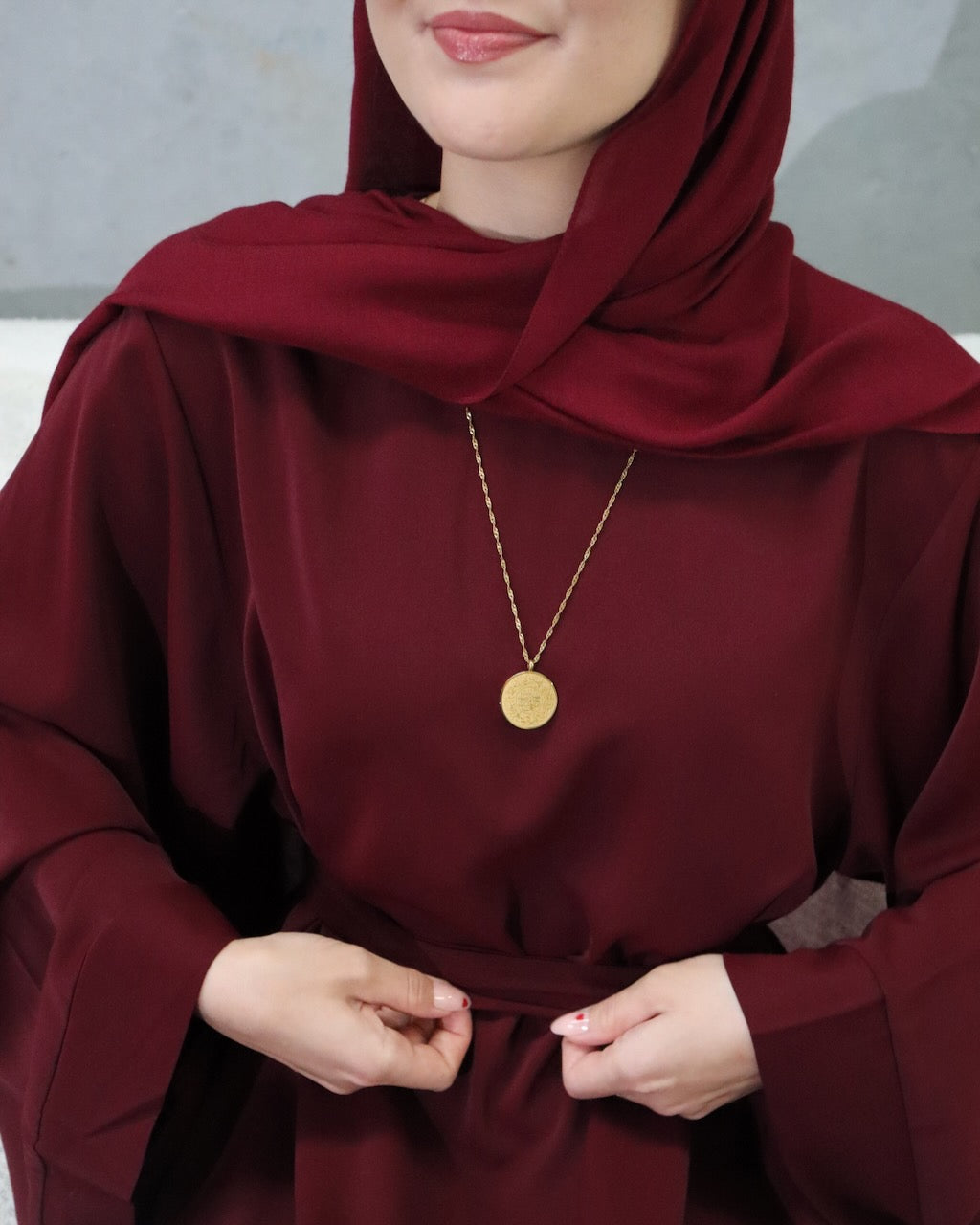
What it does. Falls in a fluid line without bulk. It is lighter on the head than jersey and softer against the skin than most woven scarves. It sits between casual and formal, which is why it suits more situations than anything else.
What it costs you. Grip. Modal has less natural hold than jersey, so it wants a cap underneath. With one, it holds all day. Without one, it will creep.
Wear it for. Almost anything. If you were only allowed one fabric, this is the sensible choice. See the modal hijabs.
Chiffon
What it is. A lightweight woven fabric with an open structure, which is why it is semi-sheer.
What it does. Moves air, drapes lightly, and layers beautifully. In a hot room it is genuinely cooler than a knitted fabric because air passes through it.
What it costs you. Sheerness and security. It must be worn over a cap in a matching or complementary tone, and it needs pins because it slides against itself. It is also the fabric most likely to catch on jewellery.
Wear it for. Occasions, warm weather and layered styles. Our chiffon is sold as a chiffon hijab set with a matching cap, which solves the sheerness problem in the same purchase.
Satin and Silk
What it is. A weave with a smooth, light-reflecting face.
What it does. Carries light. This is the entire point of it and the reason it photographs so much better than matte fabrics. It also creates less friction against hair than cotton or jersey.
What it costs you. Grip, more than any other fabric here. Satin will slide against itself, against your hair and against your cap. Pin generously and use a cap with texture.
Wear it for. Weddings, Eid, evening events, and anywhere you will be photographed. See the satin silk hijabs.
Pashmina
What it is. A heavier woven scarf with visible texture, often with a soft brushed surface.
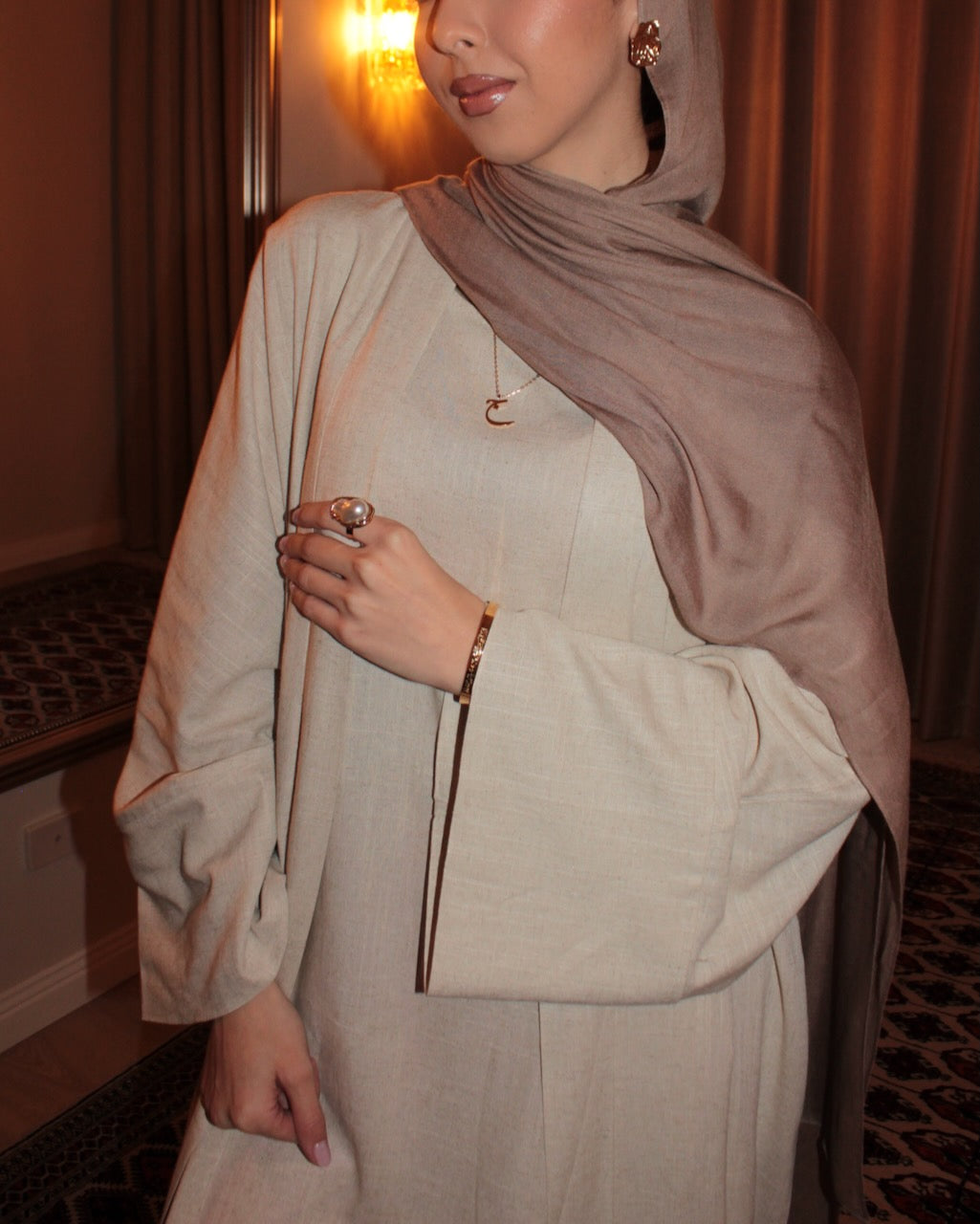
What it does. Holds its shape, provides real warmth, and works as a wrap across the shoulders as well as a head covering. The texture gives it grip that smooth fabrics do not have.
What it costs you. Weight and season. A pashmina is a genuine winter garment and it will be too warm across most of an Australian summer.
Wear it for. Winter, travel where you want one piece that doubles as a wrap, and shawl styles. See the pashmina hijabs.
Crinkle
What it is. Fabric with a permanent textured crimp set into it.
What it does. The texture grips, which makes it more secure than a smooth woven scarf of similar weight. It also hides creases entirely, which makes it excellent for travel.
What it costs you. A crisp line. Crinkle will never look sleek, because texture is the point.
Wear it for. Travel, relaxed everyday wear, and anyone who dislikes ironing.
Quick Comparison
- Most secure: jersey, then crinkle.
- Coolest in heat: chiffon, then modal.
- Warmest: pashmina.
- Best for photographs: satin and silk.
- Most versatile: modal.
- Needs a cap: everything except jersey.
- Needs pins: chiffon and satin, always.
Fabric and Australian Weather
Most hijab fabric advice is written for northern hemisphere climates and it shows.
In a Brisbane or Darwin summer, breathability beats everything. Open weaves move air; knitted fabrics hold it. Chiffon and lighter woven scarves genuinely feel cooler than jersey, even though jersey is more convenient.
In Melbourne or Canberra winter, pashmina earns its place and doubles as a wrap. For most of the rest of the year, across most of the country, modal is the fabric that handles the widest range of days.
Caring for Each
All of these want cold water, a gentle cycle and shade drying. Beyond that:
- Jersey: never tumble dry. It is the fastest way to make it bobble.
- Chiffon and satin: mesh bag, and press through a cloth rather than ironing directly.
- Pashmina: fold, never hang. The weight pulls it out of shape on a hook.
- Crinkle: do not iron it. You will remove the texture you paid for.
Frequently Asked Questions
Which hijab fabric is best for beginners?
Jersey. It grips on its own, so it holds without pins and does not need constant adjusting while you are still learning to wrap.
What is the coolest hijab fabric for summer?
Chiffon, because its open weave lets air pass through. Modal is the next best and is more practical for everyday wear since it is not sheer.
What is the difference between modal and jersey?
Jersey is knitted, so it stretches and grips without pins but carries more warmth. Modal is softer and lighter with a more fluid drape, but it needs a cap underneath to stay in place.
Which hijab fabric does not need pins?
Jersey, and to a lesser extent crinkle, because its texture provides grip. Chiffon and satin always need pins.
Which fabric is best for photographs?
Satin or silk, because the surface reflects light. Matte fabrics photograph flatter, which is why occasion wear tends toward satin.
Do I need a different hijab for winter?
If you are somewhere genuinely cold, yes. A pashmina provides real warmth and doubles as a shoulder wrap. In warmer parts of Australia a modal scarf will cover most of the year.

Leave a comment
All comments are moderated before being published.
This site is protected by hCaptcha and the hCaptcha Privacy Policy and Terms of Service apply.