
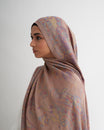
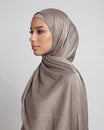
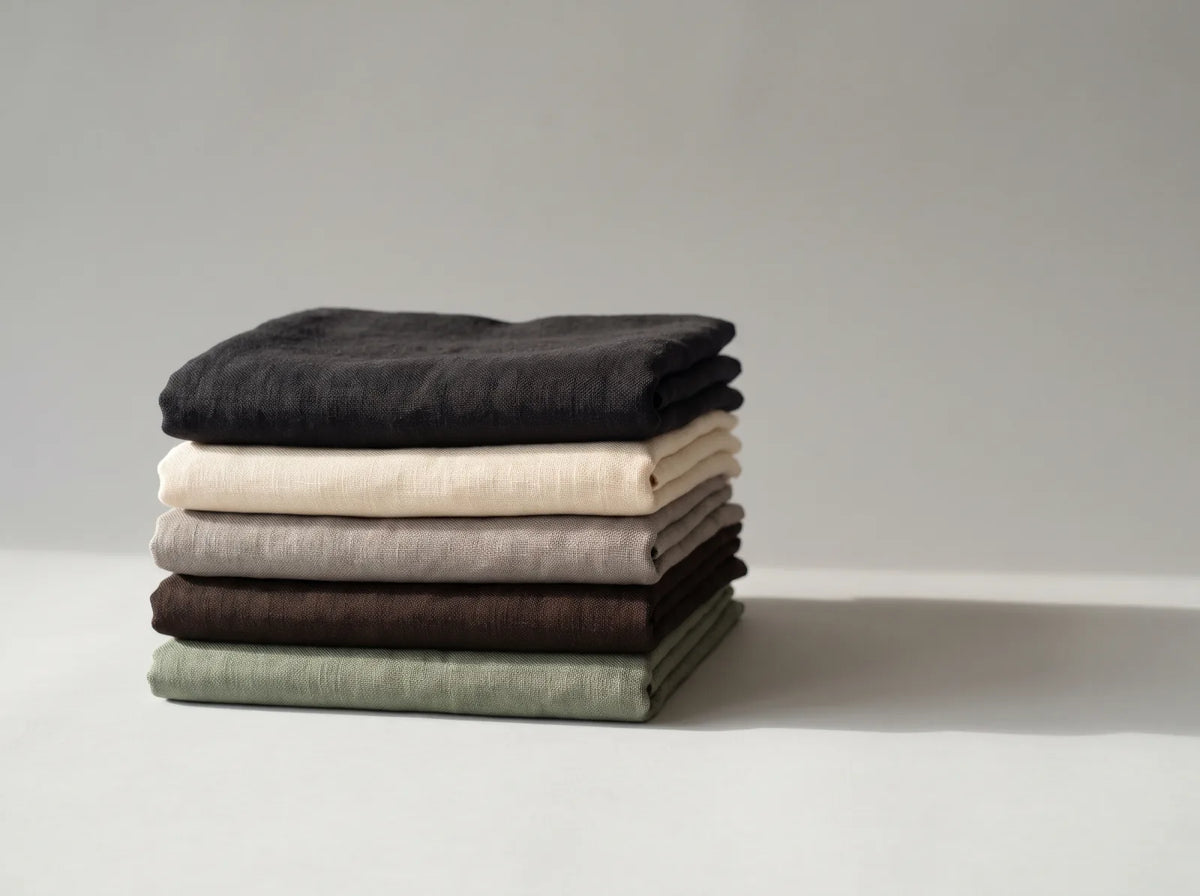
Start With the Day, Not the Fabric
Most guides to choosing hijabs for women start with fabric names. That is the wrong end of the question. The better question is what your day asks of you. A hijab that is perfect for a lecture theatre is a poor choice for a twelve-hour shift on your feet, and the scarf that photographs beautifully at a wedding will slide off your head during school pick-up.
So begin here. Write down the four or five situations you actually dress for in a normal month. School run. Work. Uni. Masjid. A gathering where you want to feel considered. That list is your buying brief, and it will save you from the drawer full of scarves that never get worn.
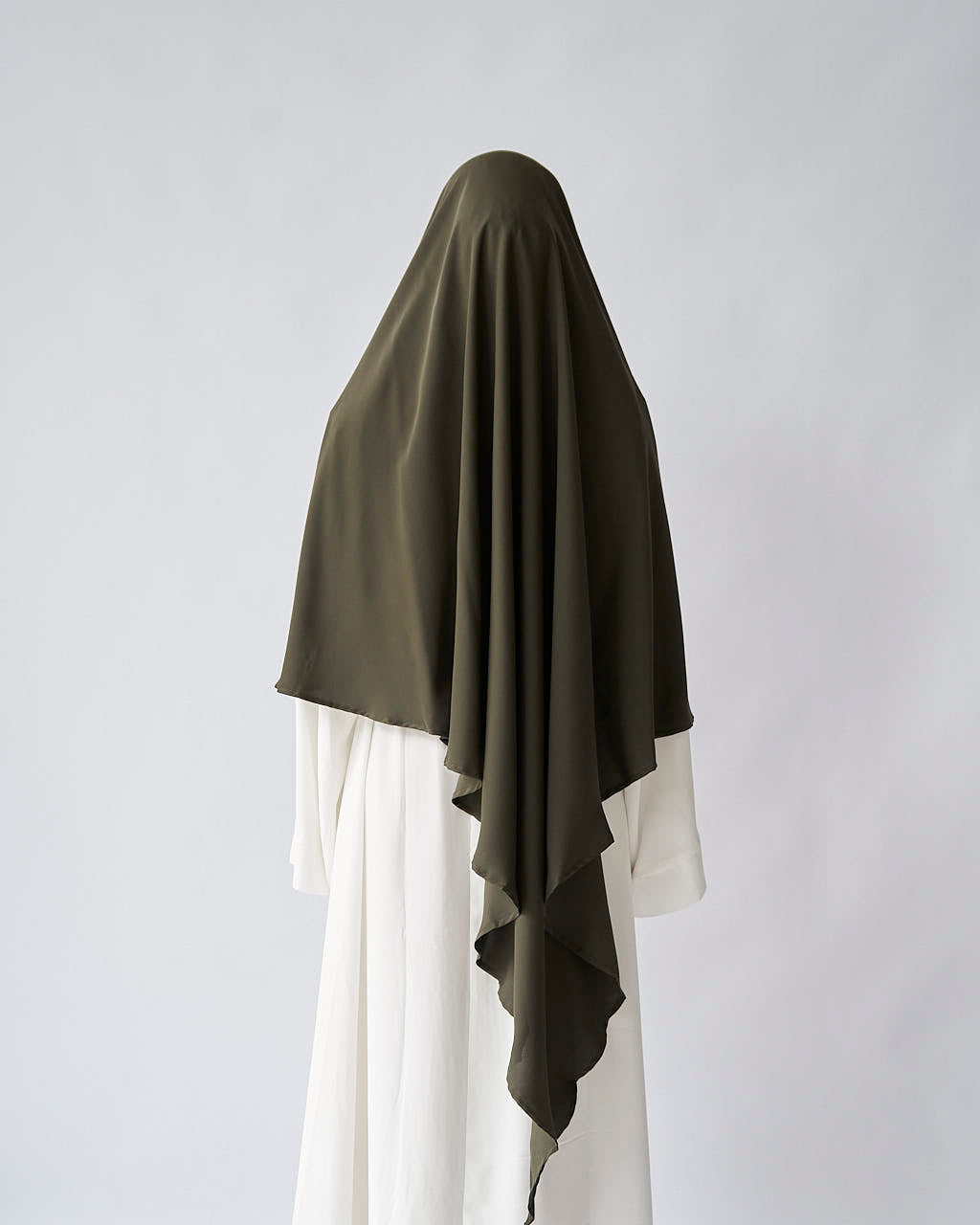
Once you know the day, the fabric follows easily. Our full hijab collection is organised by fabric for exactly this reason.
What Each Fabric Actually Does
Jersey
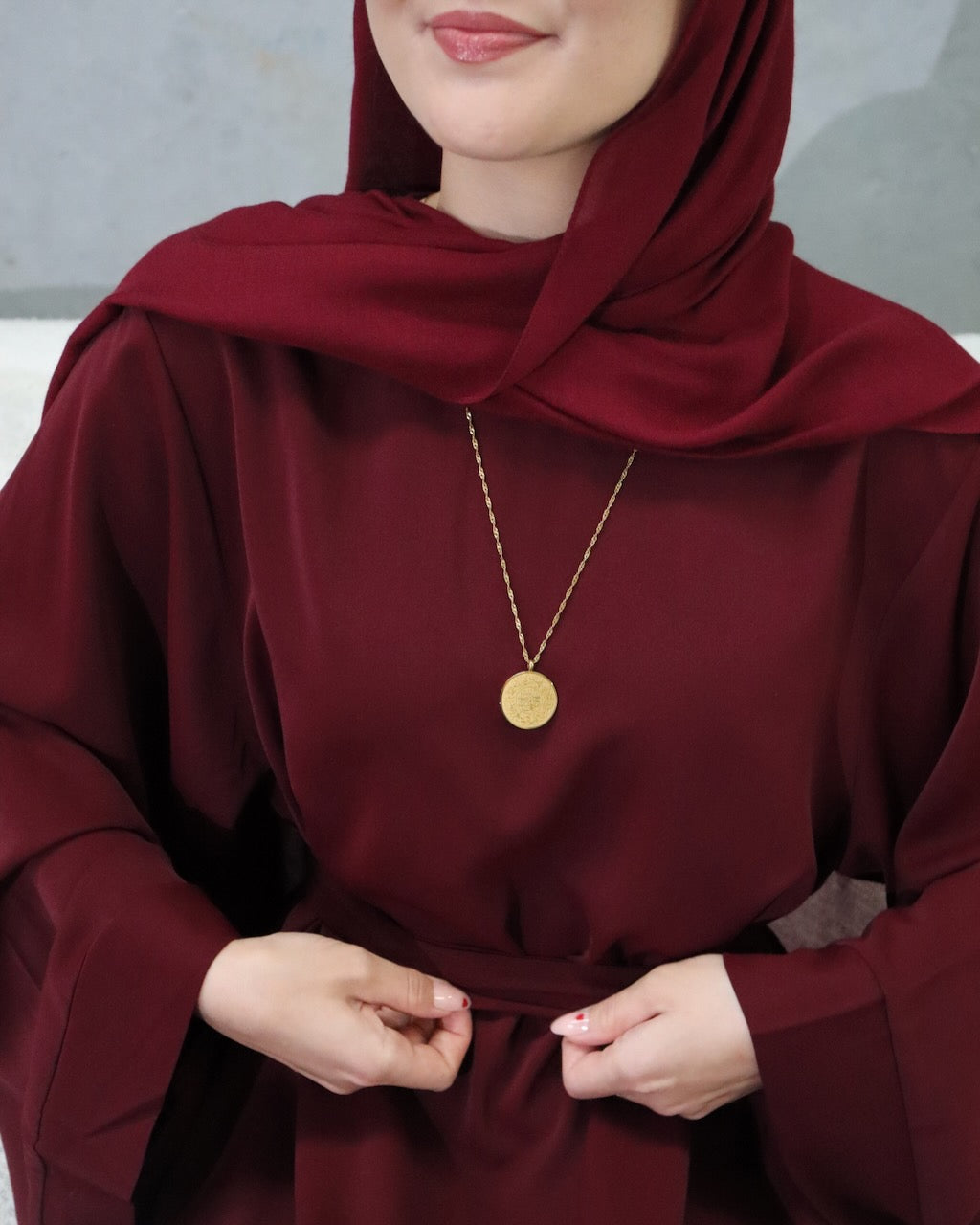
Jersey is knitted rather than woven, which is why it stretches and why it grips. It stays where you put it without a single pin. That makes it the honest answer for anyone who is new to hijab, anyone chasing a toddler, and anyone who cannot be adjusting their scarf in a bathroom mirror every hour.
The trade-off is weight. Jersey has more body than a fine woven scarf, so in a Brisbane summer it can feel warm. It also drapes in soft folds rather than sharp ones, so it reads casual more than formal. Browse the jersey hijabs if security is your priority.
Modal
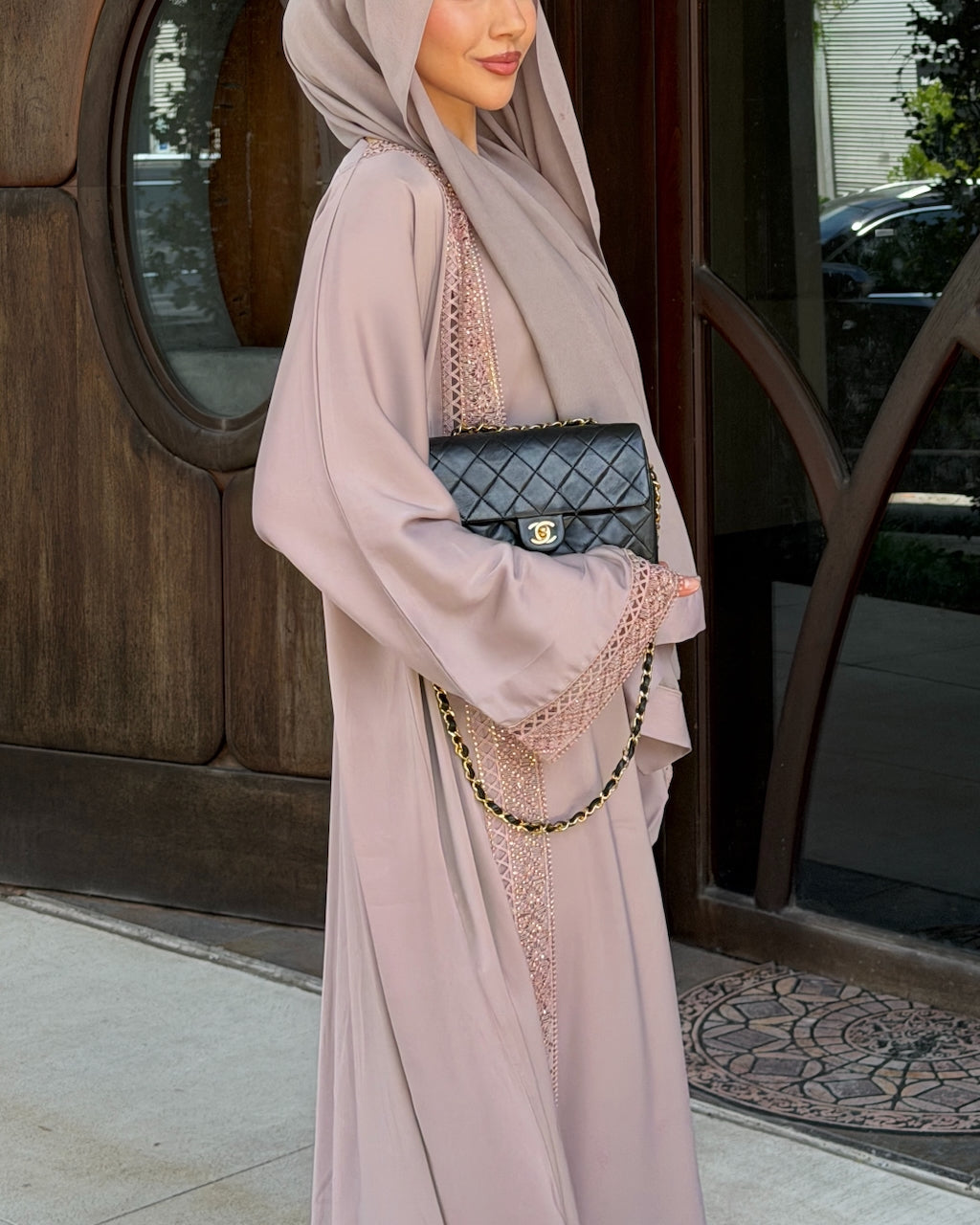
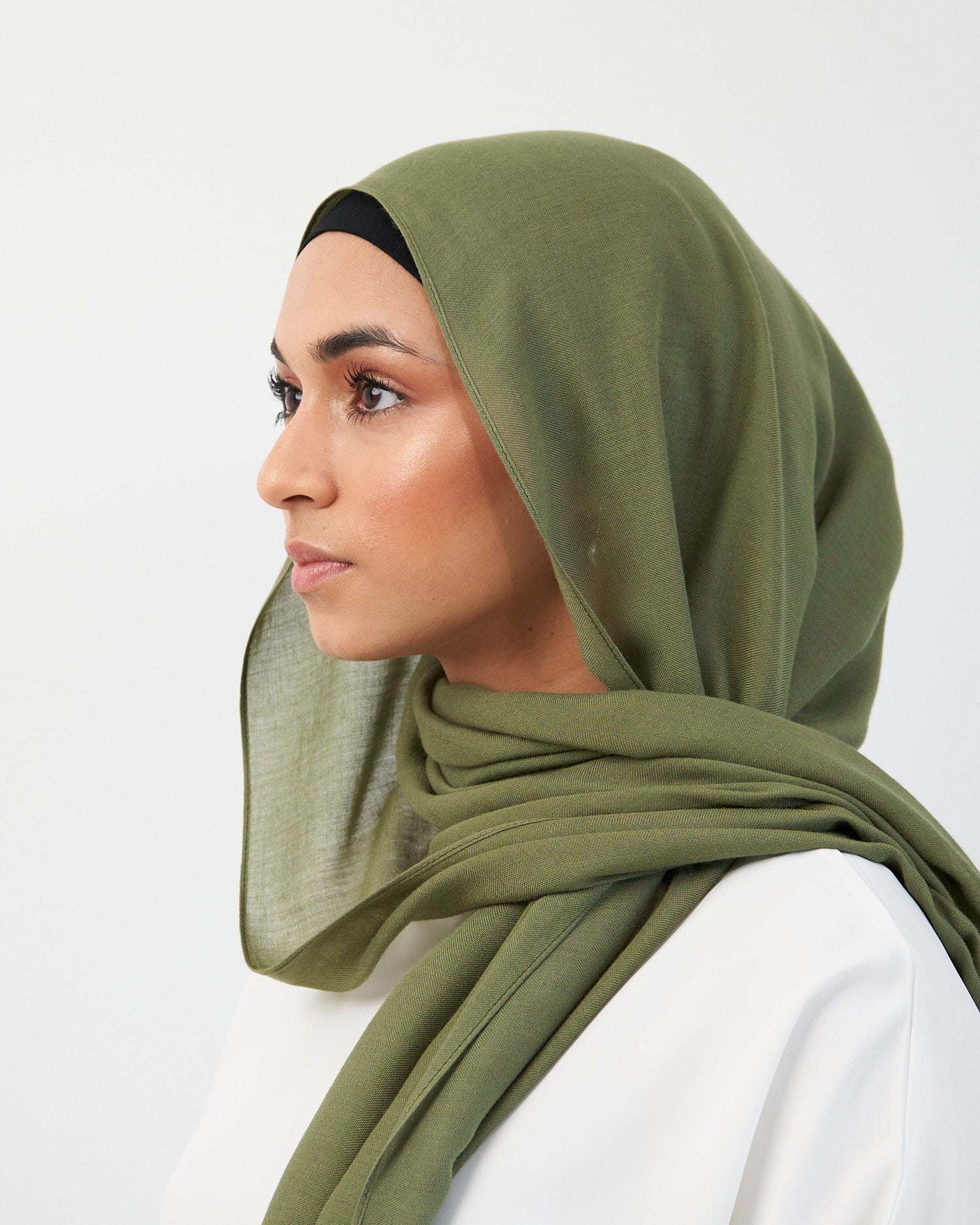
Modal is the middle ground and, for most women, the most useful scarf in the drawer. It is softer than jersey, lighter on the head, and it falls in a fluid line instead of holding its shape. It suits a workplace, it suits a weekend, and it does not announce itself.
It has less natural grip than jersey, so it wants an undercap beneath it. With one, it holds all day. The modal hijabs are the range we point most new customers toward when they ask for one scarf that does everything.
Chiffon and satin
These are the occasion fabrics. Chiffon is airy and semi-sheer, so it is layered or worn over a cap in a matching tone. Satin carries light, which is why it photographs so well and why it belongs at a nikah rather than a supermarket. Both are slippery and both need pins.
Pashmina
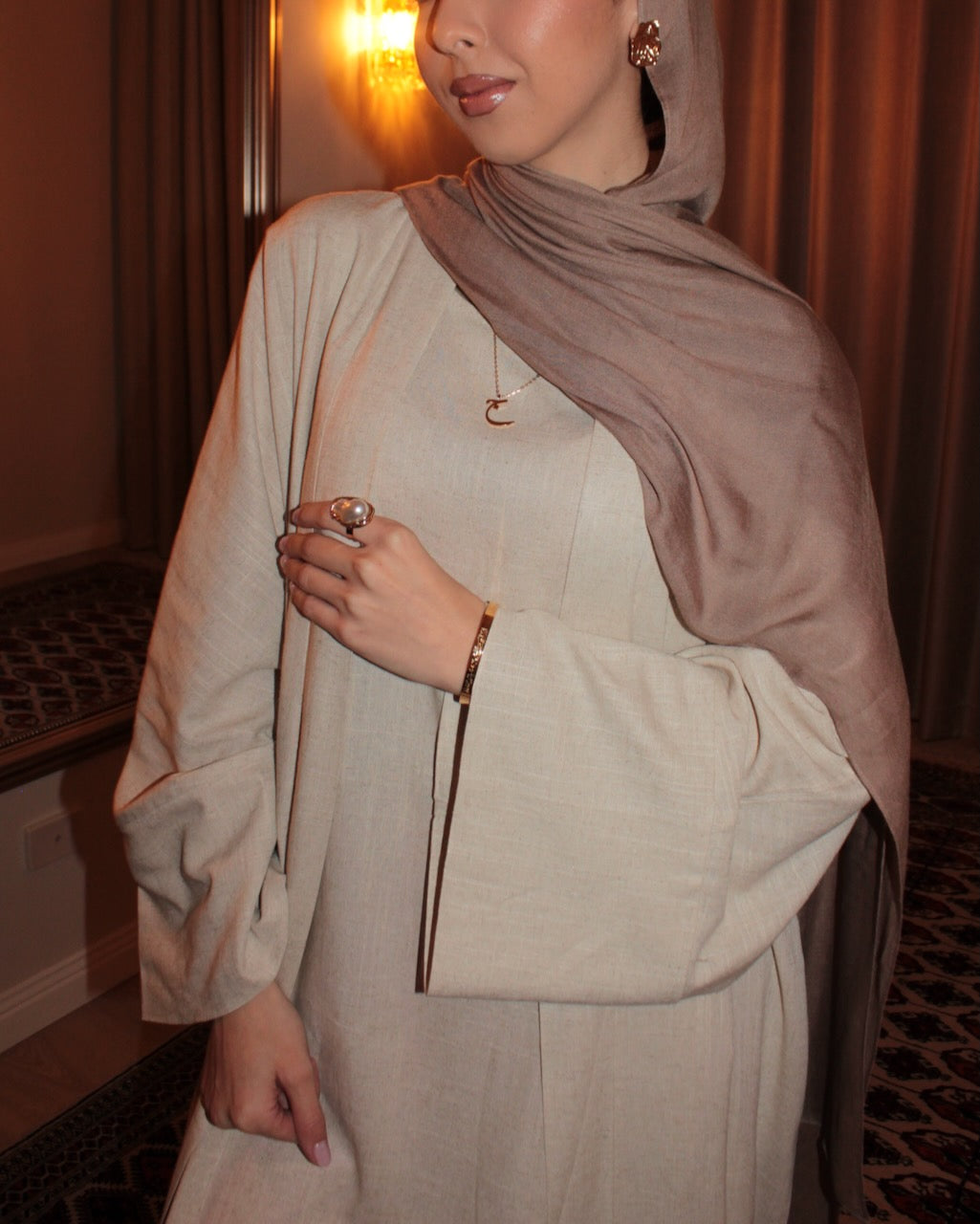
Pashmina is the warm one. It has weight and texture, it holds a shape, and it works as a wrap as much as a scarf. In a Melbourne winter it earns its place. In February it will sit in the cupboard.
Size Is the Thing Nobody Explains
A scarf that will not stay put is usually not the wrong fabric. It is the wrong size for the style you are attempting.
- Around 70 by 180 centimetres is the standard rectangular scarf. It wraps, it drapes over one shoulder, it suits most everyday styles.
- Larger square scarves fold into a triangle and give more coverage across the chest, which is why they suit fuller styles and layered looks.
- Instant and slip-on styles remove the decision entirely. You pull them on. For a hospital shift or a morning where you are already late, they are worth owning.
If you are between styles, buy the longer scarf. You can always wrap the excess. You cannot add length that is not there.
Colour: Build a Base, Then Add
The women who get the most wear out of the fewest scarves do the same thing. They own a small base that goes with everything, and then they buy colour deliberately.
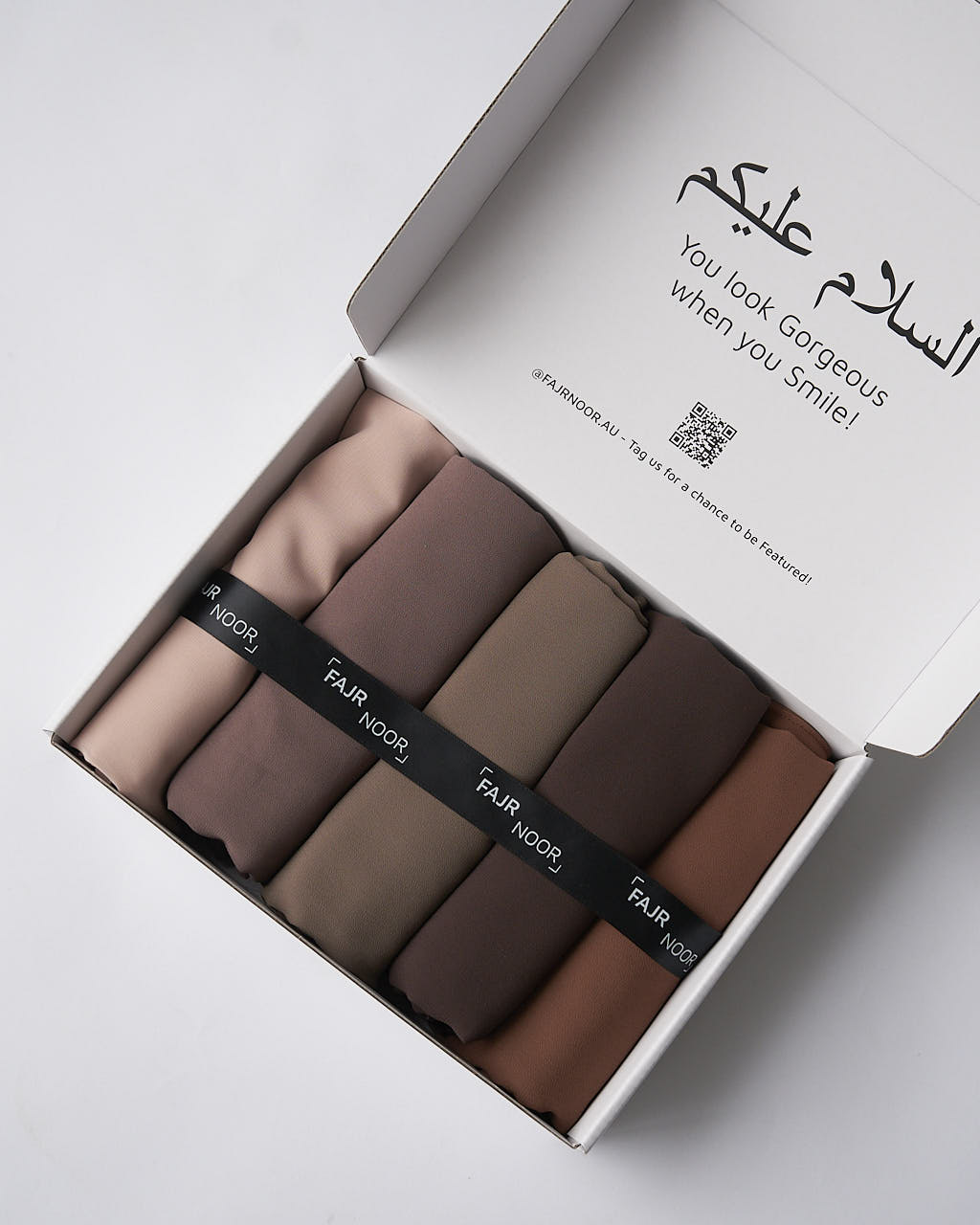
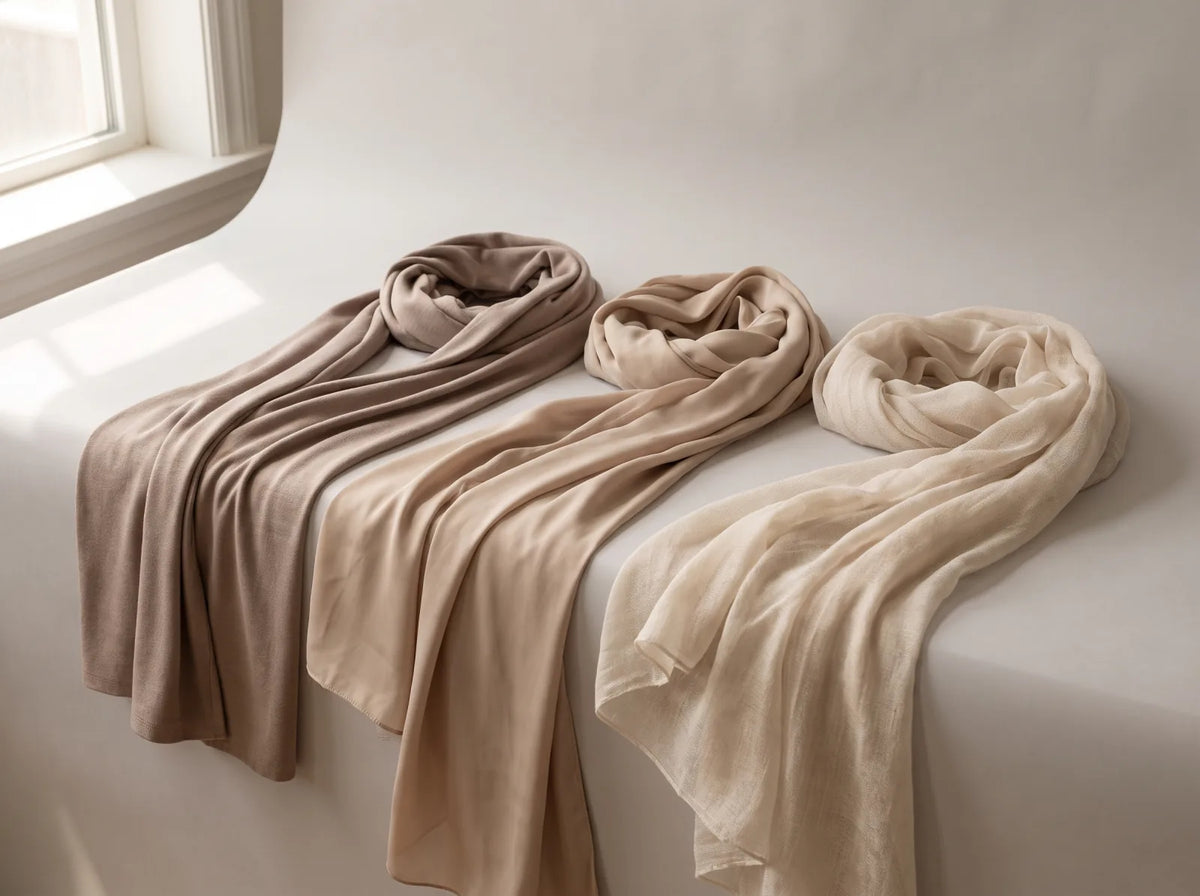
A workable base is black, a warm cream or stone, a soft grey, and one brown in the family of your most-worn abaya. Four scarves. From there, add colour for the things you actually attend, not for the wardrobe you imagine.
One practical note for Australian light. Very bright whites can read harsh outdoors here in a way they do not indoors. A warm cream or oat sits more gently against most skin tones in full sun.
What to Buy First
If you are starting from nothing, this is the order that works:
- One jersey scarf in black. It will not move, and it goes with everything.
- Two undercaps, one black and one in a nude that is close to your skin. Everything sits better over a cap.
- One modal scarf in a neutral you like. This becomes your default.
- A packet of pins. Not optional.
That is a complete, working hijab wardrobe. Everything after it is preference rather than need.
Caring for Them So They Last
Hijabs rarely wear out. They get ruined. Nearly always in the wash.
- Wash in cold water on a gentle cycle, and put delicate fabrics in a mesh bag so they do not catch.
- Hang to dry in shade. A tumble dryer is the fastest way to bobble a jersey scarf, and Australian sun will fade colour faster than you expect.
- Iron on low, and for satin or chiffon, press through a cloth rather than directly.
- Store folded rather than on hooks. Hanging pulls the fabric out of shape over time.
Buying Online Without the Guesswork
The obvious difficulty with buying hijabs online is that you cannot feel the fabric or hold the colour against your face. Three things help.
Read what the fabric does rather than what it is called. Look for the behaviour: does it grip, does it slip, is it sheer, does it need a cap. Second, buy one before you buy five, even when a set is better value. Third, check the returns policy before you order. Ours is 30 days, and shipping is free on orders over $150.
Fajr Noor is an Australian brand that ships worldwide, and we are rated 4.8 out of 5 by more than 50,000 sisters globally. A portion of every month goes to Islamic Relief. If you would like to start somewhere simple, the hijab collection is the place.
Frequently Asked Questions
What is the best hijab fabric for beginners?
Jersey. It stretches and grips, so it stays in place without pins and without constant adjusting. Once you are comfortable with how a scarf sits, modal is the natural next step because it is lighter and drapes more softly.
How many hijabs do I actually need?
Four will cover a normal month: black, a cream or stone, a grey, and one brown or muted colour. Add two undercaps. Most women find they wear these far more than anything bought on impulse.
Do I need an undercap?
For jersey, no. For almost everything else, yes. A cap gives the scarf something to grip, stops it sliding back, and keeps your hairline covered without constant fixing.
Which hijab is coolest for Australian summers?
Lighter, more open weaves move more air than knitted fabrics. Chiffon and fine woven scarves feel cooler than jersey, though they need a cap and pins to stay secure. Lighter colours also sit better in strong sun.
How do I stop my hijab slipping?
Nine times out of ten it is the absence of a cap rather than the scarf itself. Add an undercap, then pin at the temple rather than under the chin. If it still moves, the scarf is likely too short for the style you are trying.
How should I wash my hijabs?
Cold water, gentle cycle, mesh bag for delicates, and dry in shade. Avoid the tumble dryer entirely. Store them folded rather than hung so they keep their shape.

Leave a comment
All comments are moderated before being published.
This site is protected by hCaptcha and the hCaptcha Privacy Policy and Terms of Service apply.