
Why Most Hijab Styles Fail
A hijab style is not really a look. It is a small piece of engineering. It has to survive wind, a car seatbelt, wudu, a long day, and being photographed from an angle you did not choose. Most of the hijab styles that circulate online are styled for one still image and fall apart within the hour.
What follows are fifteen that hold. Each one is matched to the fabric that makes it work, because the same style in the wrong fabric is the reason it slipped last time. If you want to match a style to something in your wardrobe, the hijab collection is organised by fabric.
Everyday Styles
1. The one-side drape
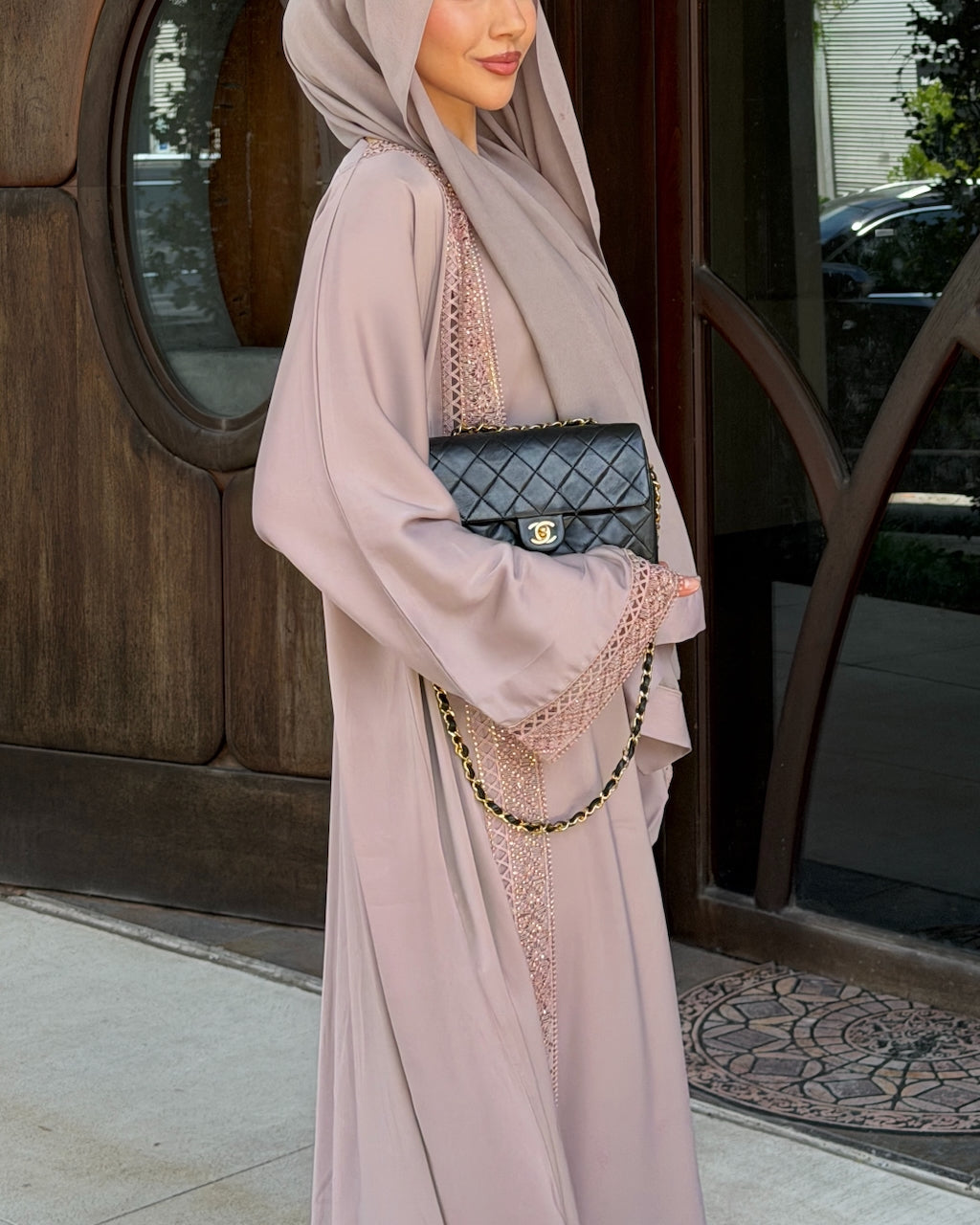
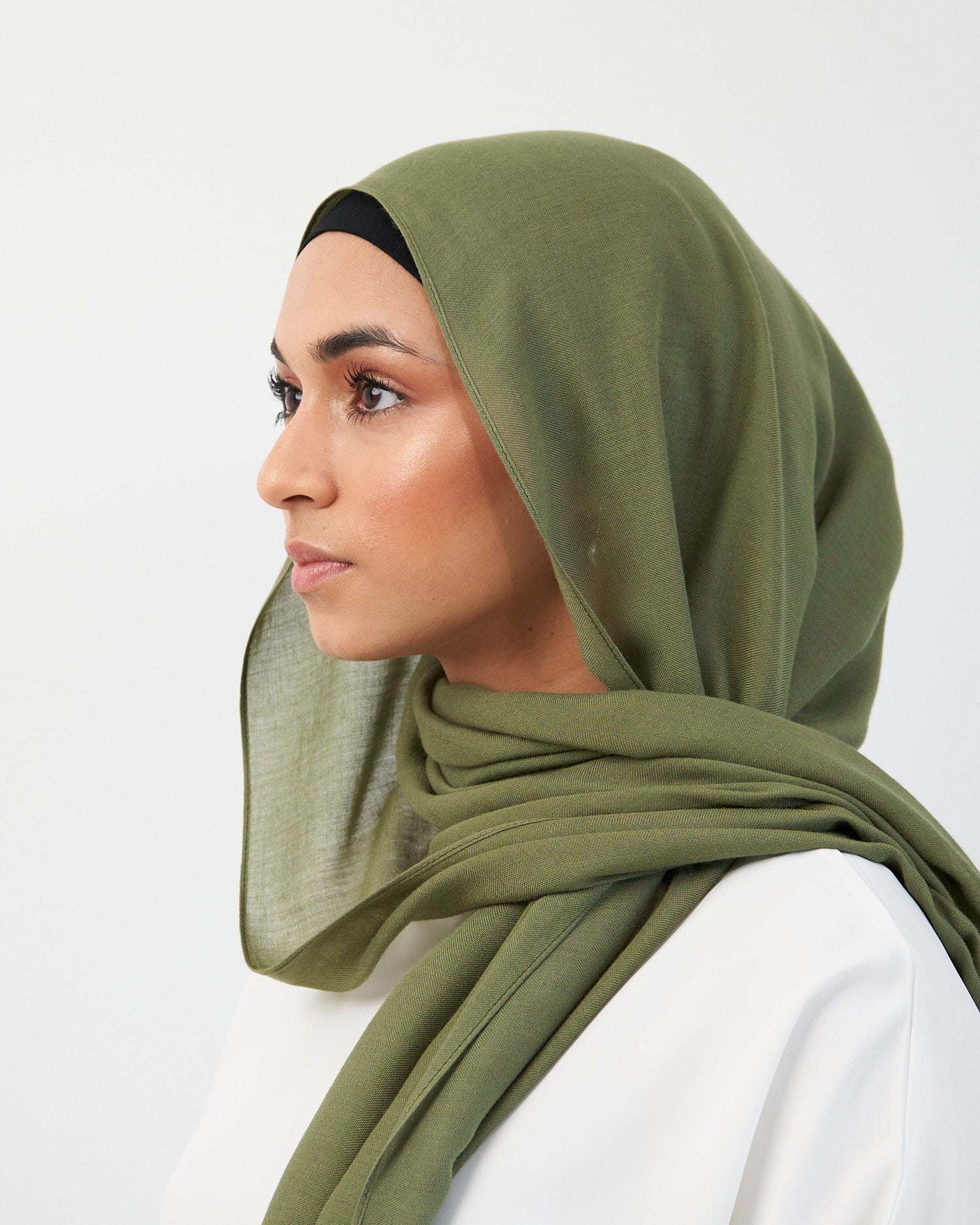
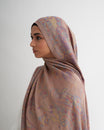
The default for good reason. One end short at the shoulder, the long end taken across and over the opposite shoulder, pinned at the temple. Works in almost anything. Best in modal, which falls without bulk.
2. The double-pin wrap
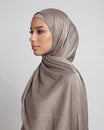
Both ends taken back and pinned behind the neck, with the excess left to fall. Secure enough for a full day of work. Jersey holds it without a single pin showing.
3. The tucked-in
Ends tucked into the neckline rather than draped. Nothing hangs, nothing catches. This is the style for cooking, for a lab, for anywhere loose fabric is a problem.
4. The instant pull-on
No wrapping at all. For hospital shifts, early flights and mornings where you are already late, an instant style is worth the space it takes in a drawer.
5. The loose shoulder wrap
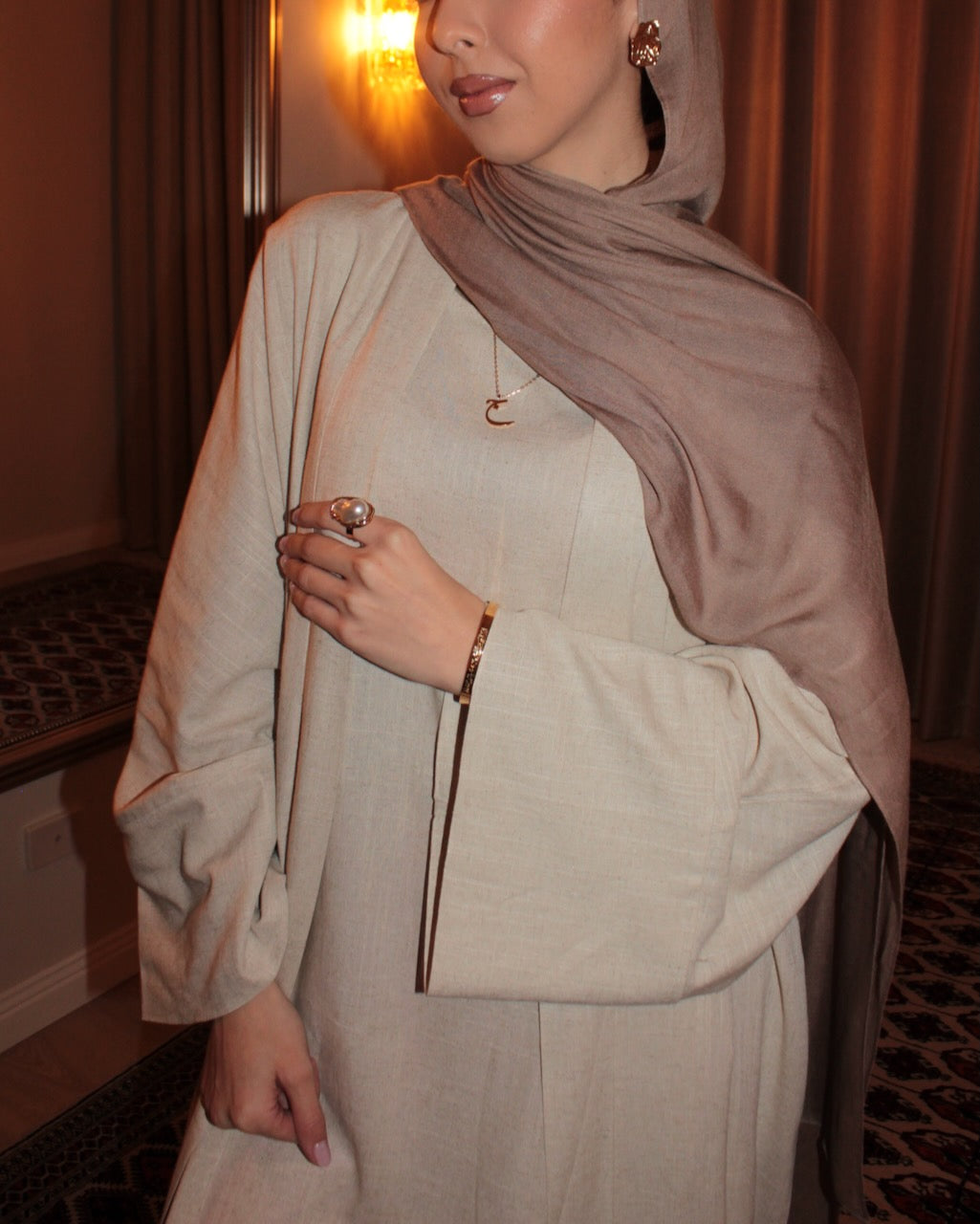
Draped rather than pinned tight, with both ends forward. Softer and more relaxed. Needs a fabric with some weight so it does not float, which is where pashmina earns its place.
Work and Formal Styles
6. The smooth crown
Pulled flat and even across the top of the head, no folds at the forehead, pinned close. It is the most composed a hijab can look and it suits interviews, presentations and any room where you want the clothing to be quiet.
7. The layered two-tone
Two scarves, one as a base and one draped over, in tones from the same family. Adds depth without pattern. Keep the under layer plain.
8. The turban-style base with drape
Wrapped close at the crown with a long tail brought over one shoulder for coverage. Structured but still modest.
9. The pinned-back professional
Both ends secured behind so nothing falls forward across a desk or keyboard. Practical and tidy for long days at a screen.
10. The high-neck layer
Worn over a high collar so there is no gap at the throat to check or adjust. Good for cooler months and for anyone who wants to stop thinking about coverage entirely.
Occasion and Event Styles
11. The satin fall
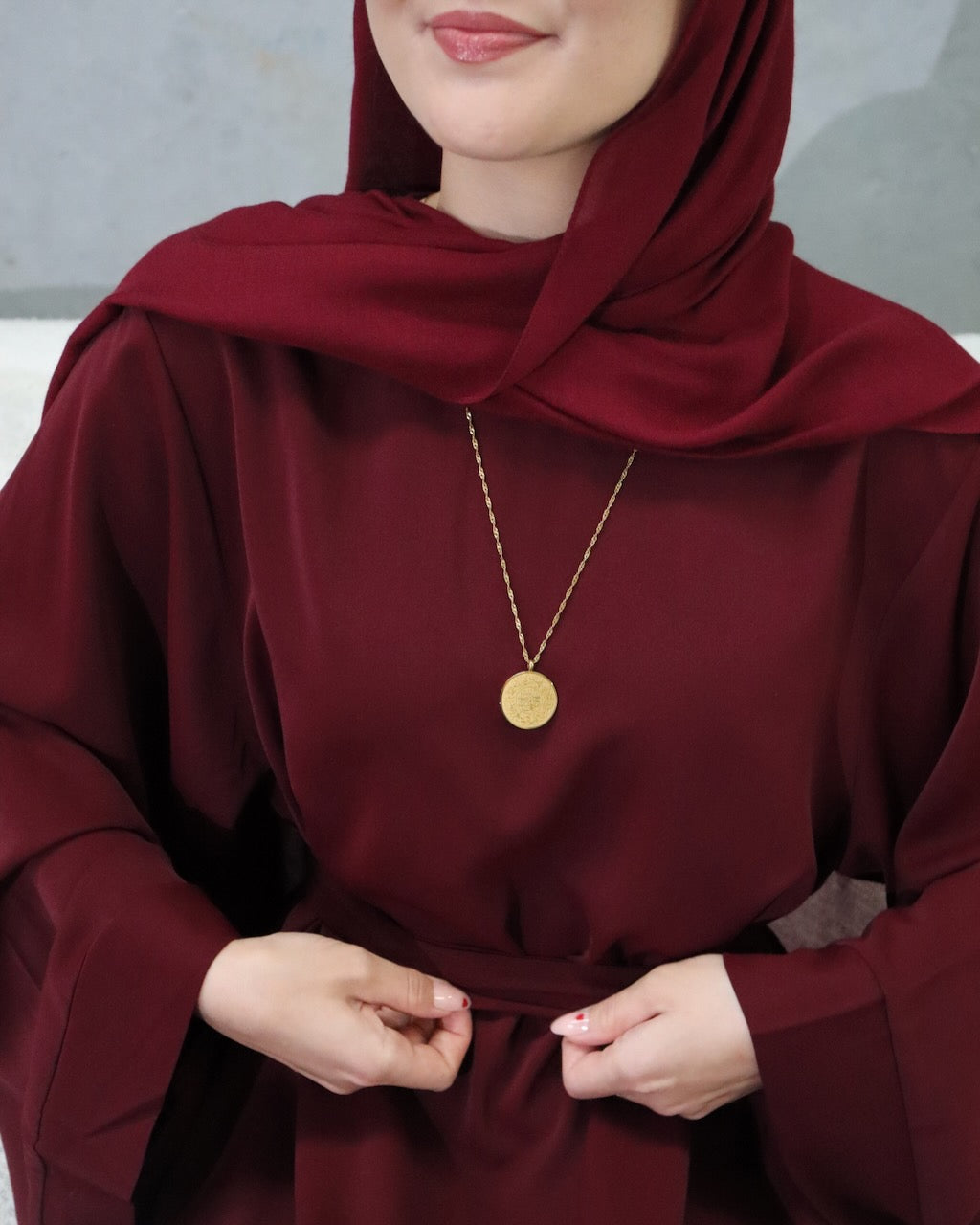
Minimal wrapping, maximum drape, letting the fabric do the work. Satin carries light, which is why it photographs well at weddings and Eid gatherings. Pin it properly, because it will slide.
12. The chiffon layer
A sheer scarf over a matching cap, so the sheerness becomes a texture rather than a coverage problem. Light, formal and cool in warm rooms.
13. The draped shawl
A wider scarf worn to cover the head and shoulders together in one line. Elegant, forgiving, and genuinely warm in winter.
14. The half-pleat crown
A few deliberate folds at the front, pinned in place, with the rest smooth. A small amount of detail without accessories.
15. The full-coverage khimar
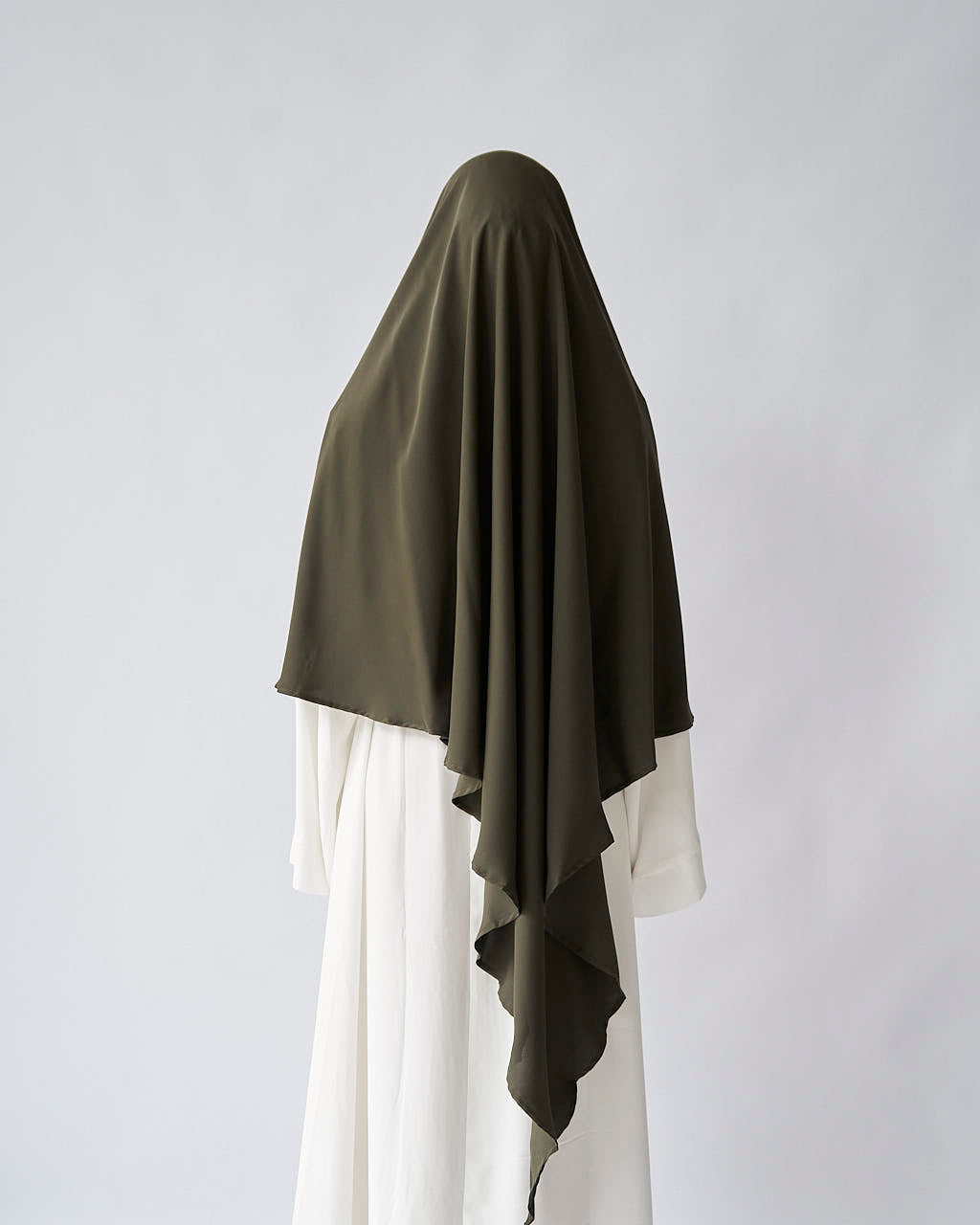
Not a wrapping style at all. A single pull-on piece that covers the head and chest together and needs no pinning. For prayer, for the masjid, and for days when you want dressing to take four seconds. See the khimars.
The Three Things That Decide Whether a Style Holds
An undercap. Nearly every style on this list works better over a cap. It gives the scarf something to grip and stops it sliding back off your hairline. Ours are in hijab caps.
Pinning at the temple, not the chin. A pin under the chin takes all the tension in one place and pulls. A pin at the temple holds the whole wrap and disappears.
Enough length. If a style keeps collapsing, the scarf is usually too short for it. Layered and draped styles need more fabric than they look like they need.
Matching Style to Fabric
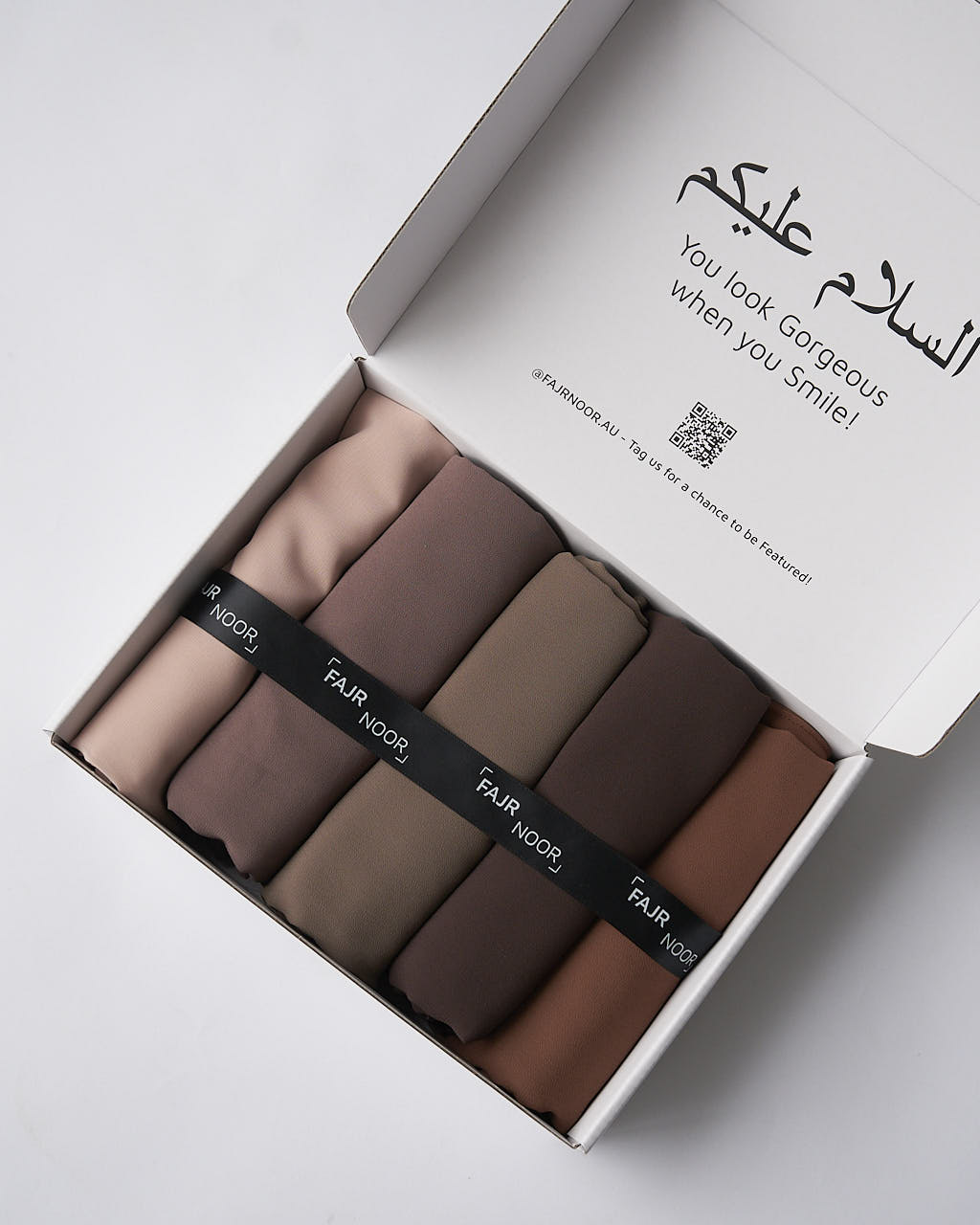
- Jersey: secure everyday styles, no pins needed, casual in tone.
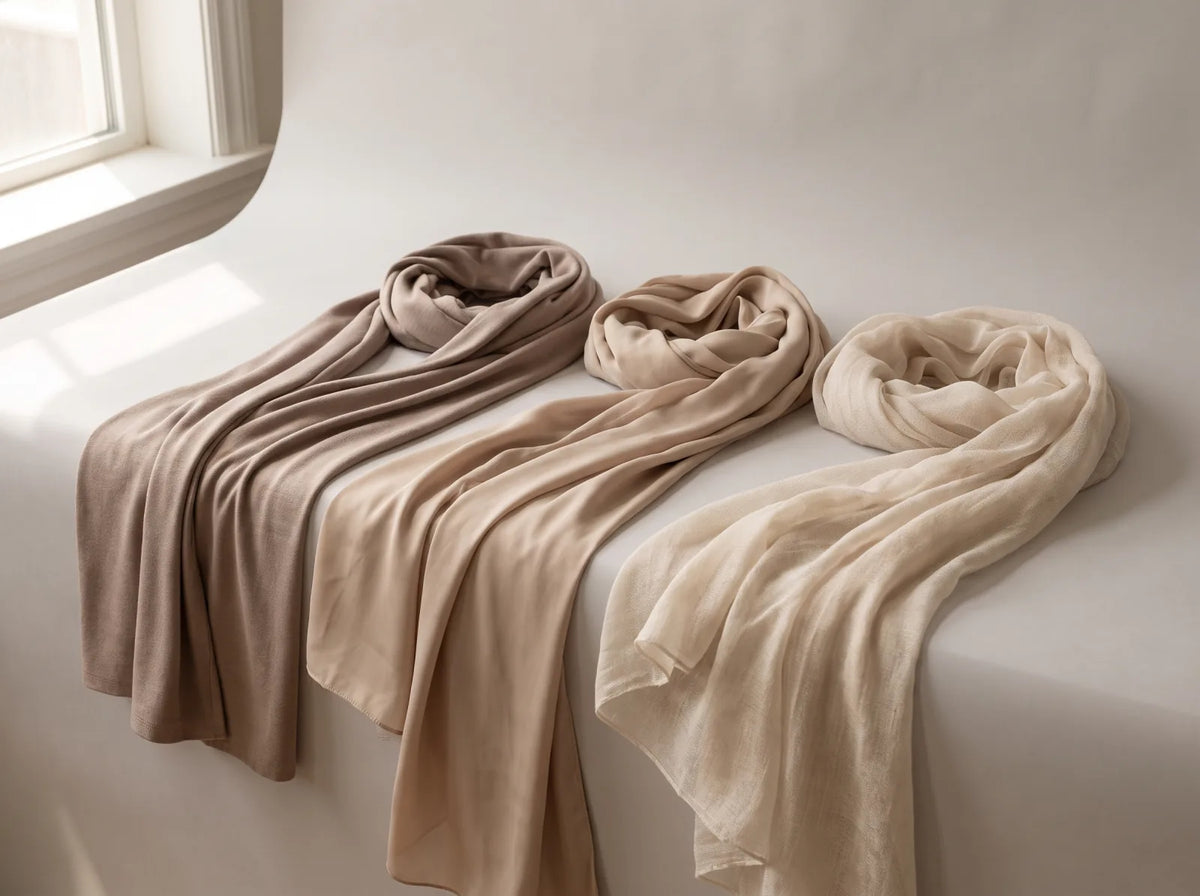
- Modal: the all-rounder, soft drape, works for almost every style with a cap.
- Chiffon: layered and occasion styles, needs a cap and pins.
- Satin: formal falls and drapes, slippery, pin generously.
- Pashmina: shawl styles and winter wraps, holds its shape.
If you are building from scratch, start with two styles rather than fifteen. One secure everyday wrap and one you can do in under a minute. Everything else is variation.
Frequently Asked Questions
What is the easiest hijab style for beginners?
The one-side drape in a jersey scarf. Jersey grips on its own, so the style holds without pins, and the drape is forgiving if it is not perfectly even.
How do I keep my hijab from slipping all day?
Wear an undercap, pin at the temple rather than under the chin, and check the scarf is long enough for the style. Slipping is far more often a cap and length problem than a fabric problem.
Which hijab style is best for work?
The smooth crown or the pinned-back professional. Both keep the fabric flat and out of the way, and neither needs adjusting through the day.
What style works for prayer?
A khimar. It is a single pull-on piece covering head and chest together, so there is nothing to pin and nothing that shifts while you move through the positions of salah.
Do I need pins for every style?
No. Jersey styles generally hold without them. Chiffon and satin always need them, because those fabrics are smooth enough to slide against themselves.
How many hijab styles should I actually learn?
Two. One secure everyday wrap and one fast style for mornings when you have no time. Most women wear the same two styles for years and vary the colour instead.


Leave a comment
All comments are moderated before being published.
This site is protected by hCaptcha and the hCaptcha Privacy Policy and Terms of Service apply.