

The Nikah Is Not a Smaller Wedding
A nikah is the marriage contract. It is the moment the marriage actually happens, and everything else, however elaborate, is celebration around it. That is worth holding in mind when choosing a nikah dress, because it changes what the outfit is for.
Many brides now separate the two events entirely: a smaller, quieter nikah, often at a masjid or at home with close family, and a larger reception later. If that is your plan, the nikah outfit and the reception outfit are answering different questions.
Colour, and What It Signals
White and ivory
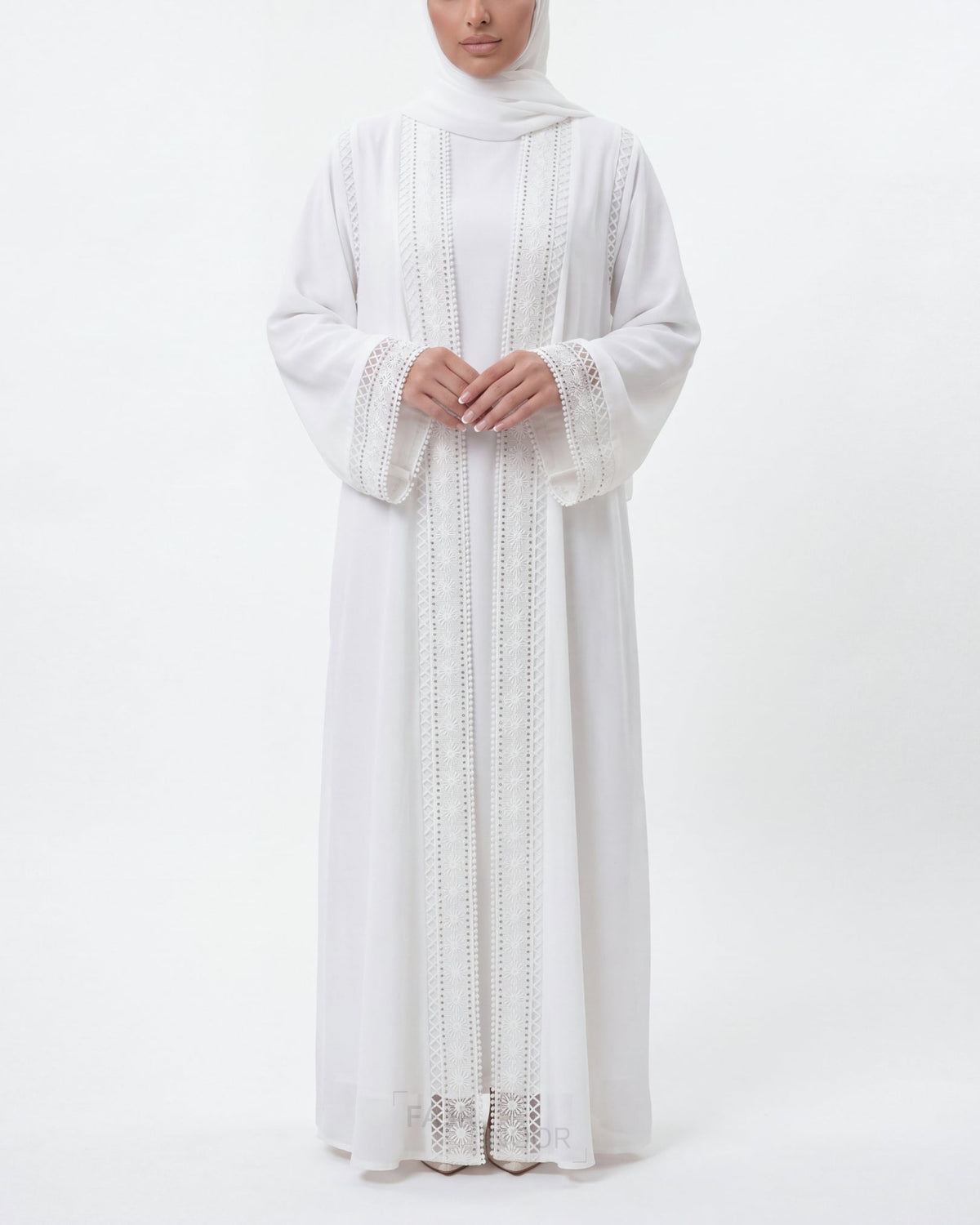
Now the most common choice for nikah across many communities. It reads as ceremonial, it photographs beautifully against a masjid interior, and it carries the association of purity that suits the occasion. If you want one decision that will not be questioned, this is it.
The practical caution is that white is unforgiving. It shows every crease and it shows what is underneath. Look for a garment that is genuinely opaque and choose a fabric that resists crushing, because you will be sitting for the ceremony.
Soft neutrals
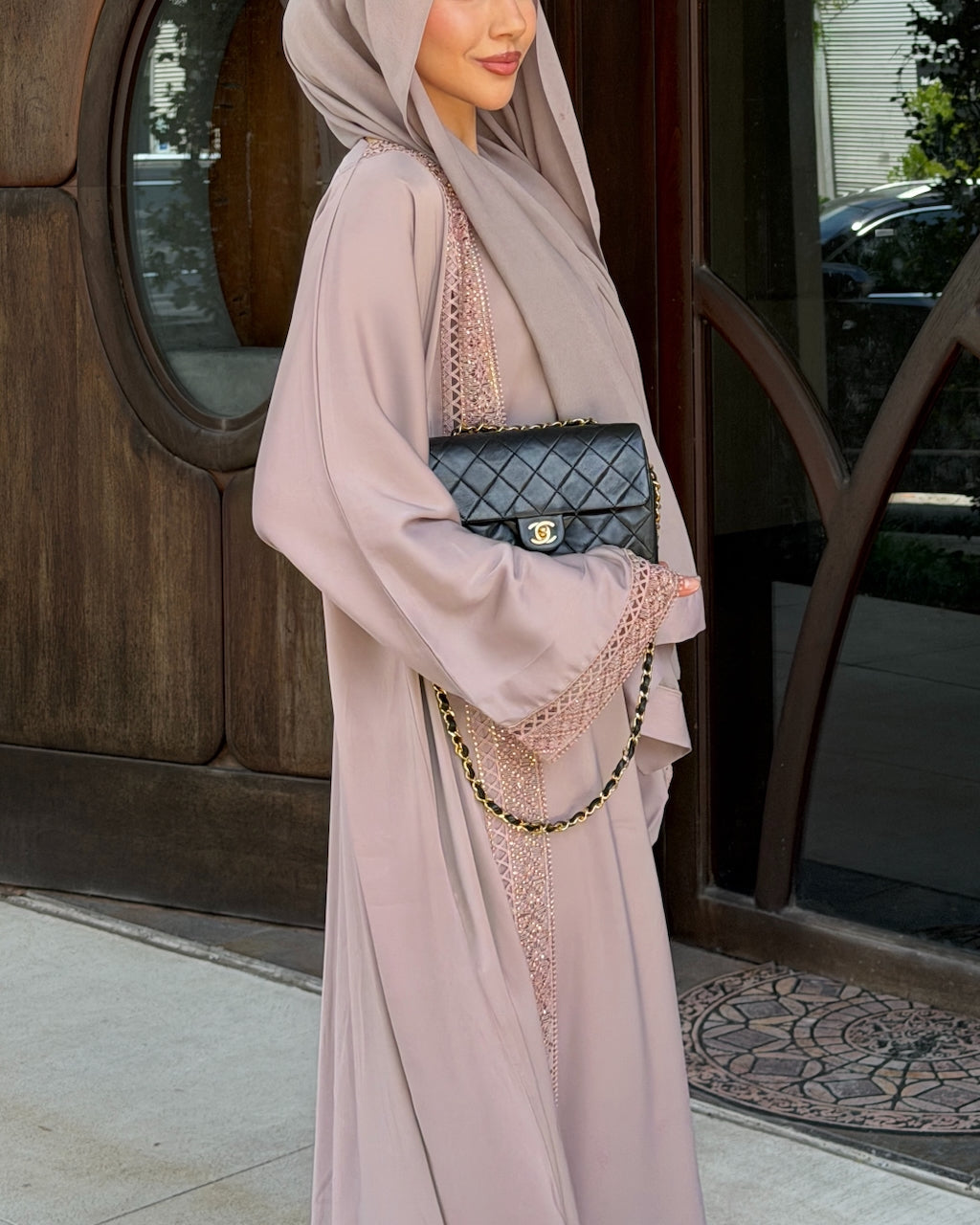
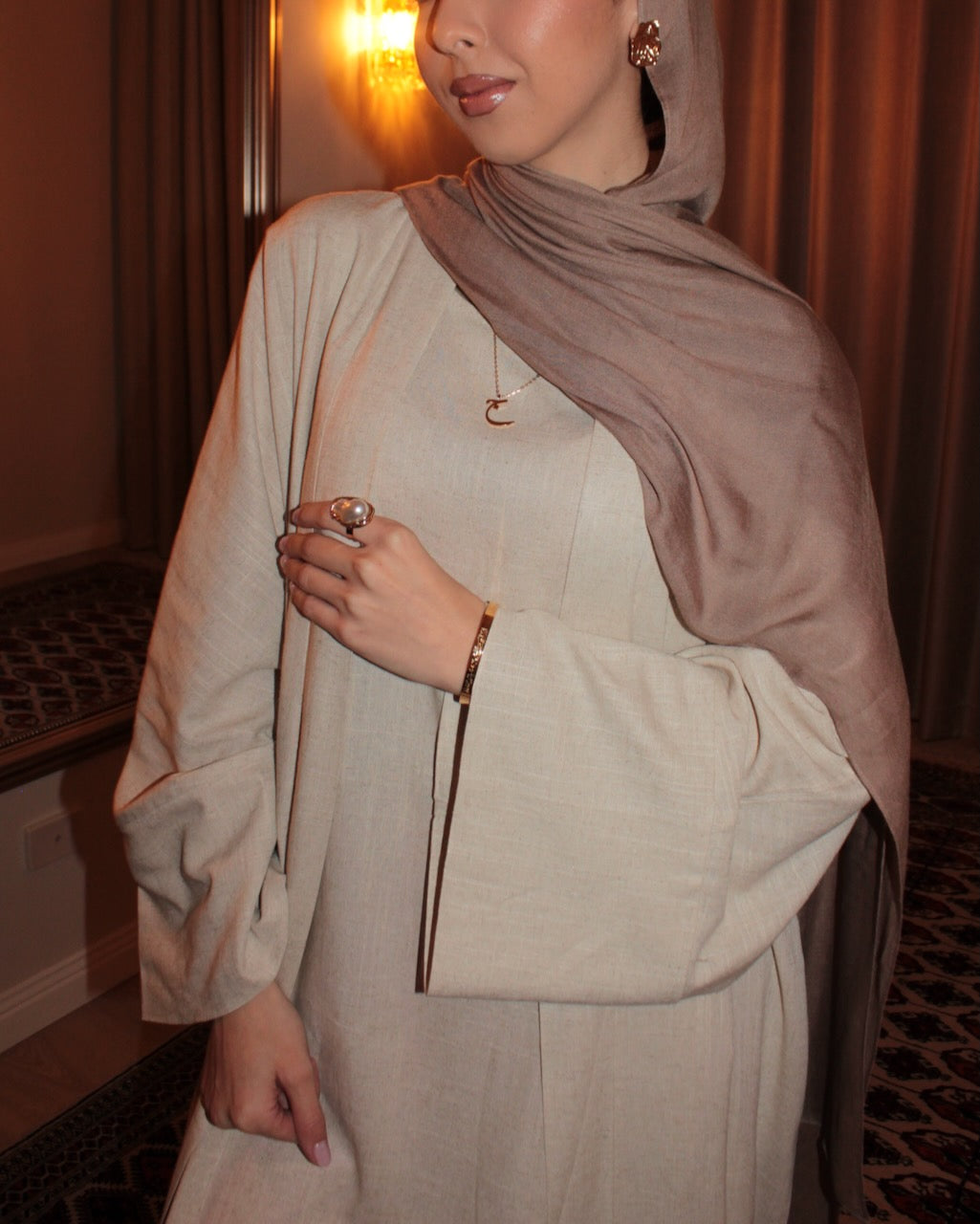
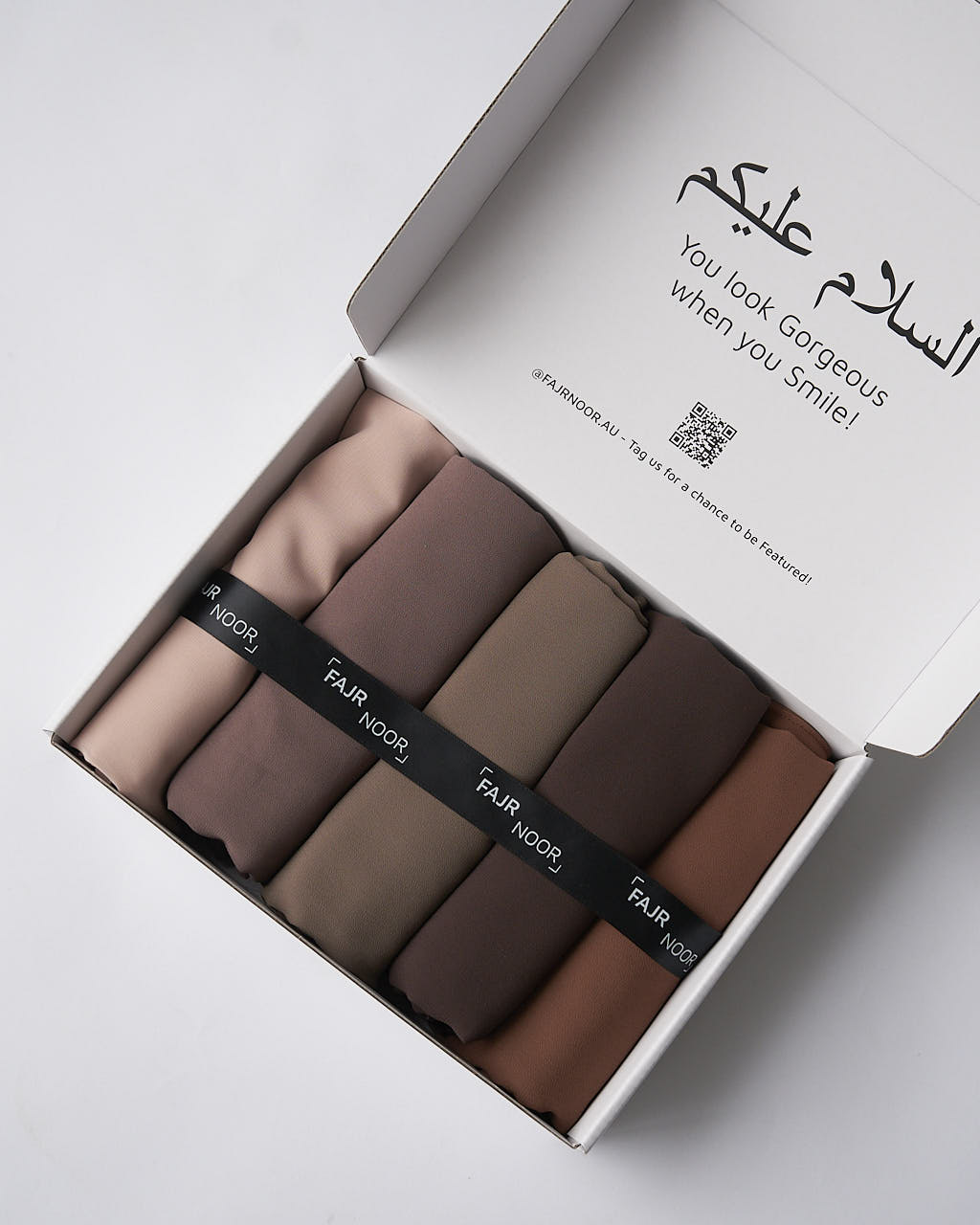
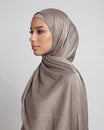
Champagne, blush, oat, warm cream. These are the most photographed nikah colours for good reason. They read ceremonial without the starkness of pure white, and they are considerably kinder in Australian daylight, which is harsher than most photographs suggest.
Green
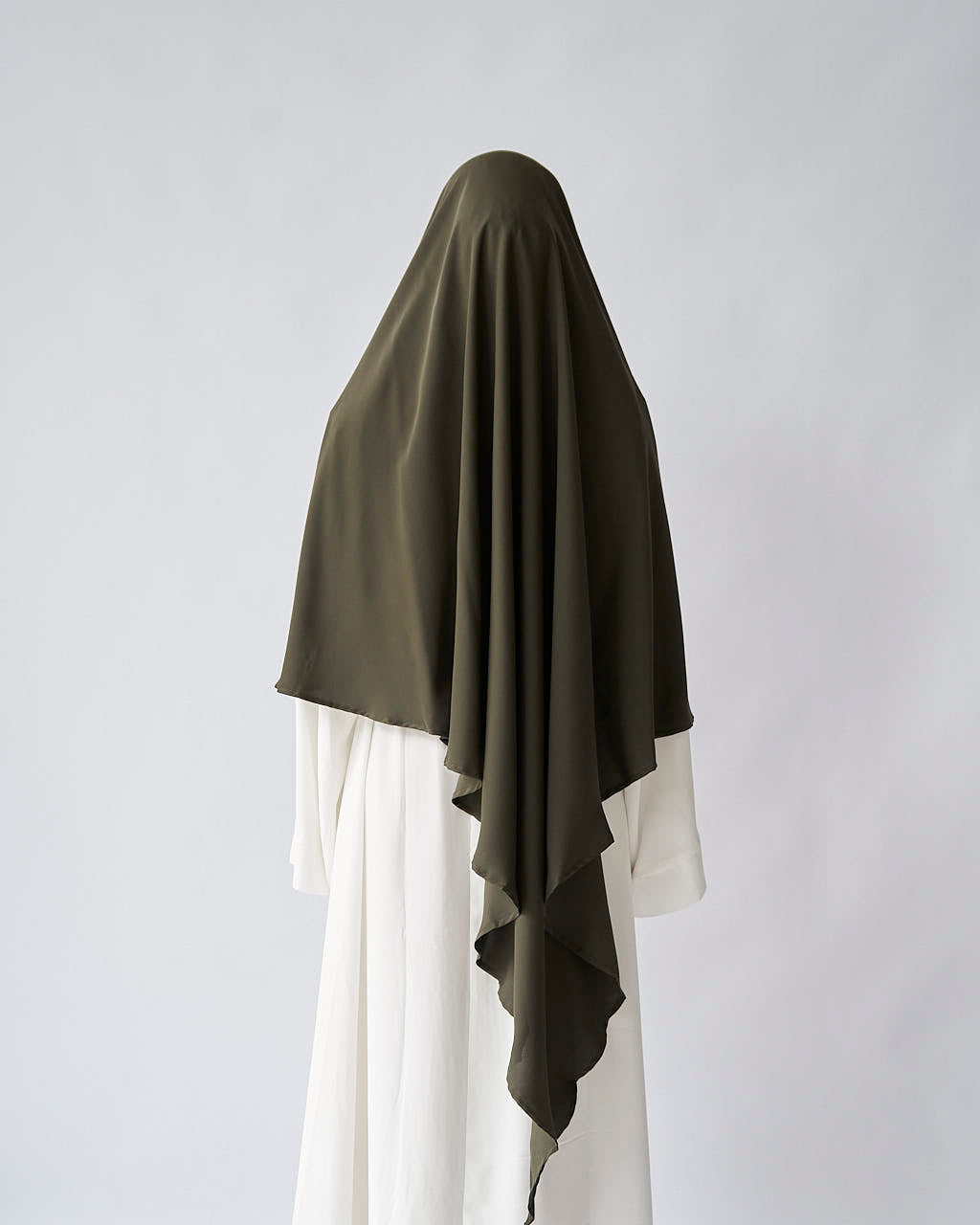
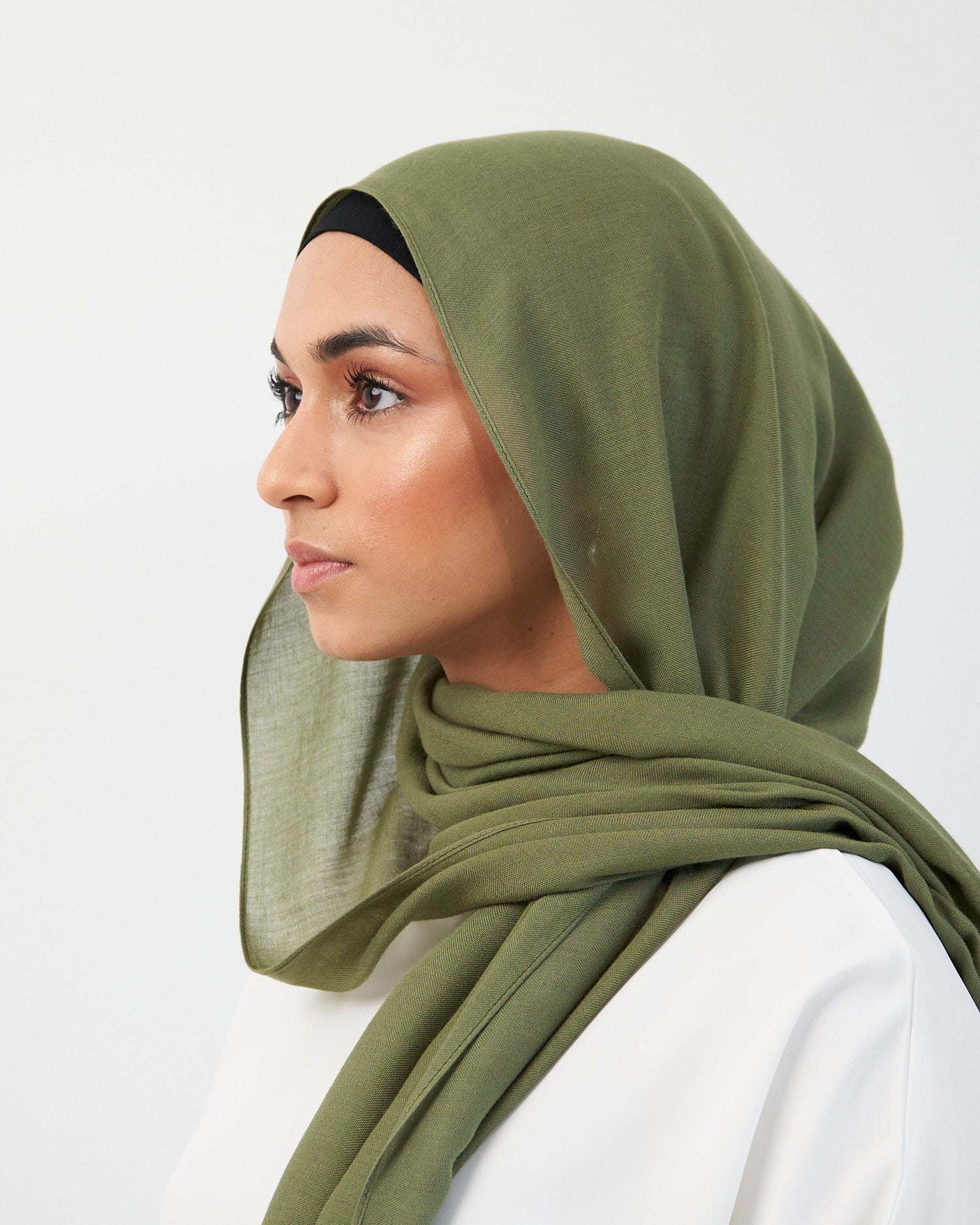
Green carries a particular resonance in Islamic tradition and has become an increasingly popular nikah choice. Emerald and sage both work, and both photograph well indoors.
Red and deep jewel tones
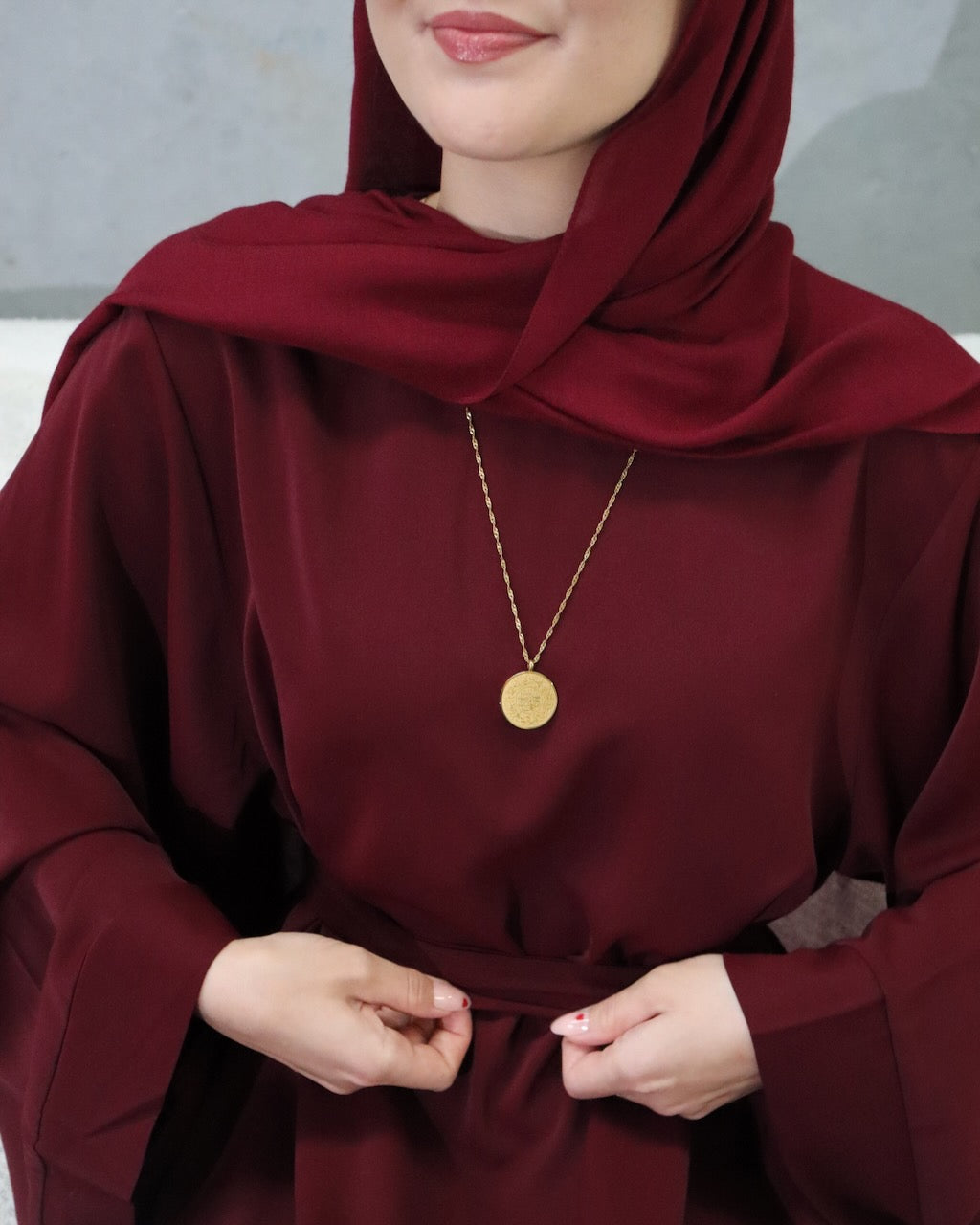
Bridal in many South Asian traditions and entirely conventional there. If your families come from different cultural backgrounds, this is worth a conversation before you buy rather than after.
The Cut Matters More Than the Embellishment
This is the thing most brides learn afterwards. A heavily beaded gown in the wrong cut looks worse than a plain garment in the right one, particularly in photographs taken from a seated position.
What to prioritise:
- Sleeves that stay put. You will be signing, raising your hands in dua, and being embraced by a great many people. Wide sleeves that need managing will need managing all day.
- A hem you can walk in. Especially on masjid carpet, and especially if you are going to be photographed on steps.
- Room through the shoulders. Almost every nikah photograph involves raised or clasped hands. A garment that pulls across the back in that position will pull in every image.
- Structure at the shoulder. Garments that hold a line photograph better than garments that collapse, regardless of how they feel on the hanger.
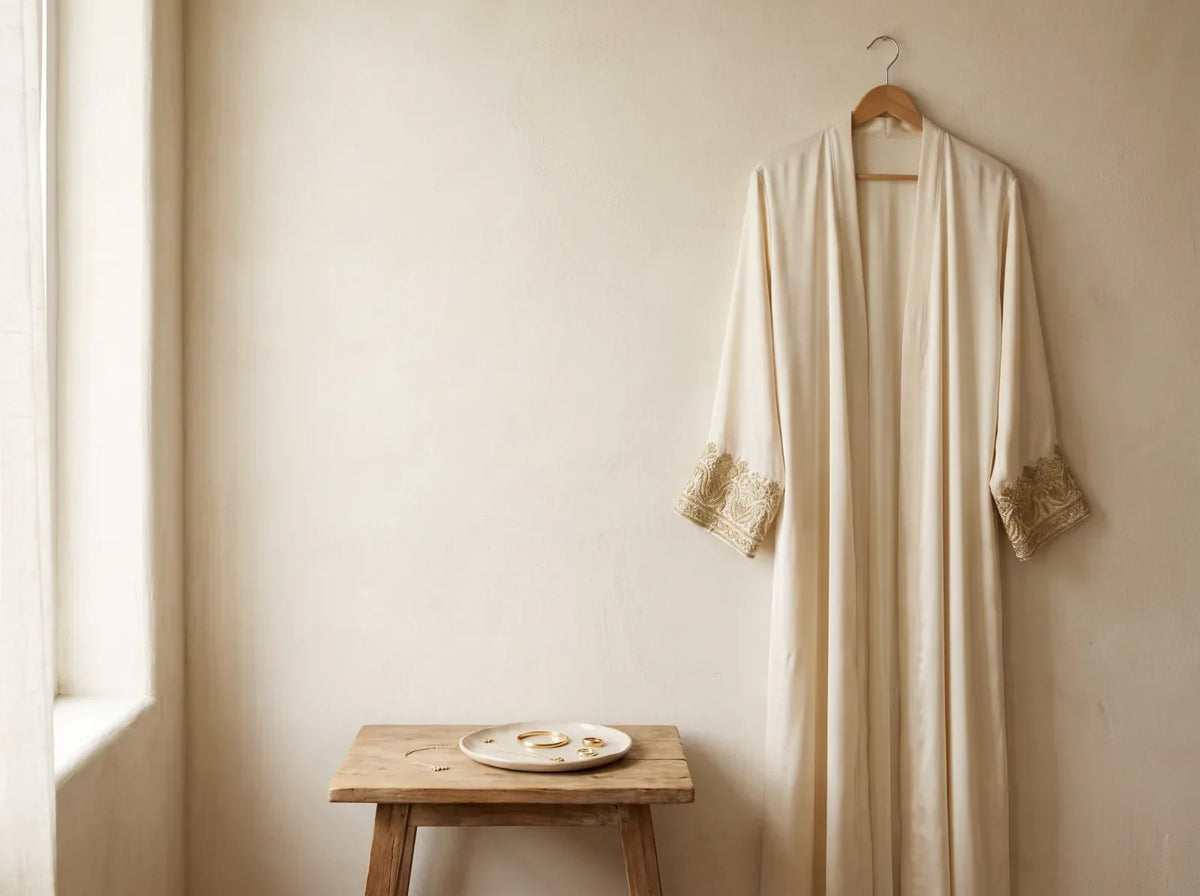
A well-cut abaya with detail at the cuff and hem achieves more than a heavily worked garment that does not fit properly. The luxury abayas are cut for exactly this kind of occasion.
If the Nikah Is at a Masjid
A few practical realities shape the outfit more than any style consideration.
You will remove your shoes, so whatever is on your feet will be seen and will need to come off and on gracefully. You will likely sit on the floor or on low seating for part of the ceremony, so the garment needs to work seated. And masjid interiors are often lit warmly and unevenly, which flatters neutrals and can make cool-toned whites look grey.
Consider also that you may move between the prayer hall and an adjoining room. A garment that is complete in itself, rather than one that needs a wrap added and removed, is simpler.
Two Outfits or One
If your nikah and reception are on the same day, changing between them is common and entirely normal. The nikah outfit is usually more covered and more restrained, and the reception outfit is where the colour and elaboration go.
If they are on different days, you have more freedom. Many brides use the nikah for the softer, quieter look and save the statement for the reception.
A practical middle path: one well-chosen garment with two jewellery settings. Minimal for the ceremony, fuller for the reception. It costs less and you will wear the garment again.
Jewellery and the Personal Detail
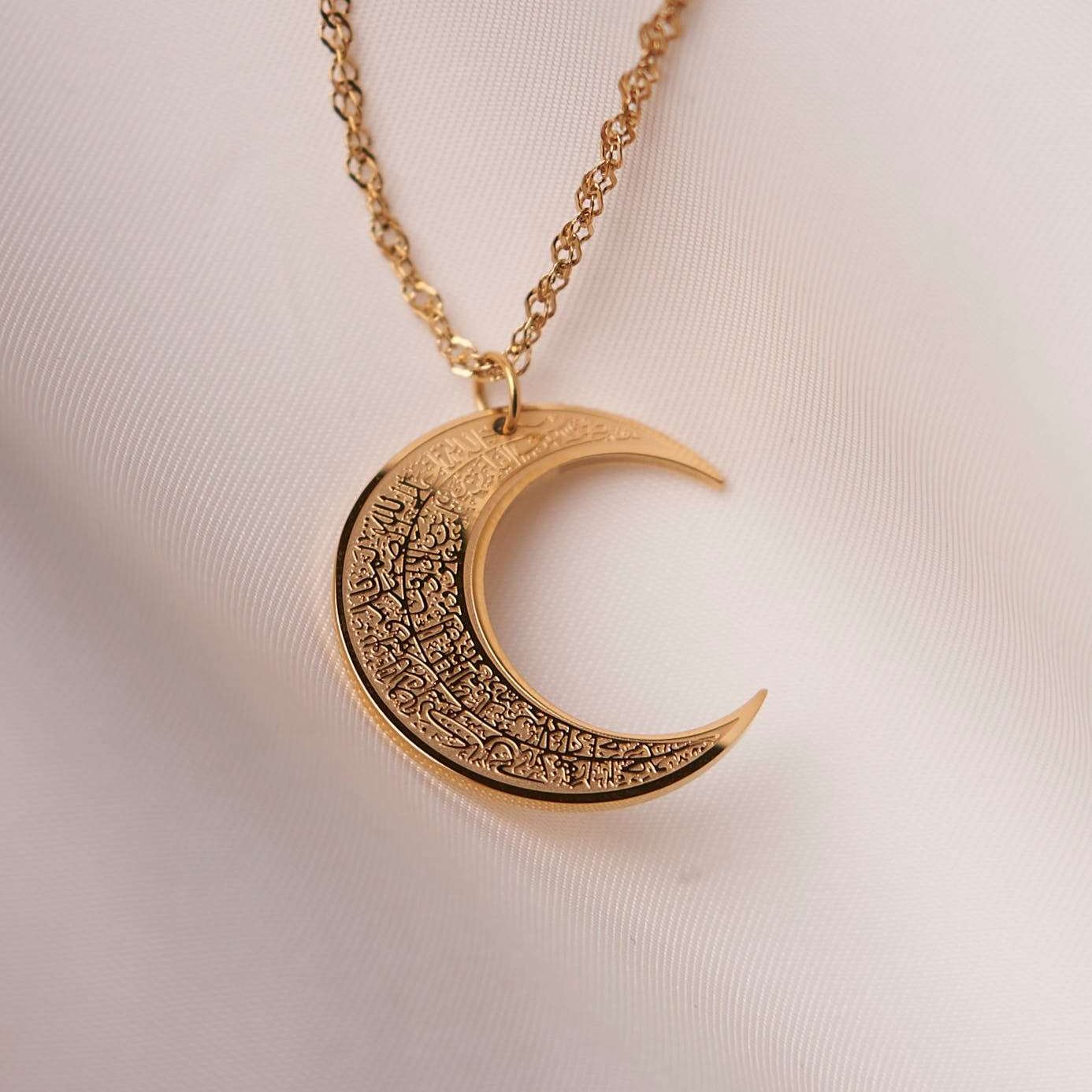
Modest necklines give jewellery a clear, uncrowded place to sit, which is why a single piece reads so strongly against an abaya.
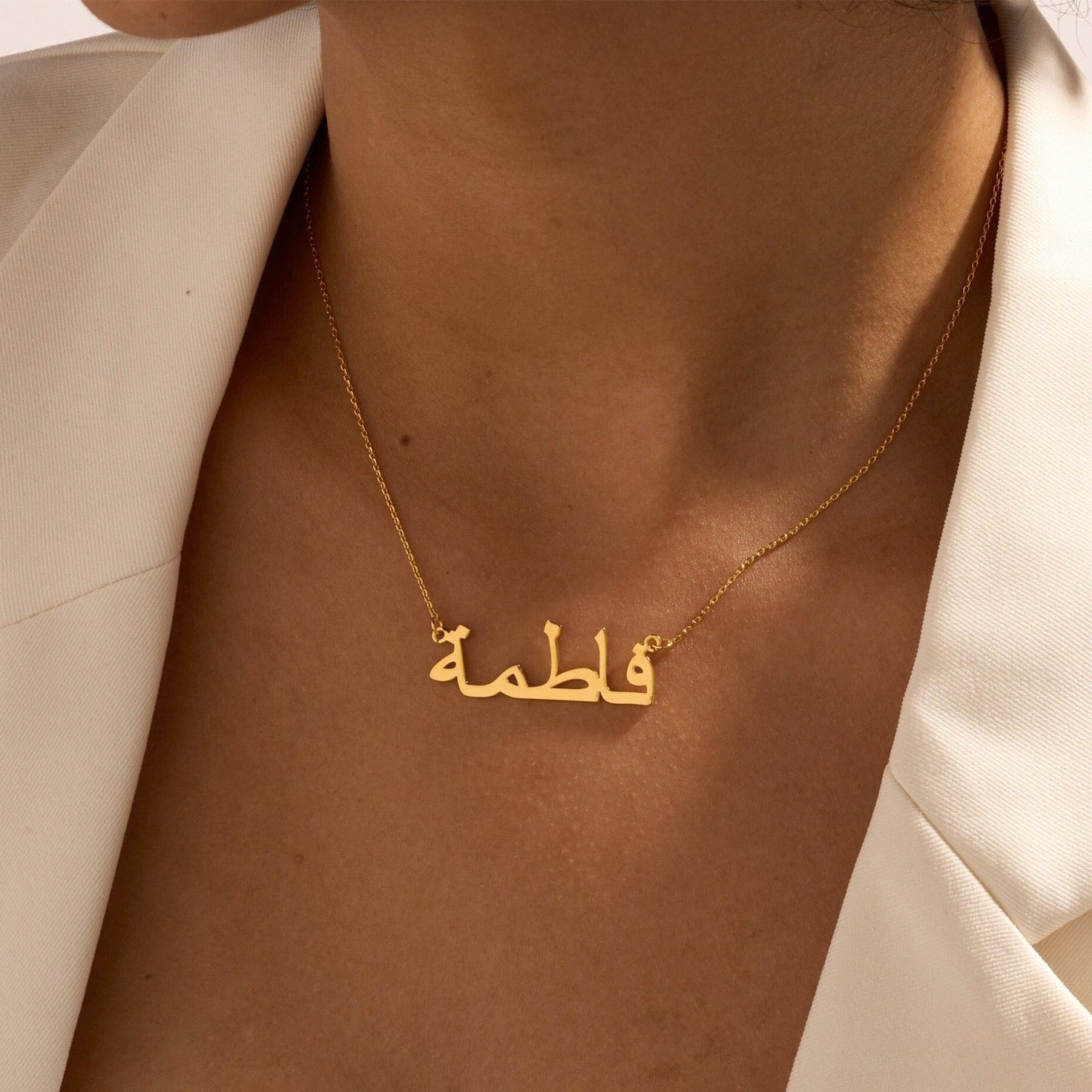
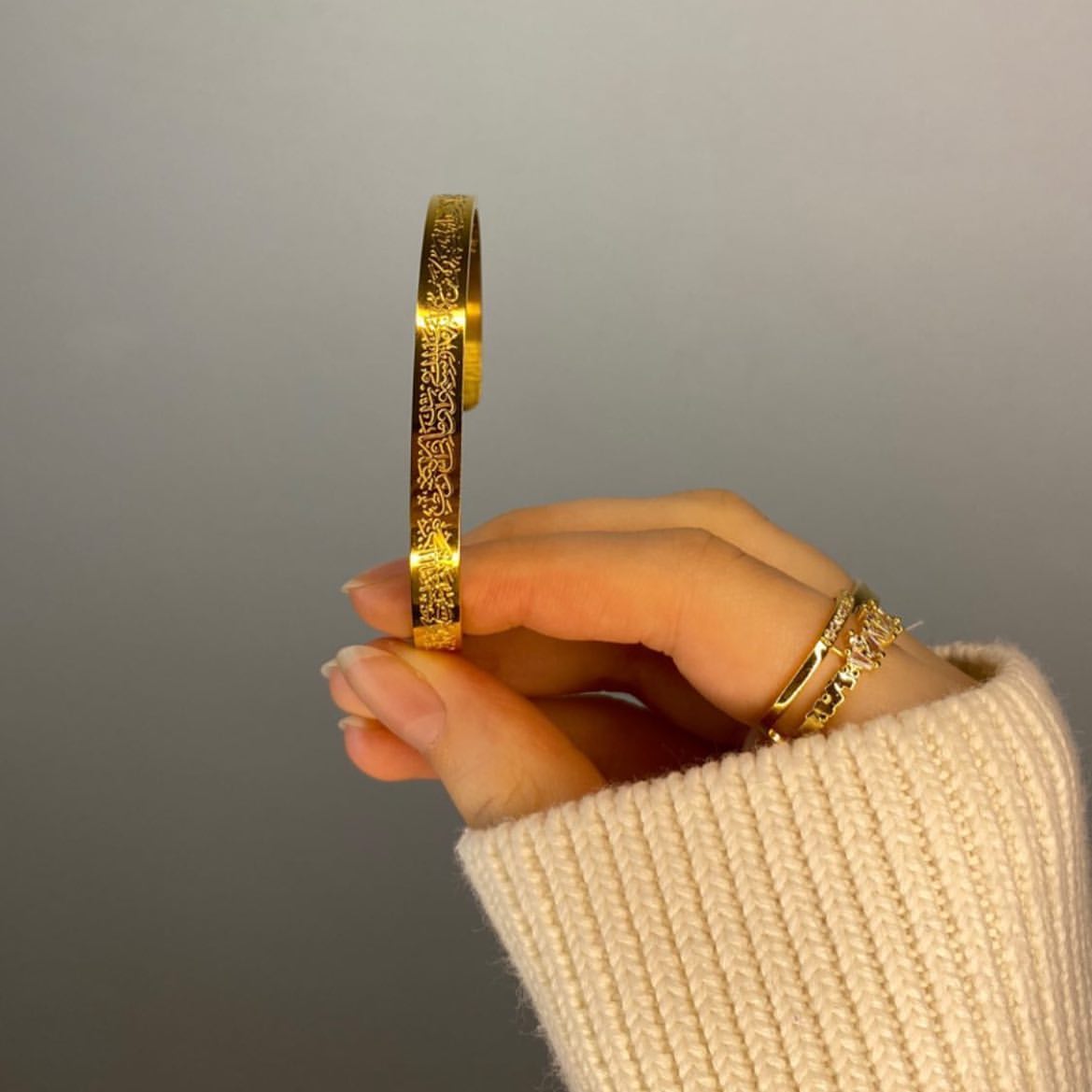
Many brides choose something personal for the nikah specifically: a name in Arabic script, a date, a short ayah. It becomes the piece you keep wearing long after the dress is in storage, which is a good argument for spending on it. Our custom jewellery is made for this.
For Guests at a Nikah
Dress modestly and a little below the level you would for a reception. A nikah is more solemn, often in a religious space, and the room is usually smaller, which makes overdressing more visible than it would be at a large reception.
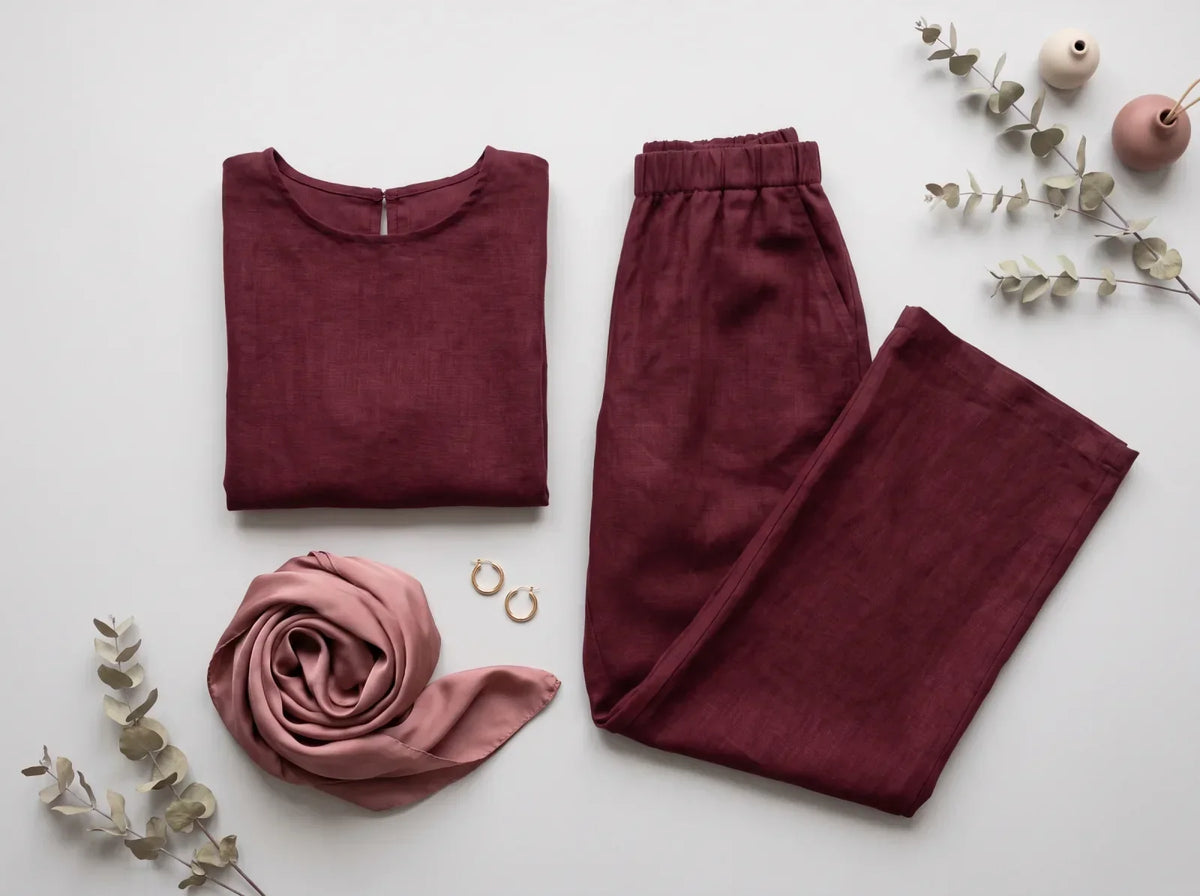
Avoid white, cover shoulders and knees, bring a scarf if the ceremony is at a masjid, and wear shoes you can slip off. A two-piece set is a reliable guest choice because it is polished without being formal.
Frequently Asked Questions
What colour should a bride wear for her nikah?
White, ivory and soft neutrals such as champagne and blush are the most common choices now. Green carries particular resonance in Islamic tradition. Red is bridal in many South Asian traditions, so it is worth checking family expectations first.
Can a nikah dress be an abaya?
Yes, and many brides choose one. A well-cut abaya with lace or embroidery at the cuff and hem photographs beautifully and is far more comfortable for a ceremony that involves sitting, signing and a great deal of embracing.
Do I need a separate outfit for the nikah and the reception?
Not necessarily. If they are on the same day, many brides change, with the nikah outfit more restrained. If they are on different days, one good garment styled two ways with different jewellery works well.
What should I wear to a nikah as a guest?
Modest and slightly below reception level. Cover shoulders and knees, avoid white, bring a scarf if it is at a masjid, and choose shoes you can slip off easily.
Should the nikah dress be white?
It does not have to be. White has become the most common choice, but it carries no religious requirement. Soft neutrals, green and deeper tones are all appropriate.
What should I look for in the cut?
Sleeves that stay put during dua and embraces, room through the shoulders for raised hands, a hem you can walk in on carpet, and a fabric that resists creasing while seated.

Leave a comment
All comments are moderated before being published.
This site is protected by hCaptcha and the hCaptcha Privacy Policy and Terms of Service apply.