

What if the key to deciding what to wear for Umrah is knowing that ihram isn’t simply one prescribed outfit for every pilgrim? It’s understandable to want clear guidance before you pack, especially when modesty, comfort and religious requirements all matter.
This guide helps Australian pilgrims separate ihram requirements from everyday clothing choices. You’ll find an overview of clothing considerations for men and women, along with practical ways to choose comfortable, modest garments for long days of travel and worship. Whether you’re preparing in Sydney, Brisbane, Melbourne, Perth or Adelaide, check personal religious questions with a trusted Islamic authority.
You’ll also find a simple way to plan your clothing, from breathable layers to useful essentials. Conditions can vary between destinations and travel dates, so check the forecast before leaving Australia and plan for outdoor weather as well as air-conditioned spaces. Preparing with your itinerary in mind can help you pack with greater confidence and focus on the journey ahead.
Key Takeaways
- Understand the difference between ihram as a sacred state and the clothing you choose to wear.
- Consider clothing for women and men separately, and check personal religious questions with a trusted Islamic authority.
- Use modesty, movement and your itinerary to guide your choices when deciding what to wear for umrah.
- Plan practical layers and pack essentials around your travel dates, trip length and access to laundry.
- Prepare in order: confirm religious guidance, review your plans, then choose suitable garments.
What to wear for Umrah: understand ihram before choosing your clothes
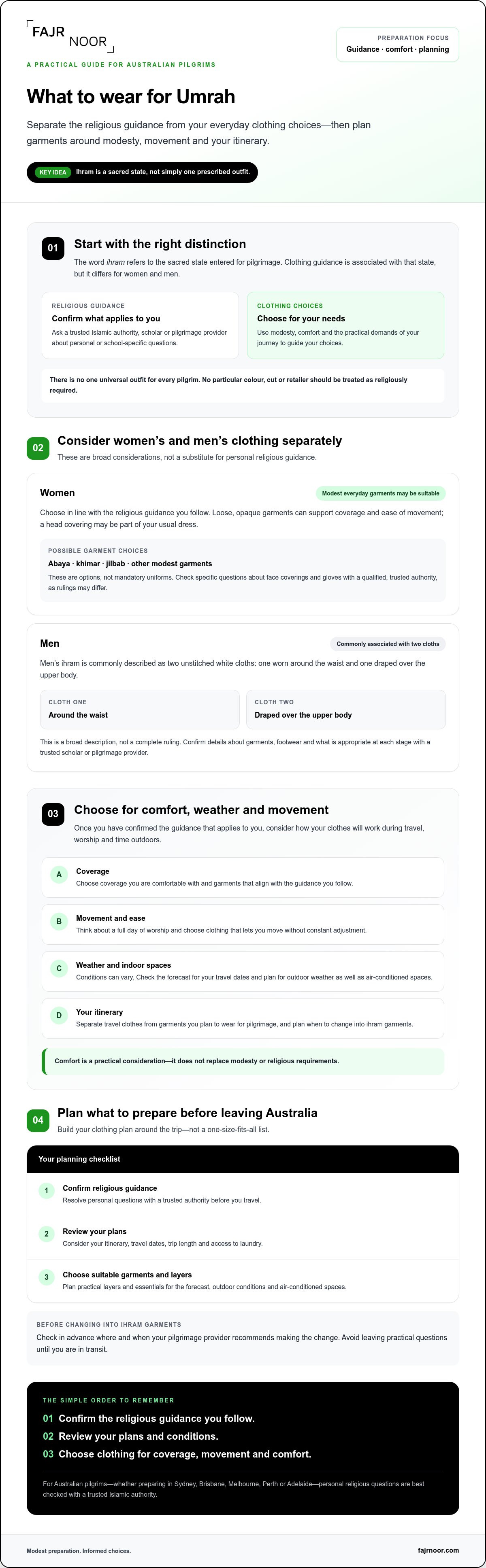
Planning what to wear for Umrah starts with reliable religious guidance, then your own needs for modesty and comfort. The key distinction is that ihram refers to a sacred state entered for pilgrimage, not simply the name of a particular outfit. The rules of Ihram are associated with this state, while clothing guidance differs for women and men.
Does Umrah require a special outfit?
There isn’t one universal outfit for every pilgrim. Women generally wear modest everyday garments, but specific expectations can vary according to religious interpretation. Check personal or school-specific questions with a trusted scholar or your pilgrimage provider before you travel.
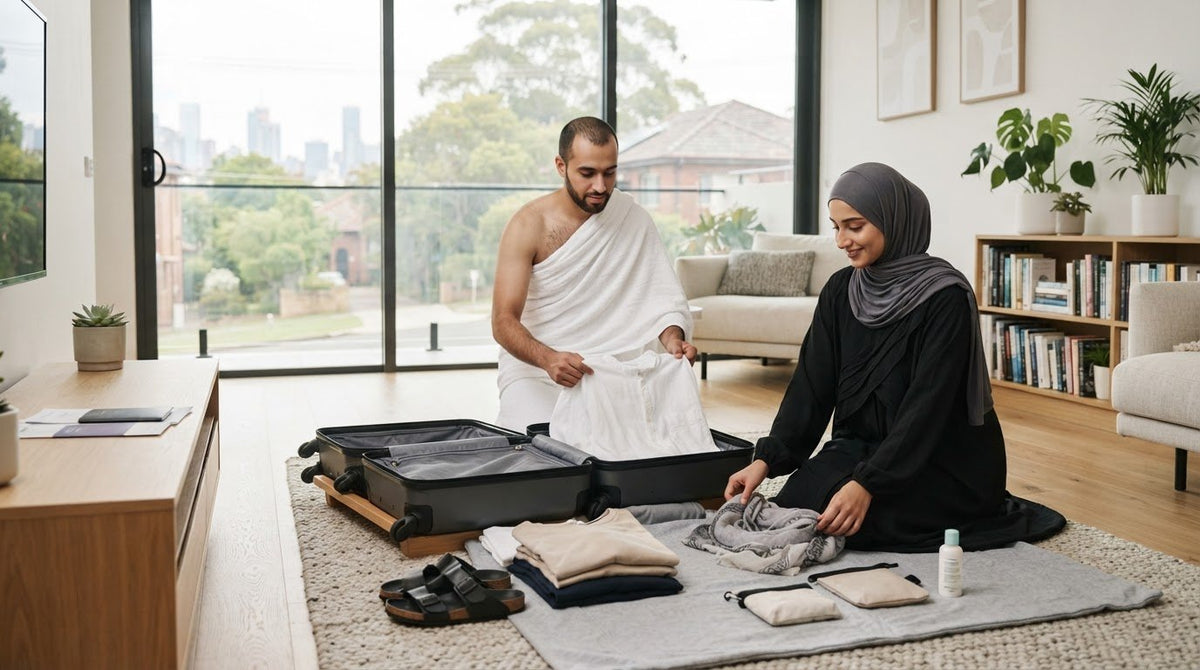
For men, ihram is commonly associated with two unstitched white cloths. This is a general description, not a substitute for guidance on how to observe the requirements. If you’re unsure about a garment or what to wear at a particular stage of your journey, ask a qualified, trusted authority.
What should modest Umrah clothing help you do?
Think about the practical demands of a full day of worship. Clothing should provide the coverage you’re comfortable with and allow you to move without needing constant adjustment. Personal comfort and cultural preferences can shape your choices. No particular colour, cut or retailer should be treated as religiously required.
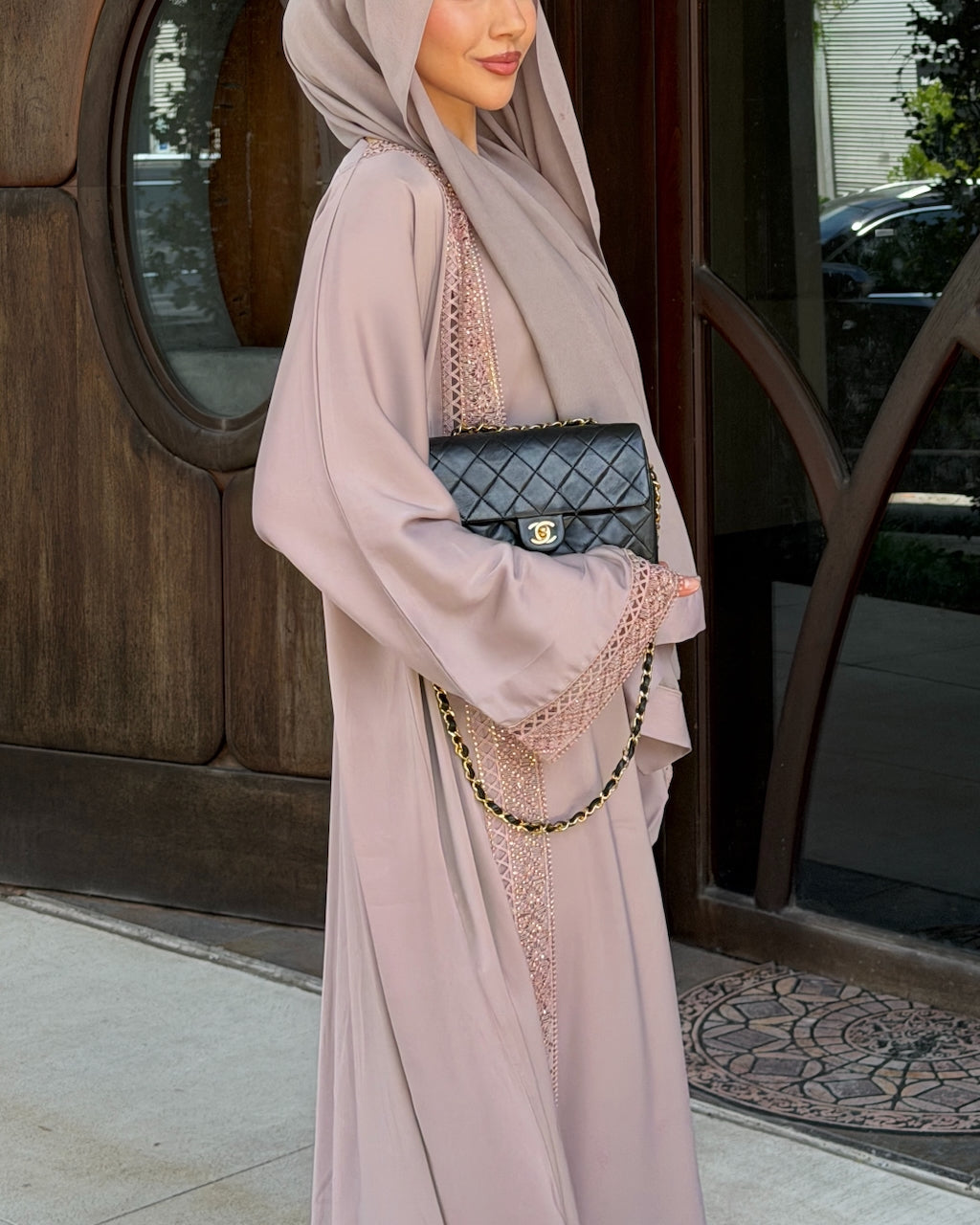
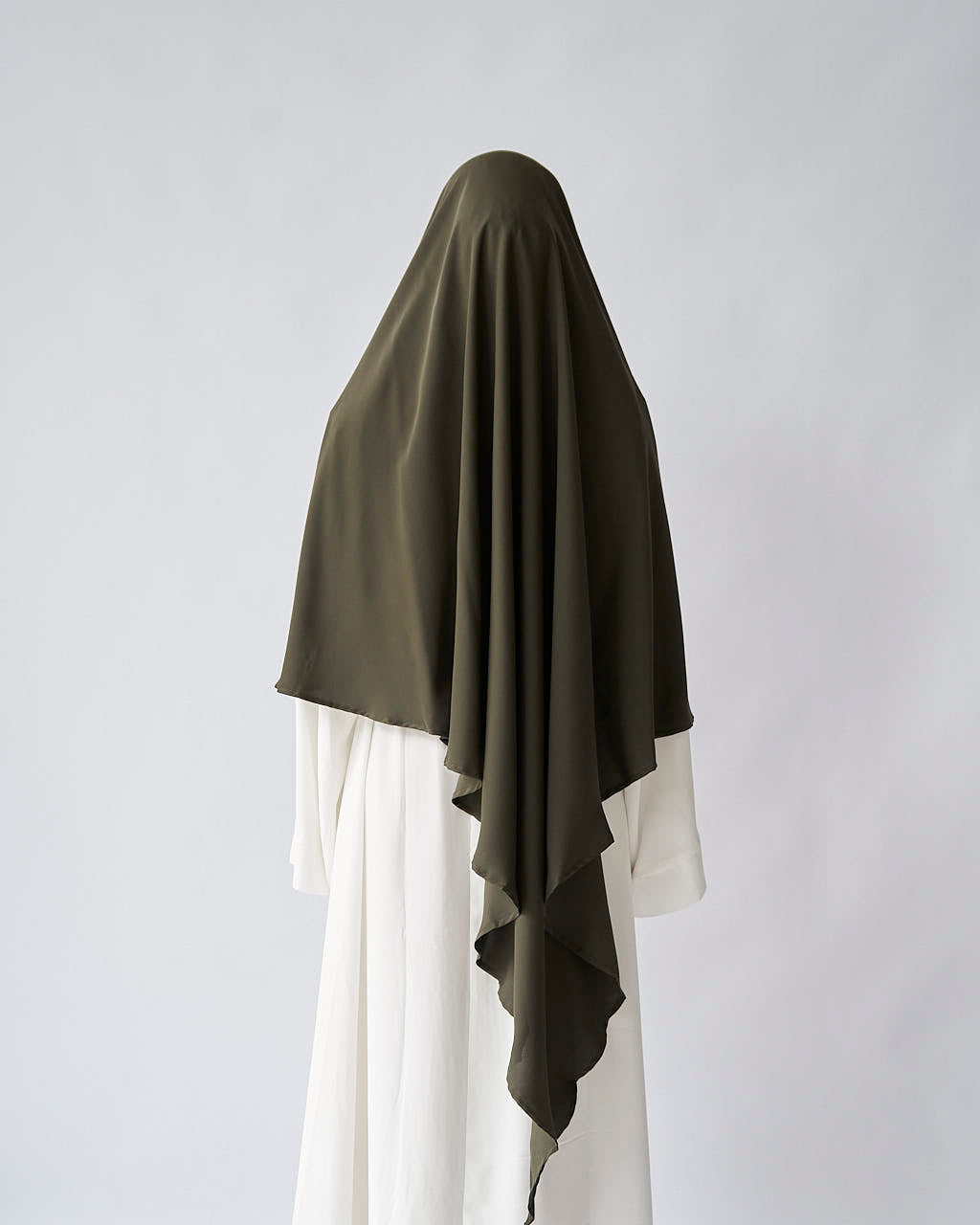
It can help to separate travel clothes from garments you plan to wear for pilgrimage. This lets you choose each with its purpose in mind and check that your choices align with the guidance you follow. For women, an abaya, khimar or other modest garment may be one option, not a mandatory uniform.
As you decide what to wear for Umrah, keep the order clear: confirm religious guidance first, then choose clothing that supports coverage, movement and personal comfort. If advice differs between sources, seek clarification from someone you trust rather than relying on a general packing list.
What women and men can wear for Umrah
Clothing choices differ for women and men, so consider each separately rather than assuming one outfit suits every pilgrim. Start with the guidance you trust, then think about coverage, movement and the practical details of your itinerary.
Women’s clothing: modest, practical layers
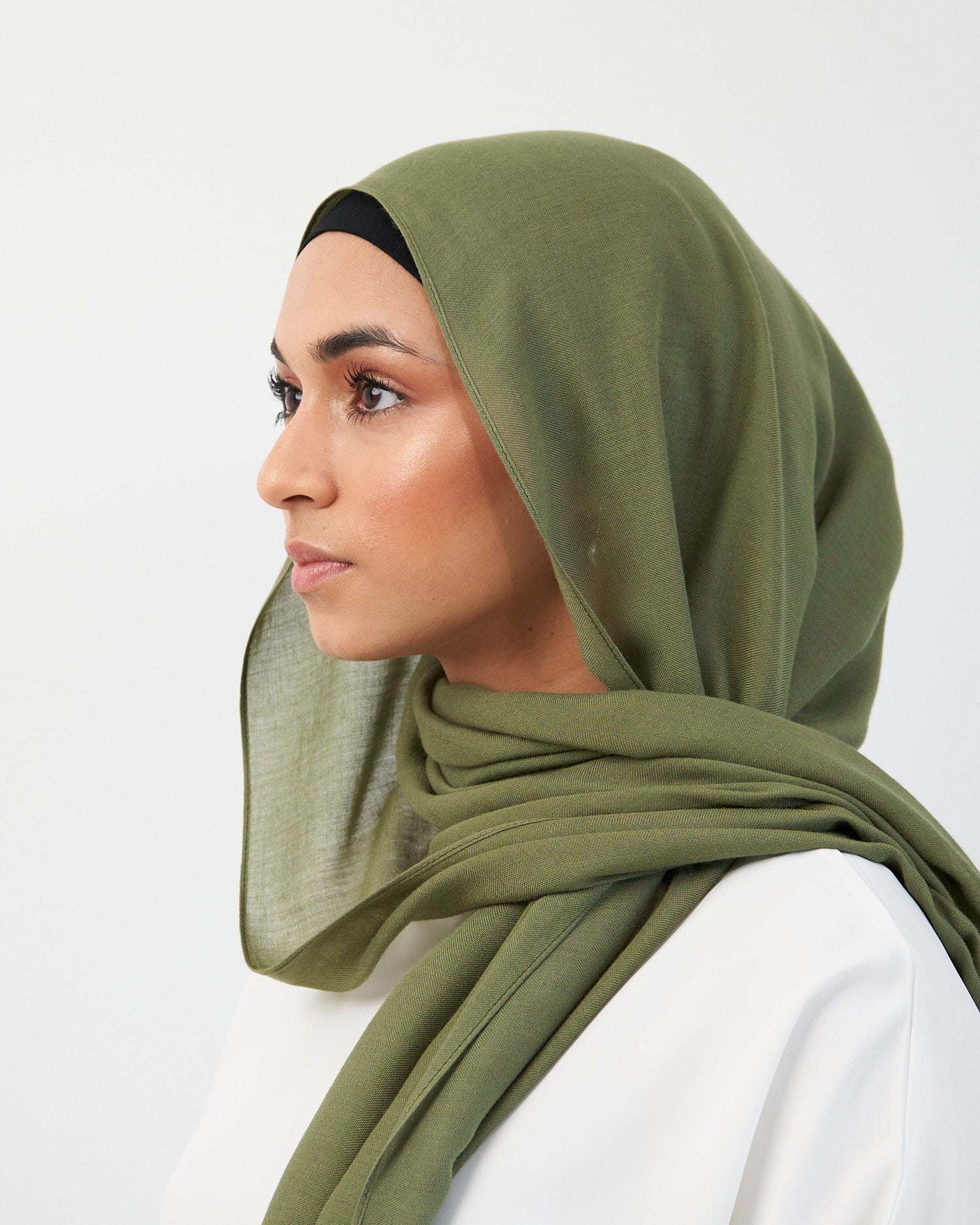
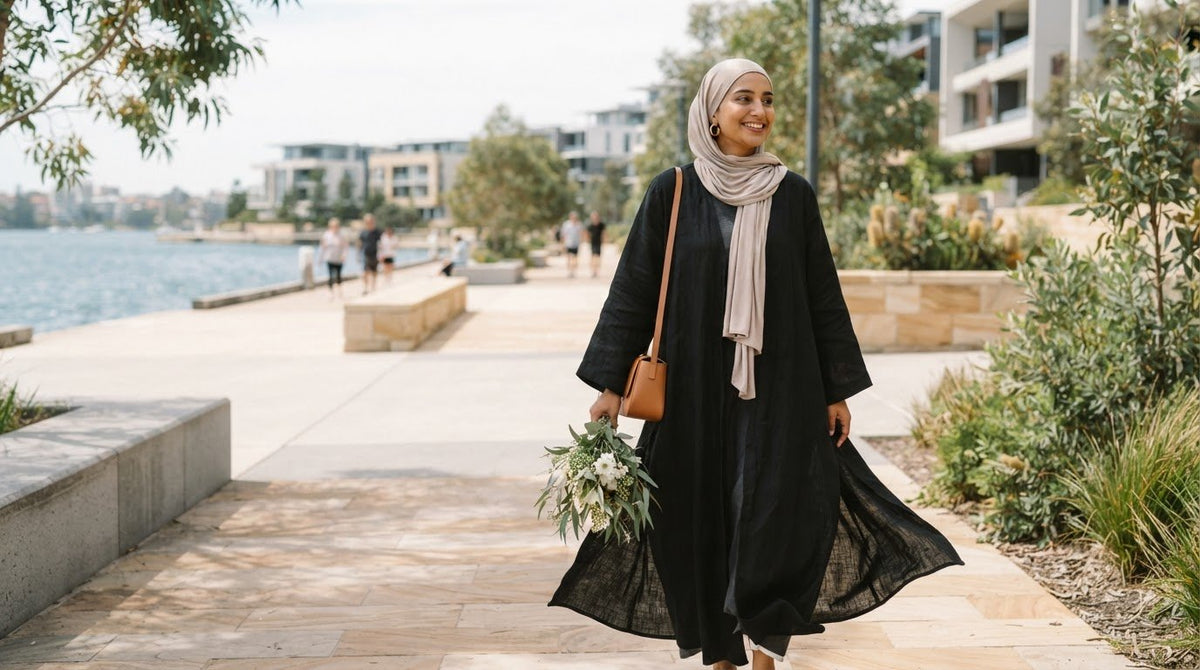
For women, ordinary modest clothing may be suitable, subject to the religious guidance you follow. Loose, opaque garments can offer coverage and ease of movement, while a head covering may be part of your usual dress. These are practical considerations, not a universal outfit prescription.
An abaya, khimar or jilbab may be among the garments you choose. None is automatically required simply because it is a particular style. Before travelling, check specific questions about clothing in ihram with a qualified, trusted authority. This includes guidance on face coverings and gloves, where rulings may differ.
The Saudi Ministry of Hajj and Umrah provides official Umrah clothing rules. Read the relevant guidance, then ask a trusted scholar or pilgrimage provider if you’re unsure how it applies to your circumstances.
Men’s clothing: preparing for the ihram garments
Men’s ihram is commonly described as two unstitched cloths, one worn around the waist and one draped over the upper body. Treat this as a broad description rather than a complete ruling. Confirm details about garments, footwear and what is appropriate at each stage with a trusted scholar or pilgrimage provider.
Think about the journey before entering ihram, too. Choose travel clothing around your itinerary and comfort, and plan when to change into the garments you’ll wear in ihram. Check in advance where and when your provider recommends making that change. Avoid leaving practical questions until you’re in transit.
In short: women may choose modest everyday garments in line with their trusted guidance; men commonly prepare two unstitched ihram cloths. The considerations aren’t identical, so verify personal questions rather than relying on a single shared dress code.
As you decide what to wear for Umrah, let religious guidance lead and personal comfort inform the details. Once you’ve checked what applies to you, you can explore suitable options such as modest clothing for Umrah as one part of your preparation.
How to choose Umrah clothes for comfort, weather and movement
Once you’ve confirmed the religious guidance that applies to you, consider how your clothes will feel during travel, worship and time outdoors. Comfort isn’t a substitute for modesty or religious requirements. It is a practical part of choosing garments you can wear with ease and adjust as your plans demand.
Choosing clothing for Saudi Arabia’s weather
Don’t assume conditions will be hot throughout your trip. Check a reliable forecast for your destination and travel dates, and review current Australian Government advice for pilgrims before departure. Your itinerary matters too: time outdoors, travel between locations and hours in air-conditioned spaces can all affect what feels comfortable.
Lightweight layers can be useful when you expect to move between outdoor and indoor settings. Choose pieces that are easy to add or remove while maintaining the coverage you prefer. Fabric names alone don’t guarantee how a garment will feel, so check care labels and, if possible, try clothing on before packing.
Use these practical checks when comparing options:
- Fabric feel: Is it comfortable against your skin, and does its weight suit your plans?
- Layering: Can you add or remove a piece without disrupting your outfit?
- Care: Do the washing and drying instructions suit the laundry access you expect?
These are practical checks, not promises about how a particular fabric will perform. Follow product care information and your own experience.
Footwear and garments for long days
Choose well-fitting footwear you’ve already worn before departure, rather than relying on a brand-new pair during your trip. Consider whether it feels secure and comfortable as you walk. Footwear guidance can depend on the circumstances of ihram, so confirm what applies to you with a trusted scholar or pilgrimage provider before deciding what to pack.
For garments, look for a comfortable fit that allows you to sit, walk and move without frequent readjustment. Secure fastenings and manageable layers can make a long day feel more straightforward. Try your planned outfit together before you leave, including any head covering or outer layer you expect to wear.
Keep your itinerary and forecast in mind as you decide what to wear for Umrah. A few considered choices, guided by reliable advice and your own comfort, can help you prepare without packing for assumptions.
Umrah clothing packing list: what to prepare before leaving Australia
A useful packing list starts with your itinerary, not a fixed number of outfits. Consider how long you’ll be away, whether laundry will be available and which garments you’ll need at each stage. Keep any clothing required for ihram accessible if your travel plans call for it, and follow the guidance you’ve confirmed with a trusted authority or pilgrimage provider.
Build a clothing checklist around your itinerary
Sort your clothing into three groups. This makes it easier to check what’s packed without taking more than you need.
- Travel-day clothing: Choose a comfortable, modest outfit for the flight and transfers. Add a spare head covering or underlayer to your hand luggage if useful.
- Pilgrimage garments: Set aside the modest outfits and head coverings you plan to wear, plus any items you’ve confirmed are required for your circumstances. Keep them easy to reach when your itinerary calls for them.
- Spare essentials: Include underlayers, suitable sleepwear and a change of clothing for unexpected delays or gaps between laundry days.
There’s no universal quantity to pack. Estimate what you’ll use between laundry days, then adjust for your trip length and planned activities. If you’ll have limited laundry access, a few extra essentials may be more useful than additional outfits.
Pack for comfort without taking too much
Choose versatile garments that work for more than one part of the journey, provided they meet your modesty preferences and religious guidance. Before packing, try the combinations you plan to wear. Check that each outfit feels comfortable for travel and movement, and that you have suitable layers for the conditions in your itinerary.
Separate clean clothes from worn garments with packing bags or reusable laundry bags. Keep your travel-day outfit and any pilgrimage garments you’ll need at a particular stage in an accessible part of your luggage. This simple arrangement can make changes between travel and other activities easier to manage.
Before closing your bags, check the forecast for your actual travel dates and review your airline’s current baggage limits. Confirm any clothing or packing instructions with your travel provider, too. Requirements can vary by itinerary, so don’t rely on a checklist alone for personal religious questions.
Save this final check:
- 1. Review your itinerary, expected weather and laundry access.
- 2. Set aside travel-day clothing, pilgrimage garments and spare essentials.
- 3. Confirm any religious clothing questions with a trusted authority.
- 4. Check airline baggage limits and your provider’s latest instructions.
With these details organised, you’ll have a clearer sense of what to wear for Umrah and what to pack. If you’re still choosing garments, explore modest clothing options as one part of your preparation.
Choosing Umrah clothing and preparing with confidence
A calm clothing plan follows a clear order: confirm the religious guidance you follow, review your itinerary and expected conditions, then choose practical garments for the journey. Shopping can help you find clothing that suits your preferences, but it can’t replace advice from a trusted scholar or pilgrimage provider.
A final check before your Umrah journey
Before departure, review your choices as a complete outfit, not just separate pieces. Try on your garments and head coverings together. Walk, sit and move in them as you expect to during the day, and note anything that needs adjusting for comfort before you pack.
Then check the details that shape your packing plan:
- Religious guidance: Confirm personal questions about clothing and ihram with a trusted authority.
- Itinerary and forecast: Review your planned activities and the weather for your travel dates.
- Baggage plan: Check your airline’s current limits and your travel provider’s instructions.
- Access: Keep garments you’ll need at a particular stage easy to reach, rather than buried in checked luggage.
This final review can help you spot a missing layer, a garment that feels uncomfortable or an item that needs to be packed separately. Make changes while you still have time at home.
Explore modest clothing options for the journey
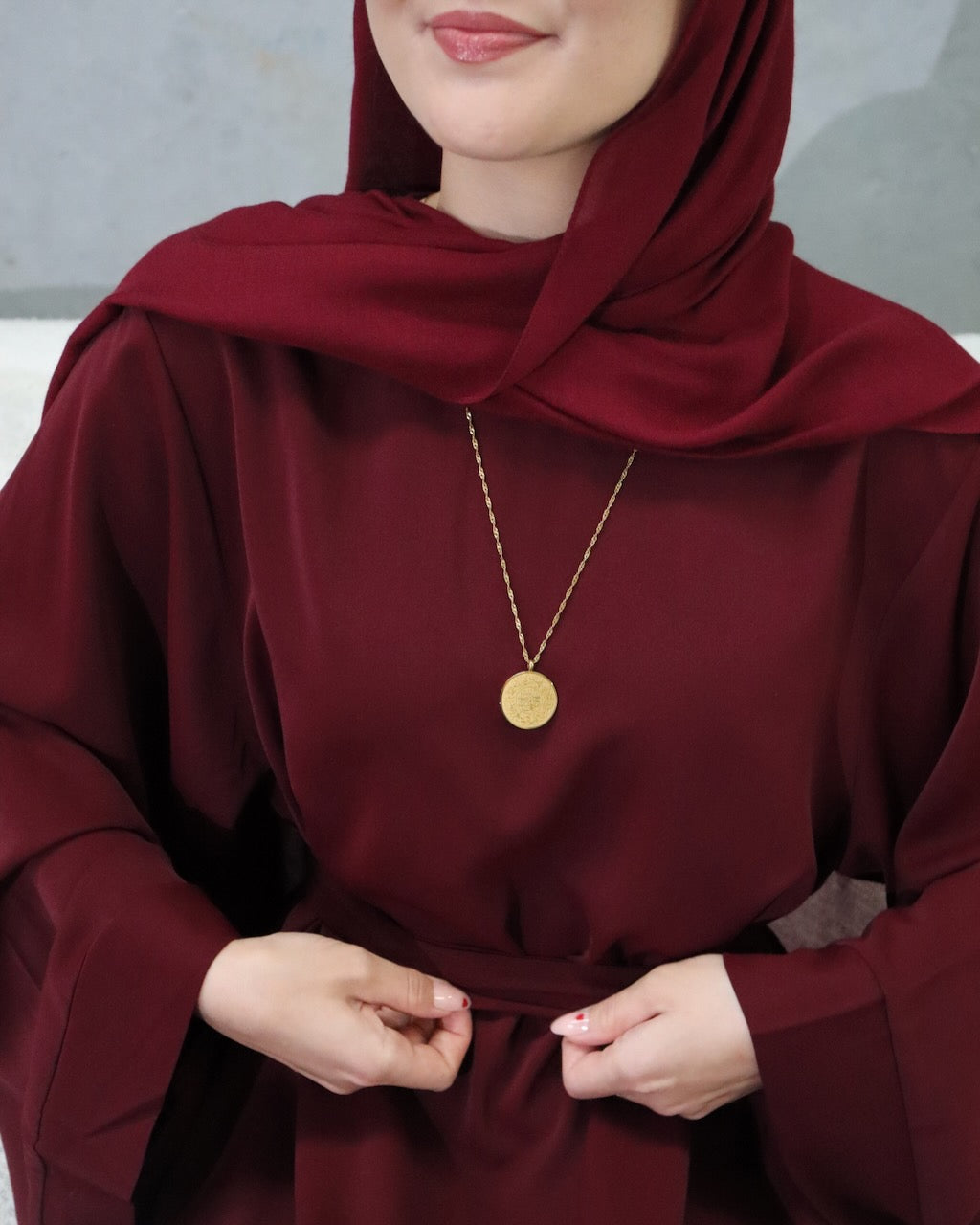
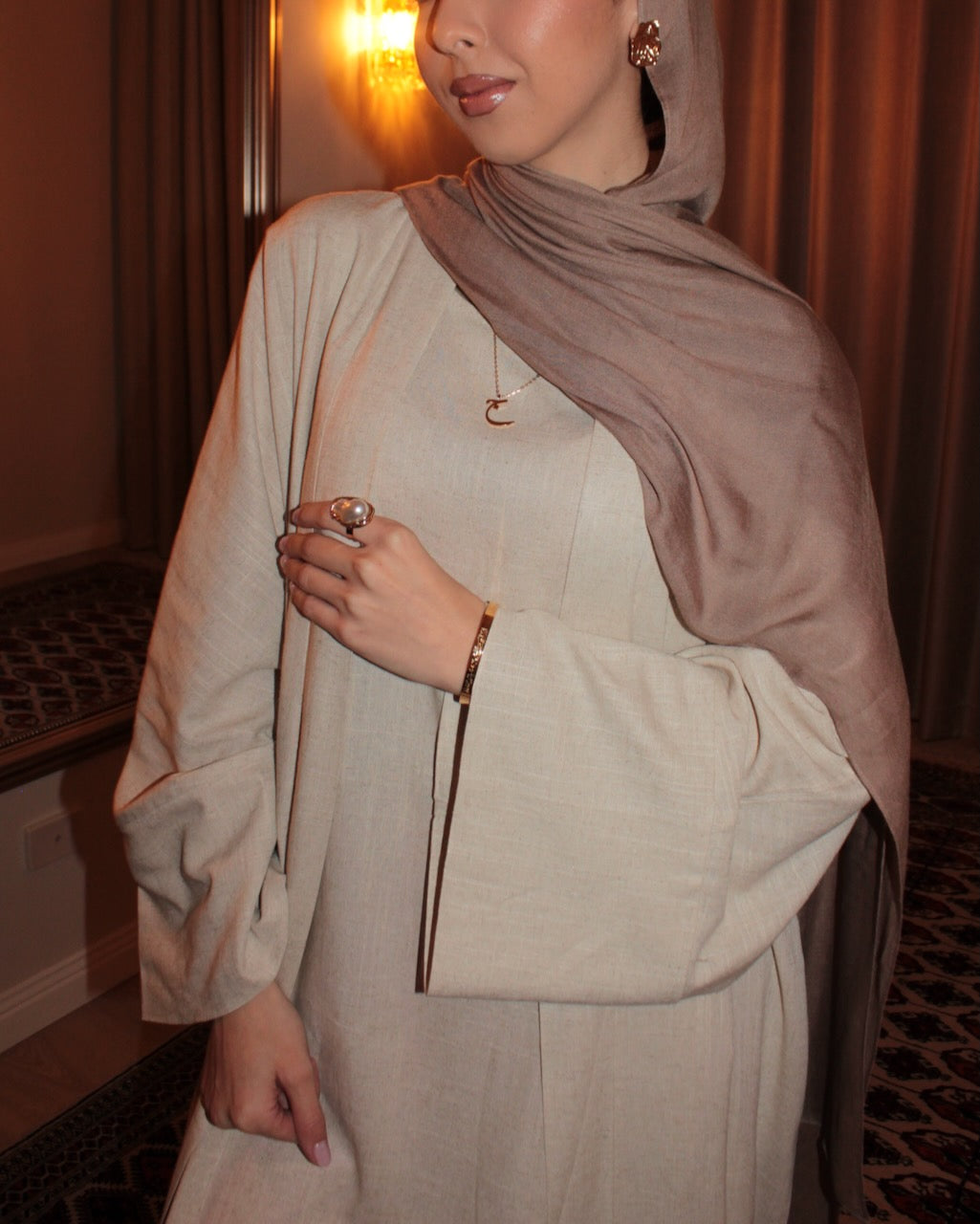
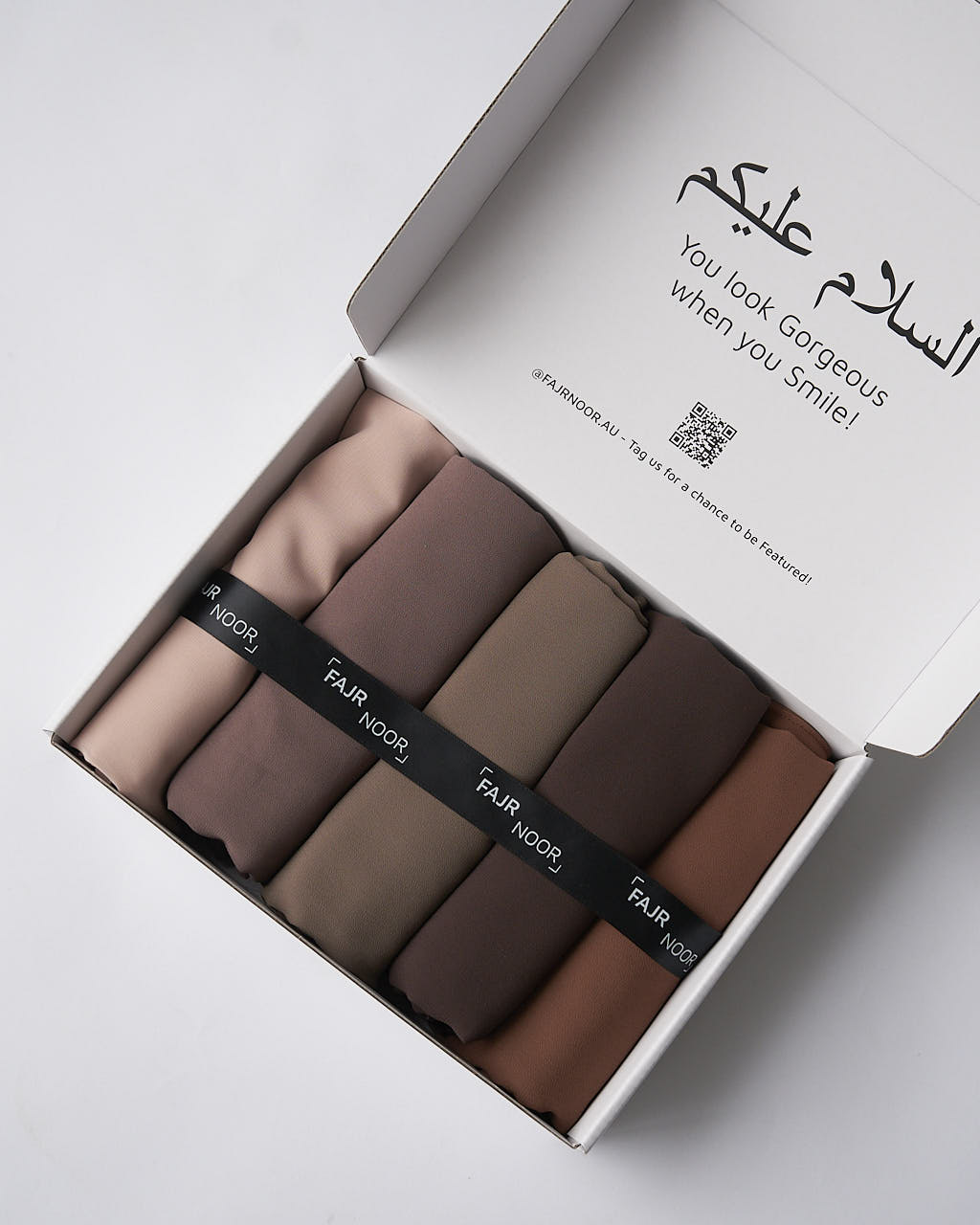
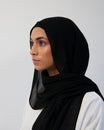
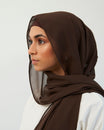
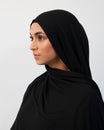
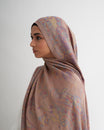
There’s no single style that every woman needs to wear. Depending on the guidance you follow and your personal preferences, an Umrah abaya, khimar, jilbab or hijab may be one of several clothing options to consider. Check each garment against your needs and trusted advice; a product category alone doesn’t confirm religious suitability.
For Australian pilgrims considering what to wear for Umrah, Fajr Noor offers these modest clothing categories through its online store. Browse the available Umrah abayas, khimars, jilbabs and hijabs at your own pace, then choose only what fits your plans and preferences. Let your trusted religious guidance lead; apparel is one practical part of preparing for the journey.
Prepare for your journey with confidence
Choosing what to wear for umrah starts with trusted religious guidance, followed by your itinerary, the weather and your comfort. Remember, ihram is a sacred state, not simply a particular outfit. Clothing choices differ for women and men, so check personal questions with a qualified authority rather than relying on a general packing list.
Before leaving Australia, review your forecast and travel plans, try your outfits on, and keep essential garments easy to reach. A simple packing plan can help you feel prepared without taking more than you need.
When you’re ready to consider clothing options, Fajr Noor is an Australian online retailer offering Umrah abayas and modest clothing, along with khimars, jilbabs and hijabs. These are options to explore, not religious requirements. Explore modest clothing for your Umrah journey at your own pace.
With thoughtful preparation and guidance you trust, you can travel with greater ease and keep your focus on the journey ahead.
Frequently Asked Questions
What should a woman wear for Umrah?
Women can generally choose modest everyday clothing that provides the coverage they prefer and feels comfortable for movement. Loose, opaque garments and a head covering may suit personal practice, but specific requirements depend on the religious guidance followed. Ask a trusted scholar or pilgrimage provider about your circumstances before departure. Choose outfits with your itinerary and expected weather in mind, too.
Do women need a special ihram outfit for Umrah?
Women don’t necessarily need a separate, specially named ihram outfit. Ihram refers to a sacred state associated with pilgrimage, rather than simply a particular garment. Modest everyday clothing may be suitable, subject to the guidance you follow. Check questions about details such as face coverings or gloves with a qualified, trusted Islamic authority, as individual rulings may vary.
What do men wear for Umrah?
Men’s ihram garments are commonly described as two unstitched cloths, one worn around the waist and one draped over the upper body. This is a general description, not a complete ruling for every circumstance. Men should confirm garment and footwear questions with a trusted scholar or pilgrimage provider, and plan travel clothing around their itinerary and the stage at which they’ll enter ihram.
Can I wear an abaya for Umrah?
Yes, an abaya can be one option for a woman’s modest clothing, but it isn’t automatically required as a specific style of dress. Check that your choice aligns with the religious guidance you follow and feels suitable for your plans. Fajr Noor is an Australian online retailer offering Umrah abayas and other modest clothing, which you can consider as part of your preparation.
What shoes should I wear for Umrah?
Choose footwear that fits well and that you’ve tested before your trip, so you know how it feels during walking and standing. Avoid relying on an unworn pair for long days. Footwear guidance can depend on your circumstances in ihram, so confirm any religious requirements with a trusted scholar or pilgrimage provider before deciding what to pack.
How many clothes should I pack for Umrah?
There’s no single number that suits every trip. Base your clothing on how long you’ll be away, your itinerary and access to laundry. Include travel-day outfits, pilgrimage garments, head coverings, underlayers and spare essentials, then adjust the quantities to your plans. Whether you’re preparing in Sydney, Brisbane, Melbourne, Perth or Adelaide, check airline baggage limits before finalising your luggage.
What fabric is best to wear for Umrah?
No single fabric is best for every pilgrim or travel date. Choose clothing that feels comfortable to you, suits the forecast and is practical to care for during your trip. Check garment labels for washing instructions, and consider whether you’ll need layers for indoor and outdoor settings. If possible, try the outfit before departure to see how it feels when you move.


Leave a comment
All comments are moderated before being published.
This site is protected by hCaptcha and the hCaptcha Privacy Policy and Terms of Service apply.