
The Piece Everyone Skips First and Regrets
Almost every problem women describe with their hijab comes back to the same missing item. The scarf slides back. The hairline shows by lunchtime. There is a lump at the crown. Hair breaks along the front.
A hijab cap solves all four. It is the cheapest thing in the drawer and it changes how everything above it sits. If you buy one accessory, buy this one. Our full range is in hijab caps.
The Four Types and What Each Is For
Tube caps
A simple stretch tube, no ties, no seams to feel. You pull it on and it sits flat. This is the everyday workhorse and the one to buy first. It disappears under a scarf, which is exactly what you want.
Best for: daily wear, under jersey and modal, anyone who wants one cap that does not complicate things.
Tie-back caps
These fasten behind the head, so you control the tension. For anyone with thick or long hair, this is the difference between a smooth crown and an obvious bump. The ties also let you adjust across the day as the cap loosens.
Best for: thick hair, long hair, long days, anyone whose cap creeps back.
Full or extended caps
These cover the head and continue down over the neck, so there is no gap at the throat to check. Useful under sheer or light-coloured scarves where a glimpse of neckline is a worry.
Best for: chiffon and light scarves, formal styles, anyone who wants to stop adjusting entirely.
Satin-lined caps
The inside is satin rather than cotton or jersey. This is not a luxury detail, it is a hair-protection one, which we will come to. From the outside they look like any other cap.
Best for: protecting edges, curly and coily hair, anyone who wears hijab most days.
The Hairline Problem
If you wear hijab daily, your hair spends most of the day under fabric, held in place, with friction at the front where the cap meets your hairline. Over months and years, that friction is one of the reasons many women notice thinning or breakage along the edges.
Cotton and jersey absorb moisture from hair and create drag. Satin does neither. It is smoother, so hair moves against it rather than catching, and it does not pull moisture out the way cotton does.
This is why a satin-lined cap is worth the difference in price if you wear hijab most days. It is the single most practical thing you can do for your hair without changing anything else about your routine.
Choosing a Colour, Properly
The instinct is to match the cap to the scarf. Usually that is the wrong call.
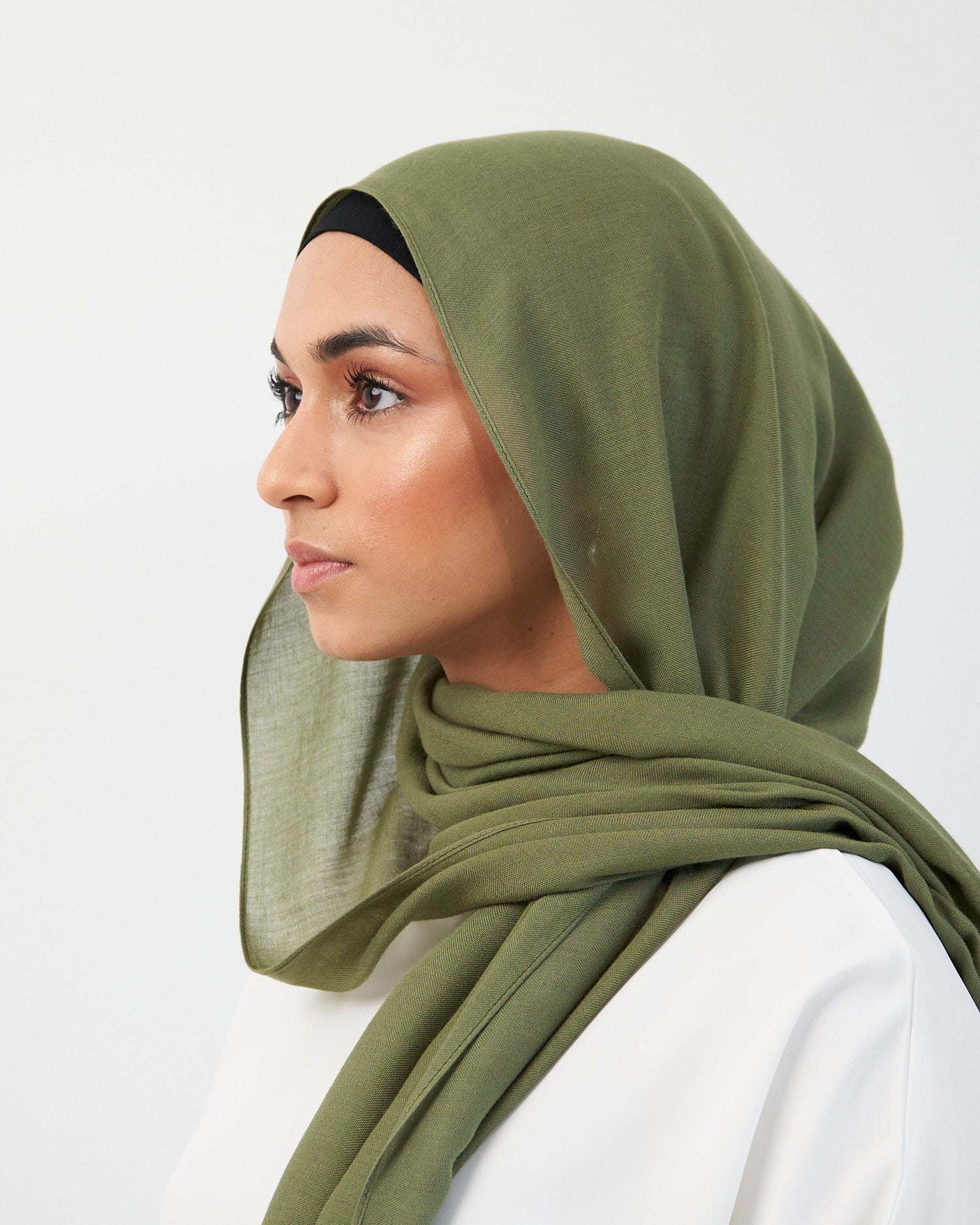
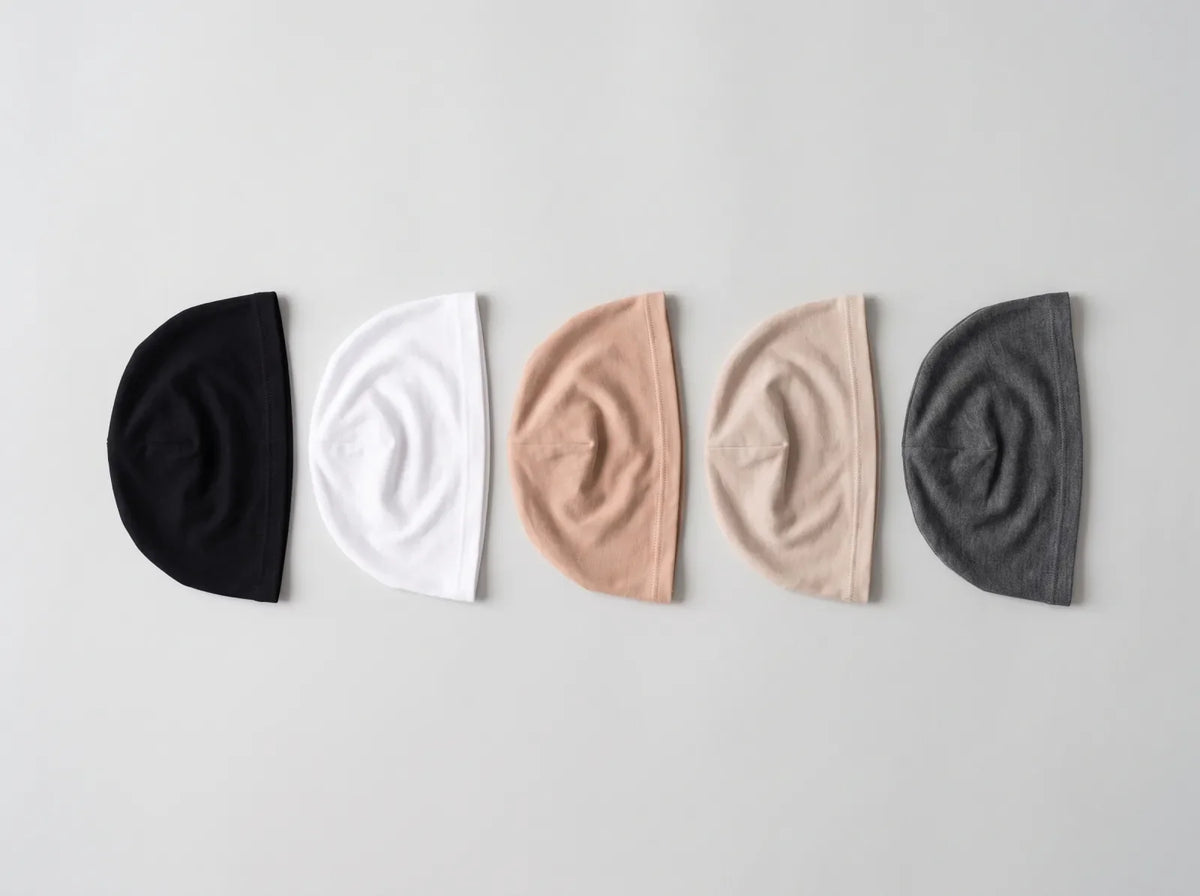
Match the cap to your skin tone instead, particularly at the front where it meets your forehead. A cap close to your skin reads as part of you and disappears. A high-contrast cap draws a hard line across your face in every photograph.
The exception is sheer scarves. Under chiffon, the cap colour will show through, so there you match the cap to the scarf rather than the skin.
Two caps cover most situations: one close to your skin tone, one black.
Fit: Snug, Not Tight
A cap that is too tight leaves a mark on your forehead and gives you a headache by mid-afternoon. A cap that is too loose creeps backwards and defeats the point.
It should sit just at or slightly above your natural hairline, hold without gripping, and stay put when you turn your head quickly. If you can feel it after twenty minutes, it is too tight.
Hair underneath matters too. A high bun creates a bump that shows through every scarf. A low, loose bun at the nape sits flat and gives the back of the wrap a natural shape.
How Many to Own
More than you think, for a simple reason: caps sit against your skin all day, so they need washing as often as anything else you wear. Owning two means washing constantly.
Four is a realistic working number. Two in your skin tone, one black, one satin-lined for daily wear. Add colours only if you regularly wear sheer scarves.
Wash them cool, dry in shade, and replace them when the elastic goes. A stretched cap is the most common cause of a scarf that will not stay put, and it is easy to miss because the cap still looks fine.
What Else Actually Helps
Caps solve most problems. Two other things solve the rest. Good pins, fine enough not to leave holes in delicate fabric. And magnets, if you wear scarves you do not want pierced at all. Both are in hijab accessories.
Frequently Asked Questions
Do I really need a hijab cap?
If you wear anything other than jersey, yes. A cap gives the scarf something to grip, keeps your hairline covered, and stops the constant small adjustments. Jersey grips on its own, so it is the one fabric where a cap is optional.
What is the difference between a hijab cap and an undercap?
Nothing. They are two names for the same item. Some people also call them underscarves or bonnets.
Are satin-lined hijab caps worth it?
If you wear hijab most days, yes. Satin creates less friction against your hairline than cotton or jersey and does not draw moisture from your hair, which helps protect your edges over time.
What colour hijab cap should I buy?
One close to your skin tone and one black will cover almost everything. Match the cap to your skin rather than the scarf, except under sheer fabrics where the cap will show through and should match the scarf instead.
Why does my hijab cap keep sliding back?
Usually the elastic has stretched, or the cap sits too far back to begin with. It should start at or just above your natural hairline. If it is an older cap that still looks fine, replace it and see whether the problem disappears.
How many hijab caps do I need?
About four. Caps sit against your skin all day and need washing as often as anything else, so two means you are always waiting on a wash.

Leave a comment
All comments are moderated before being published.
This site is protected by hCaptcha and the hCaptcha Privacy Policy and Terms of Service apply.